

























































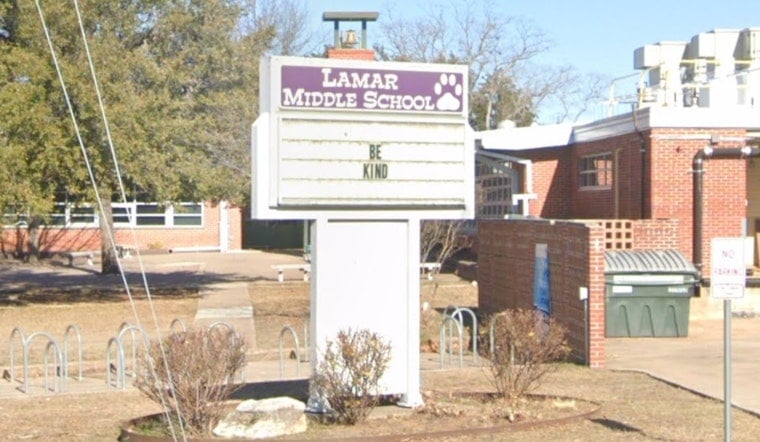
Lamar Middle School sent students and staff home early Tuesday after its HVAC chiller broke down, becoming the third Austin ISD campus in less than two weeks to lose reliable air conditioning as students settled into the new school year. Buses left campus around 11:30 a.m., running their routes ahead of schedule, and any students not picked up at release time were relocated to an air-conditioned area on campus.
Principal Travis Brunner told families the chiller needs immediate repair, and that the school is focused on working closely with Austin ISD facilities maintenance and construction management to fix the problem, according to KXAN Austin. Both the HVAC contractor and the district's facilities and maintenance team are expected to install a temporary chiller, and the campus said it expects to provide an update Tuesday night on whether normal operations would resume Wednesday.
A Familiar Scramble Repeats Itself
Lamar's breakdown lands just one week after Anderson High School dismissed students early on September 1 when its chiller was found to be cooling only about 40% of the building, a failure Hoodline reported was expected to require an overnight installation of a new circuit breaker and a 400-ton rental chiller intended to cool the campus Wednesday. Days before that, on August 27, McCallum High School issued a letter to families describing multiple portables and classrooms without working air conditioning, part of a broader outage.
McCallum's troubles were severe enough that the campus put out a public plea for donated fans while crews worked the problem, a story Hoodline covered in detail. The cooling failures at both campuses add another layer to why cooling problems keep recurring across nearby buildings entering the 2026-2027 school year.
Decades of Deferred Repairs Behind the Breakdowns
Lamar's struggles are not new. Austin ISD's 2021 facility assessment program predates this week's chiller failure, pointing to broader infrastructure needs rather than a one-off mechanical fluke.
Austin ISD's FY2024 Official Budget identifies heating and air conditioning, plumbing, roofing and other chronic maintenance issues as critical deficiencies requiring attention.
The district's challenges extend far beyond one campus. A facility assessment reported by Austin Current identified a district-wide deferred maintenance backlog exceeding $3 billion across Austin ISD's aging buildings, with some schools still running HVAC equipment pieced together over 70 years. Austin ISD officials have said full HVAC system replacements can take up to a year because of equipment procurement delays, engineering work, and permitting, according to Community Impact, forcing the district to spend roughly $10,000 per month per unit on temporary rental chillers during emergency breakdowns like the ones at Lamar, McCallum and Anderson.
Bond Money Is Coming, But Not Fast Enough
Austin voters approved a $2.44 billion school bond package in November 2022 that set aside more than $400 million specifically for targeted repairs across district facilities, including HVAC, roofing, electrical, and plumbing overhauls. That funding has already broken ground at some campuses; Austin ISD started a $47.41 million Phase 1 bond modernization project at Anderson High School in May 2025 to upgrade its HVAC, electrical, and plumbing systems, but that project is not scheduled to finish until spring 2027.
According to Austin ISD's Facility Master Plan Executive Summary, once projects are funded through bond referendums, designs are developed for each project with input from the school and community.
Part of the district's approach to major facility upkeep involves voter-approved capital bonds, whose proceeds are shielded from recapture. Texas Administrative Code also requires occupied classroom and office space to be kept between 72 and 76 degrees during warm months, a standard that helps explain why chiller failures like Lamar's trigger immediate dismissals rather than a wait-and-see approach.
The disruptions have piled up fast this school year. Just days before classes began on August 18, a contractor error during a bond-funded roof replacement at Travis Heights Elementary caused major water damage that forced all 469 students to relocate to Dawson Elementary. Taken together with the chiller failures at McCallum, Anderson, and now Lamar, the pattern points to a district still years away from closing the gap between approved bond dollars and finished repairs on aging campuses across Austin.




