

























































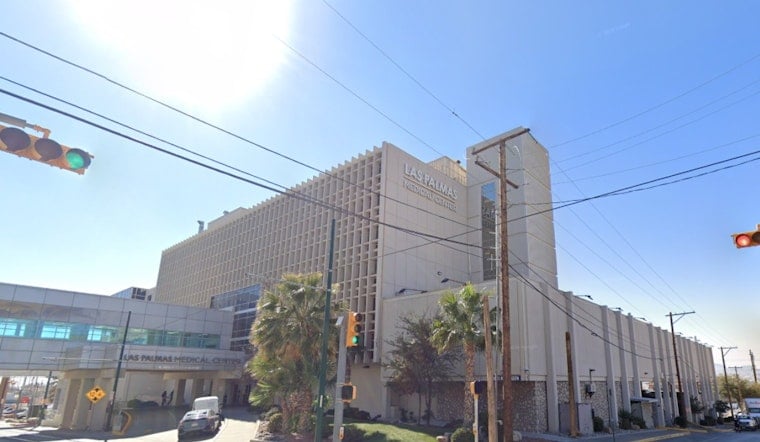
El Paso patients battling stubborn, long-standing atrial fibrillation now have a treatment option previously unavailable anywhere in West Texas. Las Palmas Medical Center announced it will begin offering a robot-assisted hybrid procedure designed to treat persistent AFib, a condition that often resists standard catheter ablation alone.
Cardiothoracic surgeon Dr. Hector Flores performed El Paso's first robotic-assisted hybrid AFib procedure at the hospital in June 2026, according to Las Palmas Medical Center. The milestone, first reported locally by KFOX, makes Las Palmas the only hospital in the region offering the therapy, according to the hospital's announcement.
The hybrid technique works by creating small incisions on the outside of the heart to block faulty electrical signals, the hospital says, while combining that surgical approach with catheter-based therapy inside the heart. Robotic assistance is also used to close the left atrial appendage in eligible patients, according to the same hospital announcement, a step aimed at reducing the risk of stroke-causing blood clots that can form during arrhythmia episodes.
A Multi-Year Push Into Advanced Heart Care
The hybrid AFib launch builds on a string of cardiovascular milestones the hospital has logged in recent years. In October 2024, Las Palmas became the first hospital in El Paso to adopt an FDA-approved pulsed field ablation system, a non-thermal technology that uses short electrical pulses rather than extreme heat or cold to destroy erratic heart tissue, per the hospital's newsroom.
By August 2025, the hospital had completed its 500th left atrial appendage occlusion procedure, according to Las Palmas Medical Center, a volume the hospital says has kept it as the regional leader for that stroke-reducing implant. That steady buildup of technology and procedure volume set the stage for the more complex hybrid approach now available to persistent AFib patients.
Las Palmas Medical Center operates as a 327-bed acute care facility in West El Paso and is part of Las Palmas Del Sol Healthcare, the regional network owned by HCA Healthcare, which also operates Del Sol Medical Center in East El Paso. The cardiovascular and arrhythmia programs at Las Palmas are overseen by Chief Executive Officer Alejandro Romero and Electrophysiology Medical Director Dr. Francisco Gonzalez, who leads the hospital's electrophysiology lab, per the hospital's own account.
Independent Recognition For Stroke Care
In August 2026, the American Heart Association and American Stroke Association awarded both Las Palmas Medical Center and Del Sol Medical Center the Get With The Guidelines - Stroke Gold Plus quality achievement award, according to Las Palmas Del Sol Healthcare. Stroke risk is significantly heightened in AFib patients, which links that outside quality recognition directly to the hospital's expanding arrhythmia treatment lineup.
Why The Demand Keeps Growing
The rollout arrives amid a dramatic upward revision in how many Americans actually live with AFib. A study published in September 2024 in the Journal of the American College of Cardiology estimated that 10.55 million U.S. adults have atrial fibrillation, according to the National Heart, Lung, and Blood Institute — roughly three times higher than earlier 20-year projections. Nationally, the condition accounts for more than 454,000 primary hospitalizations and contributes to approximately 158,000 deaths annually, according to the Centers for Disease Control and Prevention.
Cardiothoracic involvement in arrhythmia care extends beyond AFib that develops on its own. A July 2026 comparative surgical study published in the journal Medicina found that postoperative atrial fibrillation occurs in roughly 15% of thoracic surgery patients, a complication tied to cardiac tissue manipulation during chest procedures, according to research published by MDPI. That broader clinical picture underscores why hybrid programs pairing surgeons with electrophysiologists, like the one now running at Las Palmas, are increasingly viewed as necessary for patients whose arrhythmias resist simpler fixes.
Specific details on patient eligibility criteria, long-term success rates compared with standard ablation, and typical hospital stay lengths for the robotic hybrid procedure have not yet been released, leaving those questions open for future reporting as the program continues in El Paso.





