

























































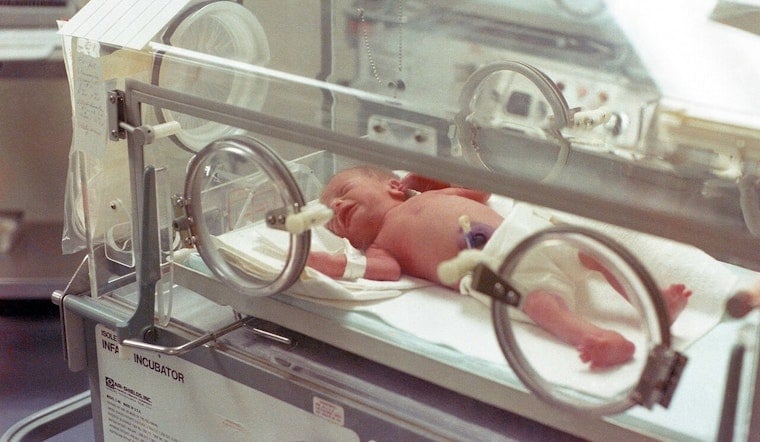
A Las Vegas mother has turned her daughter's harrowing 95-day stay in a neonatal intensive care unit into a children's book, hoping to give other families a source of comfort during one of the most frightening chapters a parent can face. Her daughter received care at a Las Vegas hospital, where she survived the extended hospitalization before eventually going home.
The mother said the experience of watching her daughter fight for nearly three months in intensive care inspired her to write a children's book about her daughter's strength, according to FOX5 Vegas. The station's report did not specify which Las Vegas hospital treated the infant, but a 95-day NICU stay falls squarely within the range Southern Nevada families increasingly encounter.
Why Extended NICU Stays Are Common in Southern Nevada
Sunrise Children's Hospital, which operates Nevada's largest neonatal intensive care unit with 72 Level III beds, cares for roughly 1,000 neonates a year with an average stay of 21 days — though extremely low birth-weight infants frequently remain hospitalized for three to four months, according to Sunrise Children's Hospital. A 95-day stay lines up with national benchmarks for very preterm infants, as a 2025 cross-sectional study of Vermont Oxford Network data published in JAMA Network Open found surviving very preterm infants average an adjusted hospital stay of 78 to 90 days across U.S. health systems.
The Level III designation matters because it defines the level of care an infant like the mother's daughter would have received. The American Academy of Pediatrics defines Level III NICU facilities as those capable of providing continuous, comprehensive care for infants born before 32 weeks gestation or weighing under 1,500 grams, along with newborns facing critical medical or surgical conditions, according to Centennial Hills Hospital Medical Center. That level of care includes round-the-clock neonatologist oversight, mechanical ventilation, central venous catheters, and specialized nutrition labs.
Nevada's Preterm Birth Numbers Paint a Difficult Picture
Stories like this one land against a backdrop of rising prematurity concerns statewide. Nevada recorded an 11.0% preterm birth rate in 2024, representing 3,552 premature births and earning the state a “D” grade and a 37th-place national ranking on the March of Dimes 2025 Report Card, per the March of Dimes. Nationally, the trend has been climbing too — CDC National Vital Statistics System data published in 2025 shows U.S. NICU admission rates among premature infants rose from 49.1% in 2016 to 51.6% in 2023.
Access to early prenatal care in Nevada has also slipped, which experts say limits the chance to catch complications before they lead to premature labor. First-trimester prenatal care initiation dropped from 78.2% in 2020 to 73.9% in 2023, while the share of women receiving late or no prenatal care increased over the same period, according to Nevada Department of Health and Human Services data. Maternal age is another factor: March of Dimes figures covering 2022 through 2024 show preterm birth rates in Nevada were highest among mothers 40 and older, at 17.0%, compared with 9.8% for women ages 20 to 29.
Other Las Vegas NICU Families Facing Similar Journeys
The mother's story arrives just days after MountainView Hospital in northwest Las Vegas saw nine infants — including three sets of twins and one set of triplets — born within a single 24-hour span this month, all requiring Level III NICU care, as Hoodline previously reported. That single-day surge underscored how often Southern Nevada's neonatal units are managing high-acuity births that stretch on for months rather than weeks.
Extended stays are not unique to Las Vegas. In August, a micro-preemie born in Walnut Creek, California was discharged home after 167 days in the NICU, illustrating just how long recovery can take for the most extremely premature infants. Clinical researchers with the National Association of Neonatal Nurses have noted that health disparities among preterm infants in NICUs are driven by higher preterm birth risks, variation in care quality, and adverse social determinants of health — a reminder that outcomes like the one this Las Vegas mother's daughter experienced are shaped by more than medicine alone.
For now, the mother's book stands as a personal marker of that journey — a way, she hopes, to help other families see a path through months that can feel endless when a child is fighting for every breath in intensive care.





