

























































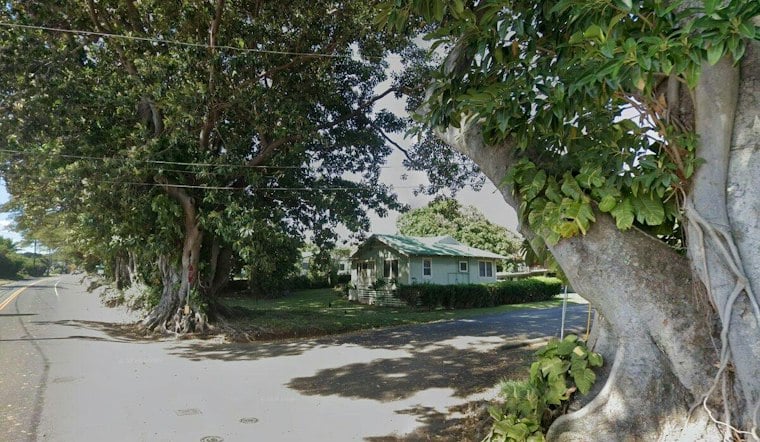
Joanne Norberte flew home to Hawaiʻi's Big Island after learning that floodwater from Hurricane Lala had snapped the front door of her 80-year-old parents' house in half and torn through the family's coffee farm in Kaʻū. Her parents barely escaped the rising water on August 15, and by the time she arrived, hundreds of coffee trees across the farm's 55 acres were gone.
The flooding came from Kauhuhuula Gulch, which sent rushing water into her parents' home hard enough to snap the front door, according to KSNV. The station reports Norberte's parents' home sustained severe flood damage, and that Norberte worked alongside the National Guard and neighbors trying to save what was left of the family farm. Her father had once worked as a sugarcane worker before the region's plantations closed, a shift that eventually pushed families like hers into coffee farming.
A Farm Born From Sugar's Collapse
The Norbertes' operation, JN Coffee Farms, began in 1996 with just five leased acres, per the station's report, and has since grown into roughly 50 acres of coffee land. That timeline lines up with the broader collapse of Hawaiʻi's sugar industry: Kaʻū Sugar Co. shut down in 1996, and the transition included five-acre lease increments.
Founder Leo Norberte built that same opportunity into a business, working nights as a cook at the Volcano House while growing the farm into a 50-acre coffee operation, according to JN Coffee Farms. Norberte taught himself culinary skills by watching TV cooking shows while transitioning his family into full-time farming, the company says. Coffee has become a mainstay of the region: Hawaiian coffee carries an annual production value of more than $48 million across roughly 900 farms statewide, the station's report notes, though the USDA reported production had already dropped 20% from the previous season even before Hurricane Lala hit.
Rain That Broke Records Upslope
The scale of the storm helps explain the damage. The Kaiholena weather station upslope of Nāʻālehu in Kaʻū recorded 24.4 inches of rainfall during Hurricane Lala from August 14 to 16, including 4.4 inches in a single hour on August 15 — the highest single-hour rainfall rate recorded anywhere in Hawaiʻi during the storm, according to the University of Hawaiʻi. The storm dropped an estimated 1.3 trillion gallons of rain across the islands, with Hawaiʻi County alone receiving 66 percent of that total.
Flash flooding from the storm caused severe debris flows and road collapses along Highway 11 near Nāʻālehu and Pāhala, temporarily severing the main route connecting Kaʻū to Kona and Hilo, as reported by Honolulu Civil Beat. Hawaiʻi Island's 911 emergency system went offline on August 17 following the storm's peak impact, forcing police to direct residents in distress to a non-emergency landline instead, according to SFGate. Extended power outages affected more than 178,000 customers statewide after the storm passed.
Neighbors, the National Guard and a GoFundMe
Back on the farm, the National Guard and community members brought food, ice, clothes and furniture to help the Norberte family, per the station's account. After learning her family and neighbors lacked flood insurance, Norberte started a GoFundMe that has since raised more than $23,000 — about 90% of its goal — with plans for any extra money to go toward other Hawaiian coffee farmers seeking aid, including the Navarro and Kamba families, whose farms were also hit by the hurricane.
“I need you to come home. We need help,” Norberte said, describing the moment she decided to fly back from Las Vegas, per the station's report. She said longtime customers, family members and people from Las Vegas reached out asking how they could help, and many fellow farmers paid out of pocket for their own repairs. Norberte said she is deeply grateful for the assistance her family has received and hopes that support extends to other farmers affected by Hurricane Lala, who she noted have only about two months to recover before harvest season.
A Safety Net Most Farmers Don't Have
The Norbertes' reliance on community fundraising reflects a broader gap in protection for Hawaiʻi's small farms. As of March 2026, only about 3% of Hawaiʻi farmers held federal crop insurance, according to Honolulu Civil Beat, because federal insurance rules are largely built for large mainland commodity farms rather than Hawaiian operations that typically run under 50 acres. That left many Kaʻū growers depending on grants and donations rather than insurance payouts after the storm.
The broader relief effort also extended to agricultural producers, as Hoodline previously reported. The organization raised more than $1 million through its Hawaiʻi Flood Response Fund after back-to-back storm events battered the islands this year. The Office of Hawaiian Affairs also deployed emergency helicopter operations on August 18 and 19, delivering roughly 1,500 pounds of food, water, fuel and supplies to isolated Kaʻū communities cut off by the flooding.
For the Norberte family, restoration work on their home continues even as harvest season approaches. Two major hurricanes swept through the Hawaiian islands within three weeks of each other this year, compounding the pressure on farms already short on time and resources. Norberte's hope, as she told the station, is that the wave of goodwill reaching her family's farm doesn't stop there.




