

























































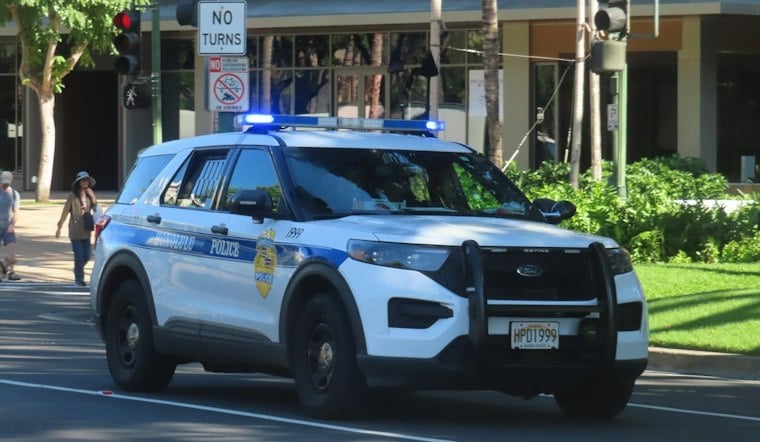
A concerned citizen's call about a man walking through Honolulu's Chinatown waving a knife sent District 1 officers racing to the scene just after 10 a.m. on November 9. Working alongside a pilot from the department's Drone as First Responder program, officers quickly located the man and took him into custody, with no injuries reported to him, officers or members of the public.
The department laid out the sequence of events in a post from Honolulu Police
, describing how the drone pilot worked in tandem with ground units to pin down the man's location before officers moved in. According to the department's program information, the Drone as First Responder effort is designed to send unmanned aircraft to certain emergency calls ahead of arriving officers, giving them real-time aerial information before they reach a scene.
That program runs in partnership with the Hawaiʻi State Department of Law Enforcement, per the Honolulu Police Department, and during its pilot phase it is based out of HPD's Alapaʻi Headquarters, initially covering Districts 1 and 5 — the area that includes Chinatown. The department has been explicit about the program's limits, stating that drones are not used for routine patrols or random surveillance.
How the Drone Factors Into Everyday Calls
HPD frames the technology as a tool for situational awareness rather than constant monitoring, saying the department uses it to improve officer awareness and help keep the community safe. The Chinatown response echoes an earlier case this year, when Hoodline reported that a Honolulu drone helped track a vehicle connected to stolen AirPods and a string of related crimes, ultimately helping officers take three suspects into custody.
That September case was described by Hoodline as the department's first publicized use of aerial tracking to close out a case, and the outlet noted that during preliminary testing, HPD's drones were able to reach incident locations in as little as 30 seconds. That response-time figure was tied specifically to testing conditions, not to the Chinatown incident, and HPD has not said how quickly the drone reached the scene on November 9.
Oversight Questions Still Hang Over the Program
Not everyone is on board with how the program is being run. The ACLU of Hawaiʻi has pushed back on HPD's drone initiative, calling for the pilot to be halted until the Honolulu City Council passes binding oversight legislation with meaningful civil liberties protections.
The civil rights group has pointed to a broader national trend to make its case, citing a 2023 report finding that more than 1,400 police departments across the country were already running their own drone programs. The organization argues that oversight hasn't kept pace with how quickly the technology has spread.
HPD's own policy materials address some of those privacy concerns directly, stating that drone operators are prohibited from intentionally recording or transmitting images of private activity, conditions or locations where people have a reasonable expectation of privacy, subject to certain stated exceptions. The department also says non-evidentiary footage is deleted within 30 days. Whether those safeguards go far enough remains a point of friction between HPD and the ACLU of Hawaiʻi, even as the department points to incidents like the one in Chinatown as evidence the tool is working as intended.



