

























































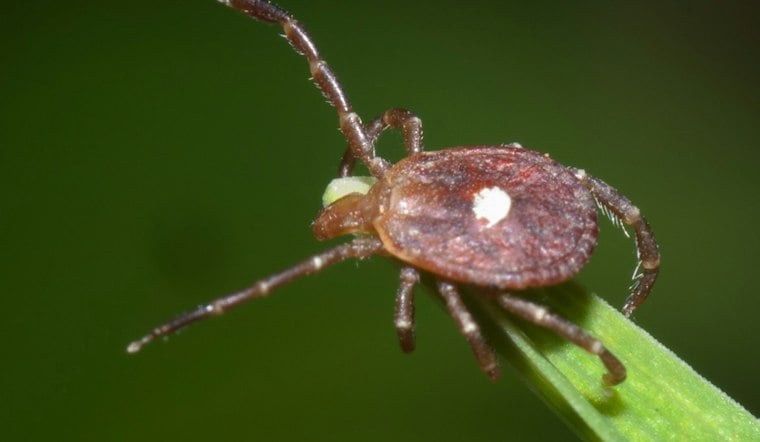
A tick species never confirmed to exist in Hawaiʻi may have turned up in Hauʻula, setting off a multi-agency scramble to track it down. Someone in the Oʻahu community reported a possible lone star tick to a state pest hotline on Nov. 6, handing investigators a photo but, so far, nothing more concrete to work with.
The Hawaiʻi Department of Agriculture and Biosecurity and the Hawaiʻi Department of Health are jointly investigating the possible discovery, according to Maui Now. The reporting party's call to the DAB pest hotline on Nov. 6 prompted the agency's plant quarantine branch and plant pest control branch, along with the Department of Health's vector control branch, to mobilize in response. Despite that rapid response, investigators have not recovered the actual tick in question, nor have they confirmed its species. No one was reported bitten as part of the initial report.
Ground Survey Turns Up Empty
Four days after the report, on Nov. 10, personnel from DAB and the vector control branch conducted a survey using tick drags — a method that involves pulling pieces of cloth along grassy areas where ticks may be present. The survey did not discover any ticks, leaving the case still open and the tick's identity unconfirmed.
That uncertainty matters because of what's known — and not known — about ticks in Hawaiʻi. Only two tick species are currently known to exist in the islands: the brown dog tick and the spinose ear tick. The lone star tick is not among them. Isaac Maeda, quoted by Maui Now, said any new tick species showing up in Hawaiʻi would be a real concern precisely because so few are established there, noting there are only two species known to exist in the state.
Why the Lone Star Tick Raises Eyebrows
Elsewhere in the country, the lone star tick has built a reputation as an aggressive, fast-spreading pest. The Los Angeles Times reported that lone star ticks have expanded their range from Maine to Oklahoma in recent years as the climate has warmed, a shift that has put more people in contact with the species. Per the CDC, lone star ticks can spread diseases including alpha-gal syndrome, an increasingly common allergy to red meat, dairy and other mammalian food products, as detailed by the Los Angeles Times.
Despite that mainland track record, state health officials say tick-to-human disease transmission remains rare in Hawaiʻi overall, per the report from the state's health department. Still, anyone who develops symptoms after a suspected tick bite is urged to contact a healthcare professional promptly, since symptoms such as fever, headaches, nausea and fatigue may not appear until days or weeks after the bite occurs.
State Agencies Lean on Public Reports
DAB and DOH are asking the public to continue reporting invasive species, a practice that initially flagged this case before investigators ever arrived in Hauʻula. Residents who spot a suspected tick or other unfamiliar pest can call the pest hotline at 808-643-PEST (7378) to get it checked out. For now, the investigation into whether a lone star tick has actually reached Hawaiʻi's shores continues, with no tick in hand and no species confirmed.





