

























































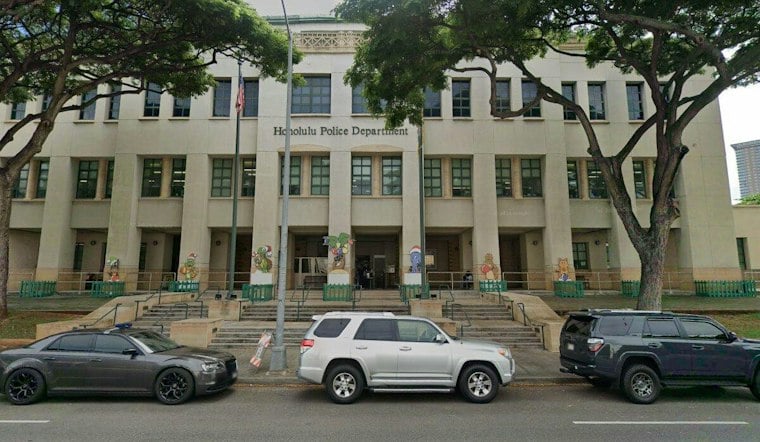
Laurie Foster resigned as chairperson of the Honolulu Police Commission on Wednesday after an agenda item tied to the police department's push for new AI-assisted surveillance tools was challenged as improperly labeled. Foster remains a commissioner on the board, and the shake-up came in the middle of a meeting already hampered by technical problems.
According to Hawaii News Now, a testifier with the Oahu Rapid Response Coalition said the item had been mislabeled as a meeting with the ACLU, even though HPD had requested additional AI-assisted surveillance tools. That mismatch between what was posted and what was actually being discussed raised questions about whether the public had a fair chance to weigh in.
Nandita Sharma, identified as a volunteer with the Oahu Rapid Response Coalition, told commissioners the item was not properly identified, which prevented discussion from moving forward as planned. The mislabeling raised concerns about compliance with Hawaii's open meetings expectations and the public's ability to testify on the actual substance of the proposal.
Commissioners Scramble Mid-Meeting
Per the station's report, commissioners and the board's legal advisor spent part of the meeting debating how to bring the item back on a future agenda without running afoul of ethics rules. The uncertainty played out in real time, with no clear resolution offered during the session itself.
Adding to the confusion, the meeting's livestream went down because of internet connectivity issues, according to the same account, leaving members of the public without a way to watch the proceedings unfold as the agenda dispute and Foster's resignation played out.
The Oahu Rapid Response Coalition had intended to raise concerns about AI surveillance tools at the meeting and said it hopes properly labeled agendas will be posted going forward so the discussion can actually happen, the station reported.
Who Leads the Commission Next
Jeannine Souki may become the commission's next chairperson, though Hawaii News Now reported that outcome only as likely rather than confirmed. The station said it had requested comment from Foster, the outgoing chair, and was still awaiting a response, while Chief Lazar declined to comment on her resignation.
A Broader Fight Over AI Policing Tools
The scrapped agenda item lands amid a longer-running debate over how far Honolulu police should go in adopting AI and surveillance technology. Interim Chief Rade Vanic told commissioners last year that the department could pilot AI-assisted report writing by the end of 2025 or the following spring, according to U.S. News & World Report, and Commissioner Christopher Magnus urged him to seek public input before moving forward.
Honolulu police have since planned a 30-day test of Axon's Draft One tool, in which body cameras would activate an auto-transcription feature even though officers themselves would not get access to the Draft One program, Honolulu Civil Beat reported. An internal notice described the test as a way to evaluate the tool's accuracy and potential time savings, and Vanic said he planned to gather public input before any official rollout. Civil Beat also noted that the Anchorage Police Department in Alaska dropped a similar program after a three-month trial failed to deliver significant time savings.
Beyond report writing, Police Chief David Lazar has said he wants to expand automated license plate readers across Oahu, where dozens of ALPR cameras already operate on both Oahu and Maui, with a handful on the Big Island and one on Kauai, according to the ACLU of Hawaii. Lazar's five-year plan also calls for a real-time investigative hub to monitor drones, license plate readers and live cameras, and for AI tools that could assist with investigations and case analysis, per Civil Beat's separate coverage of the department's strategy.
Honolulu police also launched a drone-as-first-responder pilot limited to two urban Honolulu districts in partnership with the state Department of Law Enforcement, as reported by West Hawaii Today, which noted that federal regulators issued law enforcement agencies more drone waivers between April 2025 and February 2026 than in the prior seven years combined. Civil rights groups have organized protests in Honolulu over related concerns, including the use of Palantir software by federal immigration enforcement agencies and fears about mass surveillance and predictive policing, according to Hawaii News Now's earlier coverage of an August demonstration.
Hawaii's open meetings law requires boards to give written public notice of specified meetings that includes an agenda listing all items to be considered, under Hawaii Revised Statutes §92-7.





