

























































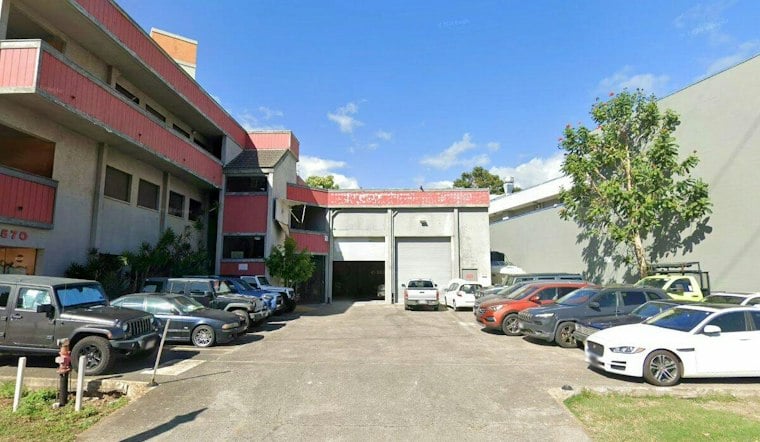
Honolulu's Department of Housing and Land Management closed on a $4.1 million purchase of a former gas station at 581 Dillingham Boulevard on October 29, adding another parcel to the city's growing land bank near the future Kūwili Skyline Station. The 14,087-square-foot property sits at the corner of Dillingham Boulevard and Kaaahi Street, squarely inside a stretch of Iwilei the city has targeted for transit-oriented redevelopment.
The acquisition is the latest move in a long-running effort that goes back to January 2024, when the city purchased the 3.8-acre Iwilei Center for $51.5 million, according to Hawaii News Now. Mayor Rick Blangiardi framed the latest purchase as part of a broader buildout: “We are acquiring land, planning critical infrastructure, and working to deliver thousands of new homes near Skyline,” he said.
A Patchwork of Parcels Near the Rail Line
The city has been piecing together land around the rail corridor for years, not just buying single lots as opportunities arise. The Honolulu Star-Advertiser reported on the city's purchase of 519 Kaaahi Street, formerly home to the clothing company Tina's Creations, for about $2.7 million. That parcel sits within what officials describe as an approximately 17-acre redevelopment area bounded by Dillingham Boulevard, North King Street and Iwilei Road.
Officials have said that more than 70% of the land surrounding the future Kūwili Skyline Station is already owned by the city or state, according to the same account. The Star-Advertiser's earlier reporting put that figure slightly higher, with the city saying more than 75% of land in the area is under city or state control — the two reports differ on the exact share, though both describe public ownership as the dominant pattern around the future station.
What's Planned — and What's Still Unsettled
Plans for the Iwilei Center call for roughly 850 to 900 affordable homes alongside neighborhood businesses, public spaces and improved pedestrian and bicycle access, per the city's figures relayed to Hawaii News Now. A separate account from the Star-Advertiser cited officials anticipating between 800 and 900 units of housing on that same site — close, but not identical, figures that underscore these numbers remain projections rather than finalized counts. The city's broader ambition, as described to Hawaii News Now, envisions more than 2,500 affordable and mixed-income homes spread across the district over the long term.
Much of the technical work behind that vision is still underway. Honolulu selected the firm DTL, working with BDP Quadrangle, Wilson Okamoto Corp. and Nippon Koei, to lead master planning for the Kūwili Station transit-oriented development area, the Star-Advertiser reported. That consulting team is developing a master plan covering future housing, transportation and infrastructure improvements, with the process expected to wrap up by June 30, 2027. The Kūwili station itself is scheduled to open for public ridership by 2031 as part of the rail system's final segment.
Echoes of an Earlier Kalihi Project
The Iwilei push mirrors a similar transit-oriented housing effort already underway in Kalihi. Hawaii News Now reported that the city selected the nonprofit developer EAH Housing to turn the former Dee Lite Bakery property into new transit-oriented affordable housing. The city had acquired that site back in 2019 for about $8.4 million, and preliminary analysis indicates the roughly 23,600-square-foot property could support more than 150 affordable rental units, though the final count is expected to be set during planning — a caveat similar to the one now attached to the Iwilei projections.
Construction on the Skyline rail line itself continues along Dillingham Boulevard, a visible backdrop to the city's land purchases in Iwilei-Kapalama. Whether the Dillingham Boulevard gas station site becomes housing, infrastructure or some other piece of the master plan remains to be worked out as the city's consultants finish their planning process. For now, it stands as one more parcel in Honolulu's slow-building case that the land along its future rail line will be public ground first.





