

























































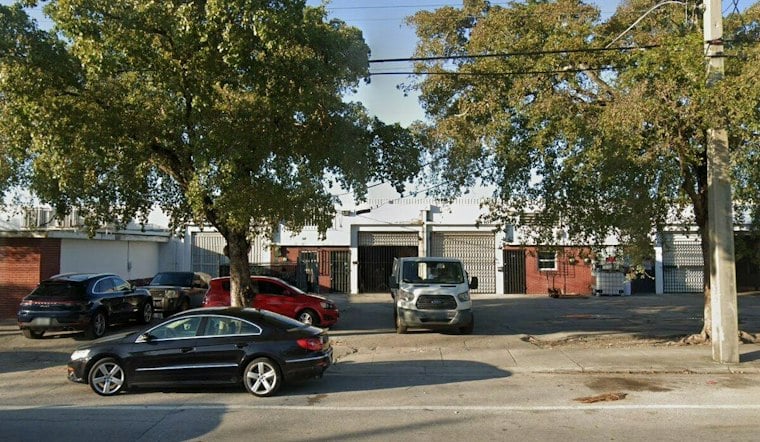
Behind a wall of aging rum barrels at 73 NW 71st St. in Miami's Little River neighborhood sits a dark, cozy speakeasy styled after an 18th-century apothecary. It's called the Founders Lounge, and it's the hidden centerpiece of what's billed as Miami's first and only rum-aging distillery — a turnkey manufacturing plant and fully operational distillery producing everything from white rum to eight-year-aged reserves finished in French cognac barrels.
The operation, first detailed by Miami New Times, came together in 2024 when Carlos Espasas, a Puerto Rican native with years of rum-industry experience, joined José Pérez Cárdenas and Kristjan Olafson to create and age a premium rum brand. Pérez Cárdenas is described as a veteran chemist and master blender, while Olafson is called an industry heavyweight. Jon Rollo handles the hospitality side of the business, according to the outlet's reporting.
A Speakeasy Built Into an Aging House
The distillery ages its rum in ex-bourbon, sherry, and cognac oak barrels, and the report notes those barrels act as biological reactors during aging, breathing day and night as the spirit matures. Once the rum reaches its desired maturation point, it gets transferred to the Miami warehouse, per the same account. The flagship product lineup includes the Vagabond White Rum, a blend of two different bases of year-old rums, bottled on-site through a line of large stainless steel tanks with no sugar, preservatives, additives, or stabilizers added, the article notes.
That flagship approach paid off this year. Vagabond won a Platinum Best in Class award at the 2026 international SIP Awards, while the distillery's five-year-aged rum, finished in Spanish oak sherry casks, took Double Gold as Best of Class at the same competition. The SIP Awards, founded in 2009, evaluate entries entirely through double-blind tasting panels of consumer judges rather than industry professionals, according to the organization's own account of its methodology.
Sourcing Rum From the Dominican Republic
Per the distillery's account relayed by the outlet, the operation sources its base alcohol from the Dominican Republic, where heat and humidity conditions suit rum maturation. Pérez Cárdenas told the outlet that a premium rum like this one is not conceived to be mixed with anything. The distillery plans to add gin and American spiced rums to its lineup, and it also produces and bottles spirits for outside clients, including D. Berry of the Dwyane Wade family and other celebrity-backed groups, offering custom formulations, contract production, aging, and bottling for private and white-label brands.
That tropical sourcing choice carries a scientific rationale beyond flavor. Distillates aging in the hottest rum-making regions typically experience an angel's share five or six times that of cool temperate zones, where Scotch has a rule of thumb of about 2% annually, according to Ethimex. The heat and humidity accelerate wood interaction even as they cause faster liquid loss, the research notes.
Own a Barrel, Get the Bar Key
Customers can go a step further than tasting the finished rums: the distillery lets people own a private rum barrel aged on-site. Private barrel ownership comes with access to the Founders Lounge and roughly 400 bottles of rum, though the bottle count shrinks as the barrel ages longer, per the outlet's reporting. The company also plans to open a rum museum in an adjacent warehouse.
Tours run Monday through Saturday from noon to 7 p.m. and start at $35 per person, with reservations accepted through the distillery's website or Tock. The Founders Lounge is part of the tasting experience, and the distillery can be reached at 305-497-6010.
A Neighborhood Reshaped, and a Law That Made It Possible
The distillery's arrival fits into a broader legal shift for Florida's craft spirits industry. Under Florida Senate Bill 46, which took effect in July 2021, craft distilleries in the state can produce up to 250,000 gallons of spirits annually — up from 75,000 — and sell cocktails directly to consumers in contiguous tasting rooms and speakeasies without needing a separate vendor license, according to Brewers' Law. Before that law, Florida restricted distilleries to small packaged product sales and prohibited on-premises cocktail consumption entirely.
Running a distillery in the state also requires state licensing, plus Department of Revenue clearance and local zoning approval, per Brewers' Law. Looking ahead, Florida Statute § 565.03 will require, starting July 1, 2026, that at least 60% of a craft distillery's finished branded products be distilled within the state using Florida agricultural products — a rule that could pose challenges for producers that import Caribbean base distillates for local aging and blending, according to the Florida Senate.
The distillery also sits inside a neighborhood with a layered past. Little River was annexed into the City of Miami in 1925, then relinquished to county governance during the Great Depression, and later saw severe economic disruption when Interstate 95 was built through the corridor in the 1960s, according to Trusted Tables. More recently, real estate firm MVW Partners began adaptive reuse projects there in 2014, followed by AJ Capital Partners' involvement in residential and commercial developments there, including a 275-unit multifamily project, as reported by Forbes. Little River's transformation has been compared with Wynwood, and the neighborhood has been described as an art, culture, and foodie destination.
Miami's licensed distilling scene itself is young, and Miami-centric spirit brands have kept multiplying, reflecting rising demand for locally branded ultra-premium spirits.





