

























































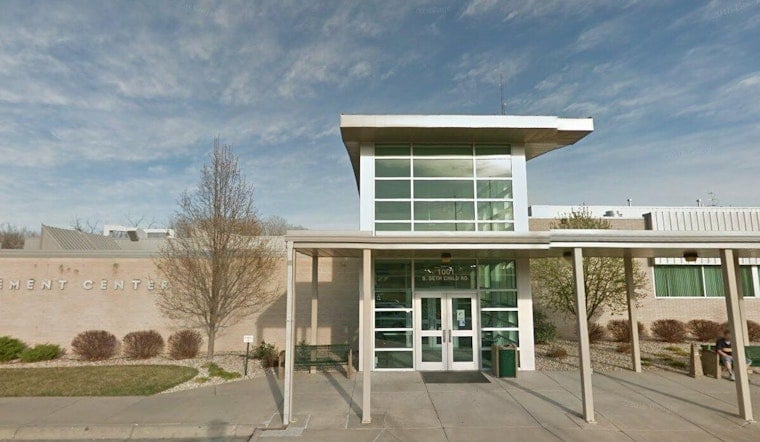
A 40-year-old Manhattan man was arrested early Saturday after allegedly brandishing a knife during a disturbance at a Kansas State University fraternity house, then getting physical with responding officers, according to Riley County police. Raphael Rashaad Byrd was booked into the Riley County Jail on charges including aggravated assault, battery of a law enforcement officer, interference with a law enforcement officer, and multiple drug offenses.
According to WIBW, the incident was reported around 12:44 a.m. Saturday in the 500 block of Sunset Avenue, with Byrd arrested roughly eleven minutes later at 513 Sunset Ave. That address is listed for Kansas State University's Pi Kappa Phi chapter, according to Kansas State University's chapter records. Police listed a 24-year-old man and a 19-year-old man as victims in the case, though their identities have not been released.
A Fraternity House With Dozens Living Inside
K-State's fraternity records identify Spring 2026 as the relevant reporting period for Pi Kappa Phi but do not establish the chapter's total membership or how many students lived at the Sunset Avenue address. The supplied sources also do not establish a specific description of Sunset Avenue's relationship to fraternity housing and off-campus student rentals or a ranking for Manhattan's town-gown relations. The passage provides local context about the university and surrounding city.
Byrd was booked on aggravated assault along with battery and interference charges tied to his alleged conduct toward officers who responded to the scene. The supplied sources do not establish the applicable legal classification, potential sentence, or statutory definition of assault.
Enhanced Penalties for Alleged Contact With Police
The supplied sources do not establish whether Kansas law increases the severity level or requires consecutive sentencing for offenses involving law enforcement officers. The battery and interference charges filed against Byrd concern his alleged conduct toward responding officers.
Byrd was also booked on possession of a depressant, possession of marijuana, and possession of drug paraphernalia. Total bond was set at $15,000, and as of Monday he remained in the Riley County Jail, per WIBW's reporting. Formal charges will ultimately be determined by prosecutors, and it remains unclear what specific evidence supports each of the drug-related counts.
The arrest comes less than three months after Byrd was cited by Riley County law enforcement on June 24 at Tuttle Creek Boulevard and Leavenworth Street in Manhattan for driving without a license, according to public citation logs reviewed by News Radio KMAN. That earlier stop occurred in central Manhattan, separate from the Sunset Avenue fraternity house where the knife incident later unfolded.
How the Case Fits Into Local Crime Trends
The supplied sources do not establish the Riley County Police Department's governance structure, fiscal-year 2026 operating budget, or year-over-year change. Department officials have noted that Part One property crimes fell to a five-year low in Manhattan as of February 2026, according to law board meeting records.
According to the Riley County Police Department's Crime Reduction Plan, the agency saw an increase in violent crime involving firearms, investigative caseloads and calls for service during the last quarter of 2024. According to the Kansas Bureau of Investigation's 2025 statewide crime statistics, 13,588 crimes were reported for the offenses of murder, rape, robbery, and aggravated assault and battery.
The supplied sources do not establish the 2024 number of crime-index offenses in Manhattan and Riley County or the ratio of property to violent crimes. In its own 2025 Crime Reduction Plan, the Riley County Police Department cited national research showing drug use or distribution is present in more than 86% of homicides and a significant share of violent incidents nationwide — context the department has used to explain why suspects in violent disturbances are routinely screened for concurrent drug offenses, as appears to have happened in Byrd's case.




