

























































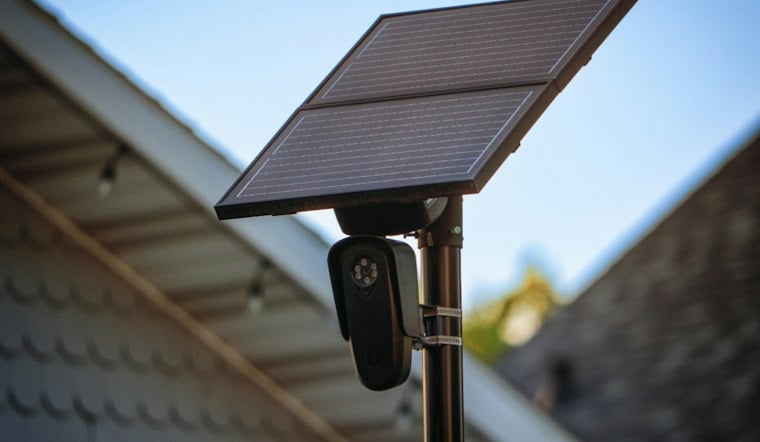
A Mansfield 911 dispatcher resigned in April rather than face discipline after an internal investigation found he had misused the city's Flock Safety license-plate reader system on two separate occasions. Shane Behrendsen's resignation, effective immediately, came just before he was scheduled to attend a pre-disciplinary conference over the findings.
According to public records obtained by the Mansfield News Journal, an internal investigation determined that Behrendsen accessed the city's Flock camera network improperly two times before he stepped down.
The exact nature of what Behrendsen searched for, or why, has not been detailed in the records reviewed by the newspaper. He resigned before a scheduled pre-disciplinary conference over the findings.
Mansfield's Camera Network Has Grown for Years
Mansfield Police began testing Flock Safety license-plate readers back in 2022, starting with seven cameras funded by a $22,000 grant before expanding the system citywide, according to reporting from the Richland Source. Department leadership pushed for the cameras as a way to multiply force capacity amid staffing shortages, the outlet's earlier reporting noted. By May 2025, Mansfield Safety Service Director Keith Porch told City Council the city had secured a $141,000 grant through the Ohio Violent Crime Reduction Grant Program, fully funding all 24 of Mansfield's Flock cameras for a third straight year.
The surveillance network extends beyond city limits, too. The Richland County Sheriff's Office approved installing Flock readers at five key county intersections back in September 2022, expanding the technology along major thoroughfares under grants administered through Mansfield Police, the same outlet's reporting from that year shows.
Ohio Law on Database Misuse
Unauthorized access to or dissemination of information from state law-enforcement databases such as LEADS or OHLEG is classified as a fifth-degree felony under Ohio Revised Code Section 2913.04. Misuse of a private Flock platform falls outside that statute absent another applicable offense. The Ohio Law Enforcement Gateway has strict audit trails and statutory penalties for misuse, per the Ohio Attorney General's Office.
Behrendsen's case is not an isolated one in Ohio or nationally. On August 21, Hoodline reported that a Highland Heights dispatcher quit after an internal review uncovered roughly 20,000 unauthorized Flock camera searches.
A National Reckoning Over Camera Misuse
An August 2026 national investigation found that at least 50 law enforcement officers across the country had been charged with or accused of misusing Flock Safety and other automated license-plate readers, according to The Washington Post. The findings helped spur changes at both the vendor and municipal level.
Flock Safety announced nationwide policy changes in August 2026, requiring users to input criminal case numbers for searches, automatically flagging abnormal search volume, and cutting default data retention from 30 days down to seven, as reported by Recorded Future News; the company's announcement about mandatory search-history audits was dated August 17. That same month, an independent lookup tool called Have I Been Flocked launched, letting motorists query a database of more than 241 million Flock search audit logs obtained through public records requests, according to Newsweek.
Other Ohio jurisdictions have taken more drastic steps. In September, Columbus Mayor Andrew Ginther temporarily paused the city's Flock camera network amid an investigation into potential officer misuse, as reported by the Montgomery-Blue Ash Courier, while WVXU reported that Hamilton County Sheriff Charmaine McGuffey suspended the county's 75 Flock cameras over data-sharing concerns. Cincinnati's City Council has also been weighing new rules for license-plate cameras and drones; the city contracts with Axon, not Flock, for its license-plate reader technology, a debate Hoodline covered in a recent look at municipal reviews of the technology statewide.
For now, Behrendsen's departure stands as Mansfield's local entry in a statewide pattern of dispatchers and officers stepping down rather than face the consequences of misusing tools originally sold to communities as crime-fighting force multipliers.





