

























































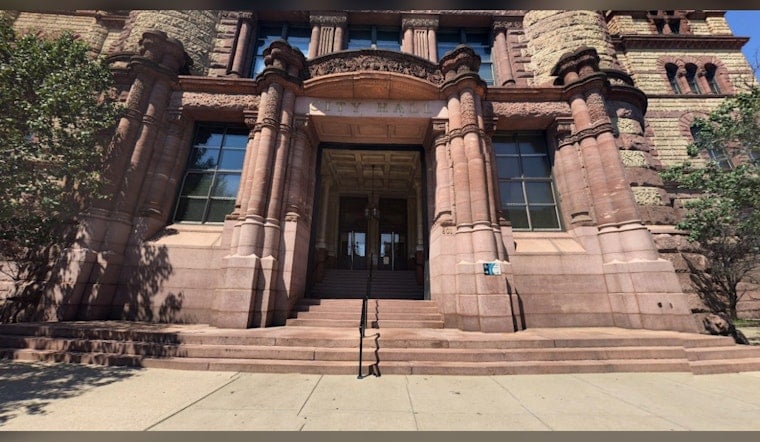
Cincinnati City Council's Budget, Finance and Governance Committee is set to dig into how the city deploys license plate readers, drones and security cameras during a 1 p.m. meeting Tuesday, with a motion on the table that would force the administration to open its books on data retention, deployment locations and outside data-sharing deals within 30 days.
The motion, filed by Councilmember Anna Albi and detailed in City of Cincinnati records, asks for a report covering current surveillance deployments, retention timelines and data-sharing agreements, while directing the administration to draft an ordinance requiring council approval for related contracts going forward. Albi's motion also calls for an annual surveillance impact report and greater council oversight of future contracts, according to WLWT. It was co-sponsored by Councilmembers Seth Walsh and Jeff Cramerding.
Notably, Cincinnati does not run Flock Safety cameras at all. As reported by 91.7 WVXU, the city instead contracts with Axon Enterprise for its license plate reader technology, meaning Tuesday's debate centers on Cincinnati's own Axon-powered system rather than the Flock hardware that has dominated headlines elsewhere in the region.
A Regional Backlash Already in Motion
Cincinnati's review lands amid a broader reckoning across Greater Cincinnati and Northern Kentucky. The station's report notes that at least eight municipalities in the region — including Oxford and Pierce Township in Ohio — have paused, terminated or allowed automated license plate reader contracts to expire over privacy concerns, with Oxford becoming the first Ohio municipality to fully eliminate its 14-camera Flock contract last month. Hoodline previously covered Pierce Township's exit from its Flock contract as part of that wave.
Just five days before Cincinnati's committee meeting, Hamilton County Sheriff Charmaine McGuffey temporarily suspended her office's use of all 75 Flock Safety cameras deployed across the county, citing the need for clearer data-sharing safeguards, per the same account from 91.7 WVXU. The county's camera network costs roughly $225,000 a year to maintain and covers multiple townships. On the same day, Columbus Mayor Andrew Ginther paused that city's own Flock camera network while officials investigated potential officer misuse of the system, according to the Montgomery-Blue Ash Courier.
Why Ohio's Records Law Complicates Oversight
Part of what's driving Cincinnati council members toward home-grown rules is a gap in state law. An amendment to Ohio Revised Code Section 149.43 that took effect in late 2025 explicitly excludes images and data captured by automated license plate recognition systems in law enforcement databases from the definition of public records, according to the Ohio Laws database. Ohio also has no statewide statute capping how long that data can be retained or requiring regular audits, leaving individual cities and counties to write their own guardrails.
Kentucky has taken a different path. House Bill 58 took effect on July 15, establishing a statewide 90-day retention cap on automated license plate reader data and banning the sale of raw data to third parties, per documentation from the City of Independence, Kentucky. Kentucky Rep. John Hodgson introduced the bill after public concerns arose over stalking and broad data sharing across Northern Kentucky. Hoodline earlier reported on Edgewood's own pause on license plate cameras amid that same regional shift.
Cincinnati's Own Precedent on Data Sharing
Tuesday's discussion isn't Cincinnati's first move on surveillance limits. In February, City Council adopted a motion prohibiting the city from sharing real-time data or footage from city-owned surveillance technology with third parties for civil immigration enforcement without a court order or warrant, according to city records. That measure was sponsored by Albi, Vice Mayor Jan-Michele Lemon Kearney and Councilmember Ryan James.
The city has also been actively investing in the very technology now under review. Cincinnati City Council passed an ordinance last September transferring more than $5.4 million from general account reserves into public safety measures, including funding for license plate readers, drones and mobile camera trailers, according to Signal Cincinnati. That ordinance was sponsored by Councilmembers Meeka Owens and Cramerding.
Misuse Cases Elsewhere Fuel Calls for Audits
Concerns about oversight aren't hypothetical. A police dispatcher in Highland Heights, Ohio resigned last month after an internal audit uncovered more than 20,000 unauthorized searches performed on the department's Flock camera system, as Hoodline previously reported. Unauthorized access to law enforcement databases is punishable as a fifth-degree felony under Ohio Revised Code Section 2913.04.
That case, along with the pauses in Hamilton County and Columbus, has left Cincinnati lawmakers under pressure to build strict local oversight into any future contracts. Albi's motion would give the administration 30 days to lay out exactly how long camera, drone and license plate reader data is kept, where the equipment is deployed, and whether that data is shared with outside agencies — the baseline information council members say they need before deciding how far to tighten the city's own rules.



