

























































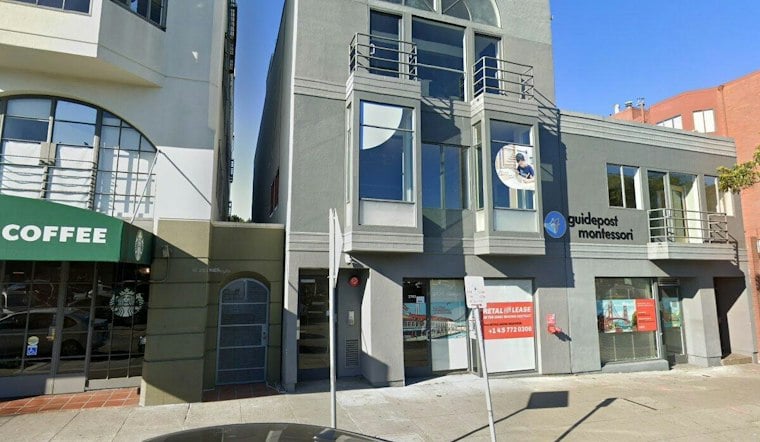
Freshmen at Alpha School's Marina campus are spending their first eight weeks of high school chasing social-media followers, sitting through recorded critiques from their own parents, and volunteering for unpaid grunt work — all while wearing heart-rate monitors that track how they handle the stress. The $75,000-a-year school, tucked into 3741 Buchanan Street, calls it a boot camp. Critics call it something closer to an initiation ritual.
The eight-week program contains 18 separate “challenges,” according to The San Francisco Standard. One challenge asks students to build a following of 100 people on X by posting daily. Another challenge instructs freshmen to hear a recording of their parents criticizing them in front of their classmates — and to pass, they must keep their pulse within 10% of their resting baseline while listening.
Heart Monitors and Hard Truths
Alpha School frames the parental-critique exercise as a lesson in hearing hard truths without shutting down, according to language on the school's own website cited in the Standard's reporting. Freshmen wear the heart-rate monitors throughout the boot camp, and the station's report notes that students fail challenges outright if complaints or victim language show up in the transcript of their reactions. A third challenge pushes students to volunteer for what the school calls an “unglamorous” unpaid job and then record themselves talking about the experience afterward.
The program's challenges are presented as exercises that families may experience differently.
A Flashpoint in the AI-Education Fight
The boot camp has become a flashpoint in the broader debate over artificial intelligence's role in classrooms, the Standard reports. Alpha's model pairs that AI-driven instruction with the life-skills workshops that produce challenges like the parental critique and the volunteer-labor assignment. According to Alpha's own San Francisco campus page, the approach is designed to let students “crush their academics in two hours,” freeing the rest of the school day for workshops on leadership, grit, financial literacy and entrepreneurship.
Not everyone agrees on how much time that academic work actually takes. A reviewer who studied the school firsthand, writing on Astral Codex Ten, said students typically start on what the school calls the “two-hour platform” between 9 and 9:30 a.m. and remain occupied with academics until noon or 12:30 p.m. — longer than the school's own two-hour framing suggests. Alpha describes its personalized learning model as mastery-based, and its materials cite MAP Growth data.
Critics Call It Exploitative Character Education
Benjamin Riley, who founded Cognitive Resonance and has raised awareness of the boot camp's contents, said one student's conscience appeared to be struggling because the student did not fully understand what they were being subjected to. The boot camp has drawn criticism over its approach to character education and entrepreneurship. Alpha proponents counter that the program teaches genuine life skills and delivers more academic rigor than a traditional classroom, and the school itself says the challenges build resilience and online savvy.
One student, identified only as Izzy, appears in the Standard's reporting about the X challenge. Izzy said classmates laughed through the parental-critique feedback and pushed back on what she described as chronically online adults questioning her education. Alpha promoted student social media posts explaining the 18 challenges as part of the rollout.
Rapid Growth Across a Shifting Campus Count
Alpha's first location was in Austin, Texas. The school has a San Francisco campus, with planned expansion in Palo Alto and the East Bay. Just how large the network has become depends on which account you believe: The Standard describes Alpha as a network of 14 nationwide private schools, while founder MacKenzie Price told ABC7 News there are now 13 campuses across the country. Price told the station she expects the school to become more accessible and affordable as it expands, and that Alpha is looking at additional Palo Alto and East Bay locations due to growing demand.
Not every campus has stuck. At least five families left Alpha's Brownsville, Texas, campus, which had opened with about two dozen students, according to reporting cited in the dossier. Meanwhile the company has moved upmarket elsewhere: the first Alpha Founders School cohort will enter New York in the fall, with $150,000 annual tuition and a promise of a diploma alongside $1 million in profit from a business they started, a structure detailed by TechBuzz.ai, which reports the school will refund the full $600,000 in tuition if a graduate fails to hit that $1 million profit mark. By contrast, Alpha's Brownsville campus charges just $10,000 a year, underscoring how wide the price range has become across the network — with San Francisco's $75,000 tuition still standing out among the city's private-school options.
Joe Liemandt, a software investor who serves as Alpha's principal, is named in accounts of the school. U.S. Education Secretary Linda McMahon visited Alpha's Austin campus in September 2025. Alpha refers to its non-teacher staff as “guides” rather than teachers, and school leaders describe the boot camp's toughest goals as deliberately designed to seem impossibly difficult for a child to clear — a framing that continues to divide parents, educators and critics watching the Marina campus closely.




