

























































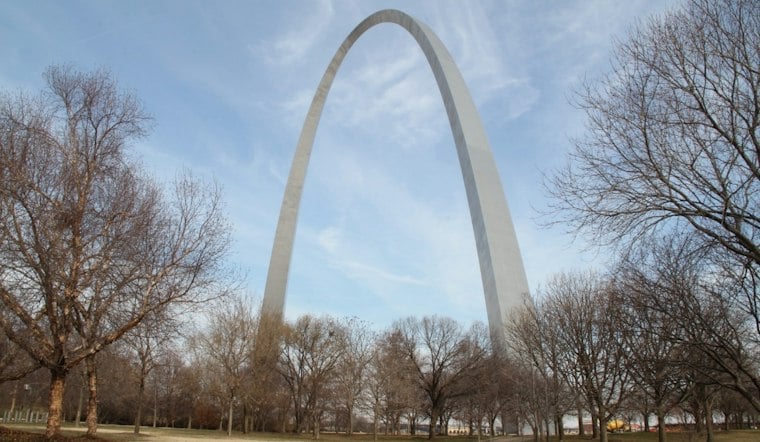
For 23 years, St. Louis has gathered along the Mississippi River to reenact one of the city’s most harrowing chapters in the fight against slavery: Mary Meachum’s 1855 attempt to help enslaved people cross to freedom in Illinois. This year, the story moves downtown. The 24th annual Mary Meachum Freedom Crossing Celebration will take place Saturday, October 10, 2026, in the performance area beneath the Gateway Arch.
The relocation marks a significant shift for an event whose history is documented by Dickinson College’s House Divided project. Recent celebrations have not all taken place in spring: the 2023 gathering was held October 14, and the 2021 event was virtual. Organizers decided to move the theatrical portion of the celebration downtown after 23 years at the original Freedom Crossing site along the river, a change intended to open the story to thousands more people, according to Great Rivers Greenway. The organization says small programs will continue at the original riverside location.
This year’s production, titled Seeking Freedom Long Before and Long After 1776, commemorates America’s 250th anniversary and explores the pursuit of freedom both before and after that milestone, per St. Louis Magazine. A cast of 20 actors will bring dramatic performances, historic spirituals once sung by enslaved people, live music and storytelling tied to Missouri’s past, the Greenway’s program description states. The performance explores freedom before and after 1776.
What Happened on the River in 1855
On the night of May 20, 1855, a small group of enslaved people met at Mary Meachum’s home before attempting to cross the Mississippi River to Illinois, according to House Divided’s detailed chronology. St. Louis Magazine reports that Meachum arranged the escape, with nine enslaved people gathering at Bissell Ferry Landing, where abolitionists waited with a small boat that could carry five people on its first load. Accounts of exactly how many people attempted the crossing differ: House Divided describes a group of about eight or nine freedom seekers, while KSDK reports Meachum organized a trip for about 8 to 10 enslaved people, and Explore St. Louis states that nine enslaved people met Mary at Bissell Point, with four escaping and five captured.
Armed police agents and slave catchers were waiting on the Illinois shore, and at least five freedom seekers were captured and returned to St. Louis in chains, according to the House Divided account. Mary Meachum was arrested after the attempted escape, St. Louis Magazine reports. Her charges were ultimately dropped on July 19, 1855, and she was set free, per House Divided. A municipal account from the City of St. Louis notes she was arrested and charged in criminal court in connection with the escape attempt, though the full charging details are not spelled out in that record.
A Life Built on Faith and Freedom
Mary Meachum was a leader in St. Louis’s Black community during the mid-1800s and devoted her life to education and helping enslaved people pursue freedom. She and her husband, Rev. John Berry Meachum, were described by Great Rivers Greenway as American abolitionists who dedicated themselves to educating and freeing enslaved people. Rev. Meachum founded the first Black church west of the Mississippi River, according to St. Louis Magazine, and the couple also founded one of the first Black churches in St. Louis along with a school, per House Divided.
Rev. Meachum purchased enslaved people from their owners and employed them in his barrel-making business until they repaid their purchase price, at which point he secured their legal freedom, St. Louis Magazine reports. He also taught enslaved people to read and write. Visit Missouri’s account states that the Meachums purchased the freedom of 20 enslaved individuals and operated a free school for Black students. When Missouri banned the education of Black children in 1847, the Meachums moved their school to a steamboat on the Mississippi River, according to Visit Missouri, sidestepping the law by holding classes on the water. Mary Meachum later resurfaced in the historical record in 1864 as president of the Colored Ladies Soldiers’ Aid Society, per House Divided.
Remembering the Crossing Today
In 2001, the National Park Service recognized the original Freedom Crossing site as part of the Underground Railroad Network to Freedom, according to Great Rivers Greenway. The riverside location remains a historic site along the Mississippi, and a colorful mural marks the site. Past celebrations at that site have also included food and drinks, artists and makers, live music and historical skits, according to Explore St. Louis; last year’s event was a two-part celebration themed Unconditional Freedom: Live Free or Die Trying, per the Greenway.
St. Louis Magazine reported on the 2026 relocation. Whatever the exact headcount of freedom seekers that night in 1855, the story organizers are bringing downtown centers on the risk Mary Meachum and her family took, and the community they built around the belief that freedom was worth fighting for.





