

























































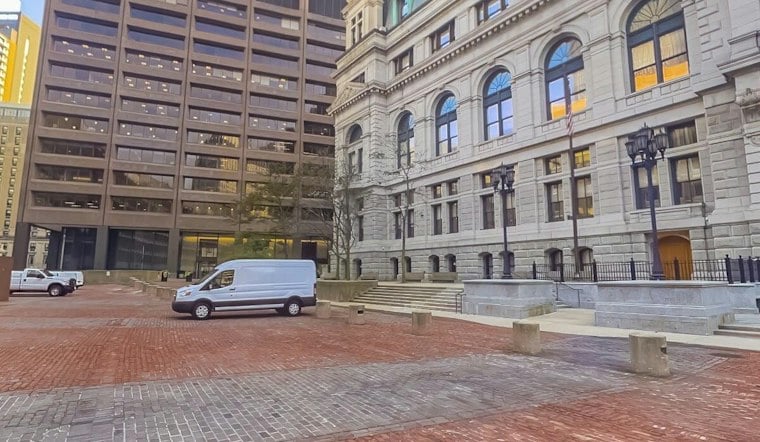
Massachusetts' highest court has once again shot down efforts to unravel the state's signature housing law, ruling unanimously that the MBTA Communities Act is a valid general law and that Marshfield's legal challenge to it fails on every count. The decision, issued Friday, marks the second time the Supreme Judicial Court has upheld the law against a municipal revolt, and it leaves the multifamily zoning mandate fully intact across the 177 communities it covers.
The MBTA Communities Act requires municipalities served by the T to make room for more multifamily housing, according to The Boston Globe. Under the law's guidelines, covered communities must include at least one zoning district of reasonable size where multifamily housing is permitted, located near a transit station if feasible, according to the National Low Income Housing Coalition. The Massachusetts Legislature passed the act in 2021, when Charlie Baker was governor.
Marshfield's Select Board had challenged the law after the town's meeting rejected compliant zoning twice, and the town sued the state, arguing the act amounted to an unfunded mandate. A Superior Court judge rejected that lawsuit, and Marshfield appealed to the Supreme Judicial Court.
Justices Dismiss Infrastructure and Funding Arguments
Justice Serge Georges Jr. ruled that Marshfield's Select Board lacked legal standing to invoke the constitutional voting rights of the town's own town meeting, according to the same Boston Globe report. Georges also dismissed the town's contention that the law created an unfunded local mandate, and the court found Marshfield's infrastructure-strain claim too conclusory and speculative to hold up.
Attorney General Andrea Campbell, who holds the authority to enforce the act, said the ruling reaffirms that the law is constitutional and compliance is mandatory.
Milton's Fight Set the Legal Groundwork
This is not the first time the state's highest court has weighed in. Milton voters rejected a zoning plan aligned with the MBTA Communities Act in February 2024, prompting the attorney general to sue the town to enforce the law, according to the court opinion published on Justia. Milton, which has four MBTA stations along the Mattapan High Speed Line, became the test case that established the law's constitutionality and the attorney general's enforcement power. That earlier ruling also pushed the state's housing agency to reissue the MBTA Communities guidelines as emergency regulations, the National Low Income Housing Coalition reported.
Compliance deadlines have varied by community, with some towns required to meet a Dec. 31, 2023 deadline and others given until the end of 2024 or 2025. As of Jan. 8, 116 communities had come into compliance, per the same nonprofit's tracking. A later count reported that 168 of 177 communities had taken steps to comply.
Political Fallout
The law has not gone quietly. Since its passage it has prompted heated public meetings, contentious referendums, and a flurry of lawsuits from municipalities resistant to the mandate. Mike Minogue has said he would eliminate the policy, arguing local communities should have a meaningful voice in determining how and where housing is developed.
More than 10,000 units are being developed, according to the Globe.





