

























































Marine Corps Air Station Miramar has enlisted an unusual new recruit in its wildfire defense: 471 female Spanish-Boer goats, trucked in from the Central Valley to munch through dry brush across 600 acres east of Interstate 15. The base says it is the first military installation in the United States to try this kind of goat grazing program, a test run set to last through December, according to FOX 5 San Diego / KUSI News.
The goats arrived Tuesday at Marine Corps Air Station Miramar, according to FOX 5 San Diego and KUSI News, and were immediately put to work on former Camp Elliott land, an area now used to gauge just how much vegetation the herd can knock down. The pilot program will track how efficiently the animals clear the thick, dry brush that has long made the surrounding canyons a fire hazard.
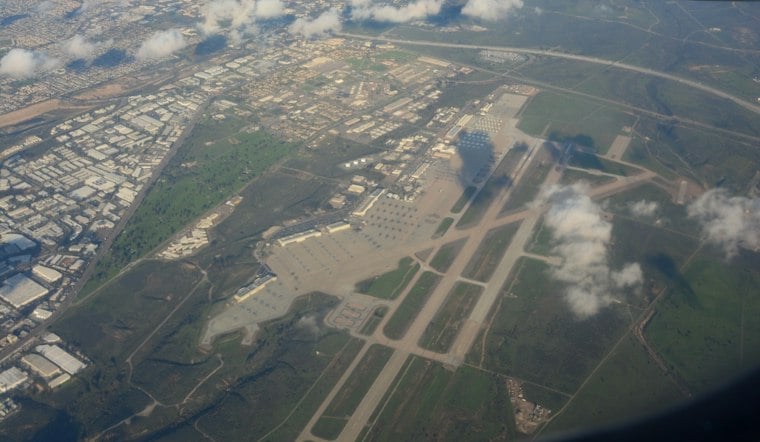
MCAS Miramar includes undeveloped East Miramar. The 600-acre grazing zone sits on former Camp Elliott land.
How the Herd Works the Land
Running the operation is Shepherdess Land & Livestock, which moves the goats daily and sets up new fencing as the herd advances, using dogs and shepherds to keep the animals on task, the station's report notes. The goats are expected to cover three to five acres per year as they graze on the dry, thick brush covering the hillsides.
Founder Cole Bush, who owns Shepherdess Land & Livestock, said 500 goats moving through dry brush will trample and break down the brush on the ground, not just eat it, adding another layer of fuel reduction beyond grazing alone. Bush is a Ventura County-based operator who sits on the California Range Management Advisory Committee and co-directs the Grazing School of the West, according to the Ojai Valley Fire Safe Council.
The herd consists of Spanish-Boer goats. The animals are being used to eat vegetation across the grazing area.
Proven Fuel Reduction, With Military Precedent
The science backing targeted grazing is well established. Targeted grazing can reduce understory wildfire fuel loads in steep or sensitive terrain where motorized equipment and chemical herbicides are restricted, since goats clear fine fuels and low brush without the mechanical sparks that can ignite dry vegetation. The Miramar pilot will test how effectively the goats reduce vegetation.
A Statewide Labor Fight Looms Over Grazing's Future
Even as the ecological case for goat grazing strengthens, the business model behind it remains a consideration for grazing operators.
Grazing operators must also account for the costs of running their businesses.
The Miramar program reflects the use of goats for vegetation management and fire prevention.
For now, Miramar's test remains focused on the ground in front of it: whether a herd of nearly 500 goats can meaningfully shrink the fire risk across 600 acres of former Camp Elliott brushland before the program's December end date, with the base watching closely to see how much vegetation reduction the goats can ultimately deliver.



