

























































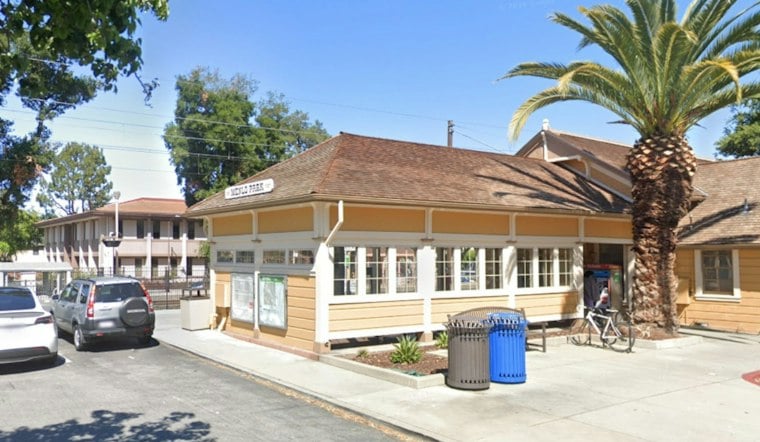
Menlo Park's push to turn three downtown parking lots into affordable housing has hit a financial wall. A new report shows all three developer proposals for the city-owned plazas near the Caltrain station come with funding shortfalls ranging from $19 million to $45 million, and closing those gaps could mean either city money or fewer parking spaces than originally promised.
The findings come from Strategic Economics, a consulting firm hired by the city to evaluate the bids ahead of a Menlo Park City Council study session scheduled for Tuesday, as reported by the Palo Alto Daily Post. The three lots in question — Plaza 1, Plaza 2 and Plaza 3 — total 5.83 acres near Oak Grove Avenue and El Camino Real, all within walking distance of the Menlo Park Caltrain stop, according to the City of Menlo Park's request for proposals issued in September 2025.
Menlo Park must plan for 2,946 new housing units by 2031 under its state-mandated allocation, and the three competing proposals — from Alliant Communities, Presidio Bay Ventures, and a joint bid from Related California and Alta Housing — were unveiled in December 2025, per the Daily Post's reporting. Each developer was required to replace all 556 existing public parking spaces at its own expense, without financial help from the city, a mandate the report says is squeezing every project's bottom line.
Breaking Down the Three Bids
Alliant's proposal calls for 345 apartments, including 60 senior units, targeting residents earning between 15 percent and 80 percent of area median income — which stood at $130,600 for a single person and $186,600 for a family of four in 2025. The plan includes 556 public parking spaces across two garages plus 182 resident spaces. The consultant could account for $268.2 million in capital sources for the proposal, whose project budgets total about $310.99 million. Alliant has a $20 million funding gap that it proposes covering with a $10 million city impact-fee loan and $10 million in soft debt, according to the Daily Post's account of the report. A more granular breakdown from MonitorMenlo.news shows Alliant's full capital stack running to $79.1 million in conventional debt and $169.2 million from affordable housing sources on top of that public support.
Presidio Bay's proposal includes 347 apartments for residents earning 80 percent to 120 percent of area median income, with 556 public spaces and 258 resident spaces — but its $45 million funding gap is the largest of the three. The developer has proposed covering it through waivers of all city fees, a community benefit contribution tied to its separate USGS site development, and other unspecified sources of city support, the report found. Presidio Bay acquired the 17.75-acre former U.S. Geological Survey campus at 345 Middlefield Road in 2025 for $137 million, and in a June 2026 filing detailed a $1 billion master-planned redevelopment there featuring 670 residential units, 118 of them deed-restricted affordable, alongside 713,000 square feet of office space, according to the SF YIMBY.
The Related California and Alta Housing bid proposes 500 apartments — 154 market-rate and 126 senior units — targeting residents earning 30 percent to 60 percent of area median income. Its funding gap is smallest at $19.2 million, but the team did not present a plan for covering it, the Daily Post reported.
Possible Fixes on the Table
Strategic Economics reported that the 556-space parking replacement requirement could be reduced, and suggested the city encourage walking or biking downtown to ease parking demand overall. Other options floated in the report include a voter-approved sales tax increase to fund a parking garage or transportation improvements, charging for parking in any new garages, installing parking meters on downtown streets, an annual fee on downtown property and business owners to help cover garage costs, or earmarking part of the property-tax revenue growth from new development toward parking.
Any path forward also runs through California's Surplus Land Act, which requires local agencies disposing of public land to follow strict state procedures that prioritize affordable housing developers — meaning Menlo Park would need to pass formal surplus land declarations and potentially seek state exemption findings for a mixed-income bid like Presidio Bay's, according to the City of Menlo Park's own analysis. Separately, state law already complicates the picture: Assembly Bill 2097, passed in 2022, bars cities from enforcing minimum parking requirements on projects within a half-mile of major transit stops like the Caltrain station — even as Menlo Park's own RFP demanded full replacement of all 556 spaces.
Measure P Adds a Wild Card
Layered on top of the financing puzzle is Measure P, a citizen-initiated ballot ordinance that would require voter approval before the city develops any of its eight downtown parking lots. The measure's text declares that downtown Menlo Park must remain navigable by car with sufficient parking for visitors and workers, and it heads to voters on November 3.
Proponents with Save Downtown Menlo said the raw signatures they gathered represented more than 15 percent of Menlo Park's voting population; the validated count was 2,200, only slightly above the required threshold. The measure also contains a legal defense and indemnification clause: if the city fails to appeal an adverse court ruling against the ordinance, proponents are authorized to defend it themselves as agents of the people, with the city covering their legal costs, per the League of Women Voters of South San Mateo County's impartial analysis of the filing.
The League formally registered as an official opponent of Measure P in August, arguing that mandatory voter referendums build administrative barriers that raise housing costs and delay municipal planning. Opponents of the measure have also said parking is vital to downtown and that new housing could be built elsewhere, pointing to the Bohannon Industrial Park and the former USGS site on Middlefield Road as alternative locations. The Yes on Measure P campaign has countered that the city can meet its housing goals without sacrificing downtown parking.
The cost debate has spilled into local politics as well. City Council candidates sparring over filings this month noted that delivering below-market-rate apartments through private projects like Parkline runs roughly $90,000 in public subsidy per home, compared with $100,000 to $250,000 per home on the downtown parking lots, largely because of the high cost of replacement parking and land valuation, according to the Palo Alto Daily Post's coverage of the race.
Menlo Park Council Weighs Findings
Menlo Park's City Council is set to weigh the Strategic Economics findings at Tuesday's study session, just over a month before voters decide the fate of Measure P.





