

























































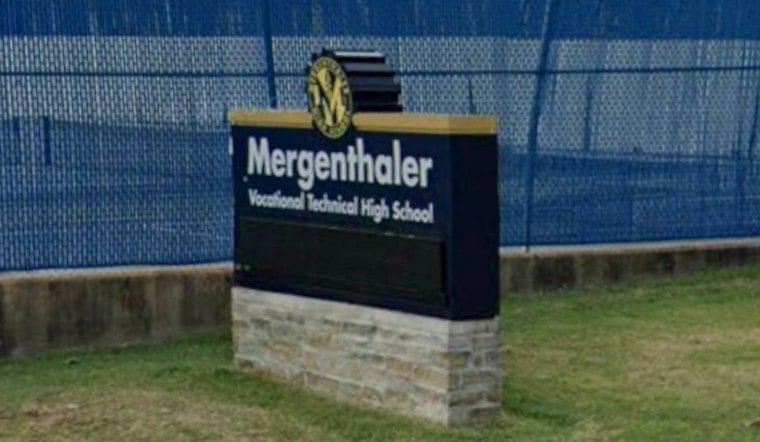
A 3,000-pound piece of 19th-century printing history rolled into Mergenthaler Vocational-Technical High School this week, and it didn't come cheap to move — even though the machine itself sold for just $500. The Linotype, a mechanical marvel that once powered newspapers around the world, now sits in the school's parent and alumni information center, visible from the lobby, where staff, students, and Baltimore Mayor Brandon Scott gathered to watch it get moved into place on Tuesday.
The machine was invented by Ottmar Mergenthaler, a German-born watchmaker who moved to Baltimore and gave the high school its name, according to WBAL-TV 11 Baltimore. Mergenthaler's invention in the late 1800s revolutionized the printing industry, dramatically cutting the time required to mass print newspapers and publish books. The technological leap was so significant that Thomas Edison reportedly called the Linotype “the eighth wonder of the world,” according to the South Baltimore Peninsula Post.
Finding a working Linotype in 2026 is no small task. Per WBAL-TV's reporting, Mervo school leaders needed help from the Baltimore Museum of Industry to track one down, eventually locating one in Virginia. The station's report notes the machine's owner gave it to the school for $500, but getting it to Baltimore was a different story: transport alone cost close to $8,000, according to Alicia Wilson, vice president of civic engagement and opportunity at Johns Hopkins University and a Mervo alum, who said the price reflected the machine's 3,000-pound weight. Johns Hopkins University sponsored the transport, per the same account.
Why Surviving Machines Are So Rare
The scarcity Mervo encountered isn't surprising. Out of more than 200,000 linecasting machines built between 1886 and the 1970s, fewer than 1,000 are estimated to still exist today, and only a small fraction of those remain operational, according to the Museum of Printing. Phototypesetting eventually replaced Linotype machines across much of the industry.
That industry shift happened fast once it started. Linotype machines dominated global publishing for nearly a century before hot-metal typesetting was phased out during the 1970s and 1980s in favor of phototypesetting and digital computer systems, per Jewish Currents. Before Mergenthaler's design won out, the race to automate typesetting drew other inventors and investors into the fray — author Mark Twain famously lost a personal fortune backing a rival machine called the Paige Compositor, according to the International Printing Museum.
A Living Lesson for Mervo Students
For students at Mervo, the machine is more than a museum piece sitting in a hallway. John Bishop, a senior at the school, said his trade teacher showed students a video about Mergenthaler and the school's history before the machine arrived, per WBAL-TV's account. Principal Dr. Jermaine Skinner explained that the Linotype gives students historical context and background about the school itself, and called it a reminder of what is possible.
Mayor Brandon Scott, himself a Mervo alumnus, attended the machine's arrival at the school where he once studied. Mervo plans to install a plaque next to the Linotype detailing both the machine's history and Mergenthaler's story, ensuring future students understand the significance of what now greets them from the lobby.
Baltimore's Deep Ties to the Invention
Mergenthaler perfected his linecasting invention in Baltimore during the 1880s, though mass manufacturing of the machine eventually moved north. The Mergenthaler Linotype Company built a 10-building factory complex in Brooklyn, New York, between 1895 and 1927, according to a related report from Hoodline's coverage of the former Brooklyn site. The Linotype made its commercial newspaper debut on July 3, 1886, at the New York Tribune, whose publisher Whitelaw Reid reportedly coined the machine's name after watching it produce a line of type, per Jewish Currents.
Baltimore still offers another place to see the technology in action. The Baltimore Museum of Industry maintains a working 1936 Model 8 Linotype in its print shop exhibit, and the museum marked the machine's 90th anniversary this past July, according to the South Baltimore Peninsula Post.
Mergenthaler Vocational-Technical High School, established in Baltimore in 1953 and named for the inventor, currently offers 22 state-approved trade pathways, including Graphic Arts and Printing, according to background compiled on Wikipedia. The school enrolled 1,832 students during the 2021–2022 school year, operating as one of two main vocational-technical high schools in Baltimore City alongside Carver Vocational-Technical High School.





