

























































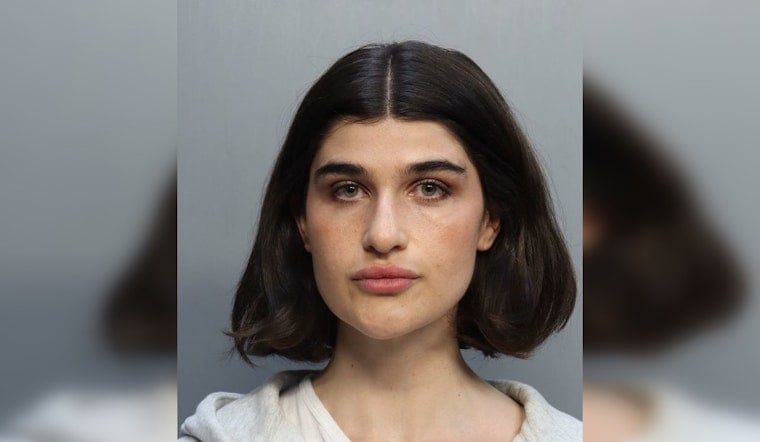
A Miami-Dade therapist accused of having sex with a patient appeared in bond court this week, the latest local case to test Florida's strict criminal ban on sexual contact between mental health providers and the people they treat. Under state law, it does not matter whether the patient consented — that defense is explicitly off the table in court.
According to NBC 6 South Florida, the therapist appeared before a judge as part of standard bond proceedings, where a defendant's initial bail terms and formal charges are set. The station's report frames the case around the same set of allegations: sex between a therapist and someone under his professional care.
Why Consent Doesn't Matter Under Florida Law
Florida Statute § 491.0112 makes it a third-degree felony, on a first offense, for a psychotherapist to engage in sexual misconduct with a current client — or with a former client if the professional relationship was ended primarily to pursue sexual contact, according to the Florida Senate. Critically, the statute bars client consent as a legal defense in these prosecutions, according to Online Sunshine, the state's official statutes portal. Lawmakers built the rule around the idea that the power imbalance inherent in a therapeutic relationship makes a patient's agreement legally meaningless.
If a conviction results, a third-degree felony under this statute carries a maximum of five years in state prison and a $5,000 fine, per Florida Statutes § 775.082 and § 775.083. The charge can climb higher, too: if a therapist engages in misconduct through what the law calls “therapeutic deception” — falsely telling a patient that sexual contact is part of treatment — the offense becomes a second-degree felony, which carries steeper prison exposure, according to FindLaw's breakdown of the statute.
Who Counts as a Psychotherapist Under State Law
The statute's definition of “psychotherapist” is broad by design. It covers licensed physicians, nurses, psychologists, clinical social workers, marriage and family therapists, mental health counselors, and, per FindLaw, anyone who simply purports to provide mental health counseling — a scope meant to keep unlicensed or non-traditional counselors from slipping through a legal loophole.
Beyond prison time, a conviction carries consequences that extend well past sentencing. Florida legislative reports note that a conviction under § 491.0112 is classified as a felony sexual offense, which permanently blocks automatic restoration of voting rights after a sentence is served, according to the Florida Senate. Separately, licensing regulators can act on their own timeline: under Florida Administrative Code Rule 64B4-5.001, state boards can impose penalties for a first sexual misconduct offense ranging from a $1,000 fine and one-year suspension all the way to full license revocation, according to the Health Care Law Blog. It remains unclear whether any such administrative complaint has been filed against the therapist's license in this case, or whether investigators have interviewed additional patients or facility staff.
Part of a Pattern in Miami-Dade
This bond hearing lands amid a string of similar Miami-Dade cases. In July 2025, City of Miami Police arrested 33-year-old therapist Manuel Enrique Garcia after three female patients at a local treatment facility accused him of sexual assault during private therapy sessions, according to CBS News. And in October 2024, Miami-Dade Police arrested 32-year-old Leandro Pardo-Fuentes on sexual battery charges after a 25-year-old client accused him of assaulting her during an appointment at a West Miami-Dade spa, a case Hoodline previously covered in detail; he was booked into the Turner Guilford Knight Correctional Center.
The pattern isn't confined to Miami-Dade. In March 2026, Polk County prosecutors charged Lakeland therapist Daniel Wayne Bartlett II under § 491.0112(1) with third-degree felony psychotherapist sexual misconduct for allegedly engaging in sexual relations with a long-term patient, according to The Space Coast Rocket. Court records in that case reportedly showed investigators leaning on electronic communication records to establish the boundary breach, illustrating how prosecutors across Florida jurisdictions have moved to enforce the statute.
As with any criminal case, the allegations against the Miami-Dade therapist remain unproven accusations at this stage, established only through a preliminary bond hearing rather than a trial or plea. What happens next — including whether prosecutors pursue the base third-degree felony or seek an enhancement — will depend on the evidence gathered as the case moves forward.





