

























































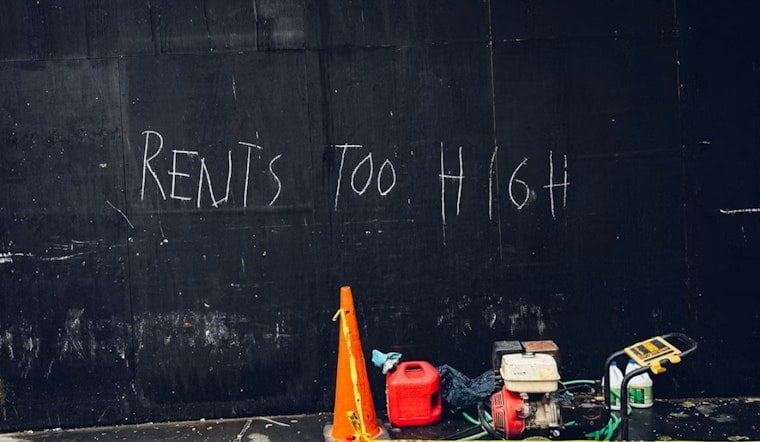
A one-bedroom in Birmingham can now run more than $2,800 a month, while a similar unit an hour north in Burton might rent for under $1,000 — and that nearly $1,900 gap sits inside the same state, sometimes the same commuting radius. New Zillow Observed Rent Index figures covering 235 Michigan ZIP codes lay out just how far apart the state's rental markets have drifted, with typical asking rents ranging from about $900 to just over $2,800 a month.
The data, seasonally adjusted as of July 31, comes from MLive, whose analysis by reporter Michael Kransz maps rents across every ZIP code Zillow tracks in the state, drawing on rental listings in the 35th to 65th percentile range to represent a typical asking price. The report includes both single-family and multifamily rentals, and its interactive map colors lower-rent ZIP codes green and higher-rent ones red, according to the same MLive breakdown. Flint, Detroit, and several smaller Michigan cities land at the bottom of that scale, while Metro Detroit, Ann Arbor, Grand Traverse Bay, and Grand Rapids post some of the state's highest typical asking rents, per the outlet's findings.
Oakland County Suburbs Dominate the Top of the List
Birmingham's 48009 ZIP code tops the state with a typical asking rent of $2,806 a month, the highest figure MLive's analysis found anywhere in Michigan. Novi's 48374 follows at $2,721, with Troy's 48085 close behind at $2,708 and Bloomfield Hills' 48304 at $2,686 — all four in Oakland County, according to the MLive data. Brighton's 48116 in Livingston County rounds out the top five at $2,642.
Those numbers track closely with local income levels. Census ACS estimates for 2020 through 2024 put Oakland County's median household income at $97,760, with a median owner-occupied home value of $343,600, according to the U.S. Census Bureau. MLive's own analysis notes that Michigan ZIP codes with higher asking rents tend to also carry higher home values, while lower-rent areas tend to have lower home values — a pattern the Oakland County suburbs illustrate on the expensive end.
Flint and Detroit Anchor the Cheapest End
At the other extreme, Burton's 48529 ZIP code in Genesee County has Michigan's lowest typical asking rent at $910 a month. Two Flint ZIP codes, 48505 and 48209 in Detroit, are tied for the second-lowest spot at $913, with Flint's 48503 at $948 and Davison's 48423 at $958 rounding out the bottom five, per the MLive figures.
The economic backdrop in those communities looks starkly different from Oakland County's. Flint's median household income sits at $37,646 with a poverty rate of 34.1%, according to Census Bureau estimates. Detroit, where the 48209 ZIP code posted that $913 asking rent, has a citywide median household income of $39,209 and a 34.5% poverty rate, per Census figures — numbers that help explain why asking rents there sit under $1,000 even as some suburban ZIP codes command triple that amount.
A Statewide Squeeze on Renters
Even where rents look cheap on paper, affordability remains a widespread problem. The 2024 Michigan Statewide Housing Needs Assessment found that roughly half of all Michigan renters spend more than 30% of their gross income on housing, the threshold generally used to define being cost-burdened, according to the Michigan Housing Data Portal. The National Low Income Housing Coalition separately estimates the state is short by 195,462 rental units that are both affordable and available to extremely low-income households, who make up 28% of Michigan's renters.
Nationally, the picture is similarly stretched. Typical U.S. asking rents reached $1,962 a month as of July 2026, requiring an annual household income of $78,488 to afford comfortably, according to Zillow Research. That's still well below the nearly $99,800 income Zillow says is needed to comfortably afford a typical mortgage payment, a gap the firm's data puts at more than $21,000 a year in favor of renting over buying.
Why Cities Can't Just Cap the Rent
Michigan cities facing runaway rents in places like Birmingham have no legal path to impose local rent control. Under Michigan Compiled Laws Section 123.411, part of a 1988 state act, municipalities are barred from enacting or enforcing any ordinance that caps what landlords can charge on private residential property, leaving pricing entirely to market forces statewide.
State officials have instead focused on expanding supply. Under Michigan State Housing Development Authority benchmarks updated by Governor Gretchen Whitmer, the state set a goal to build or rehabilitate 115,000 housing units by the end of fiscal year 2026 — up from an original 75,000-unit target set in 2024, according to the State of Michigan. Hoodline has previously reported on a $42 million tax credit push tied to that broader effort, and on projects like the reopened Rohns Apartments in Detroit, which brought 17 units online with rents starting around $900 — squarely in line with the bottom-tier ZIP codes identified in the new Zillow figures.
Protections That Do Exist for Renters
While Michigan renters can't count on rent caps, state law does set some boundaries around move-in costs and rent hikes. Under Michigan Compiled Laws Section 554.602, landlords statewide are barred from requiring security deposits that exceed 1.5 times the monthly rent, regardless of property type. Separately, MCL 554.134 requires landlords to give month-to-month tenants at least one full rental period's notice — typically 30 days — before a rent increase takes effect, though state law sets no ceiling on how much that increase can be.
Those rules apply whether a tenant is signing a lease in Birmingham at $2,806 a month or in Burton at $910, even as the market forces shaping those two numbers remain worlds apart. The full interactive breakdown of all 235 ZIP codes, including where individual neighborhoods fall between those extremes, is available through MLive's original analysis.





