

























































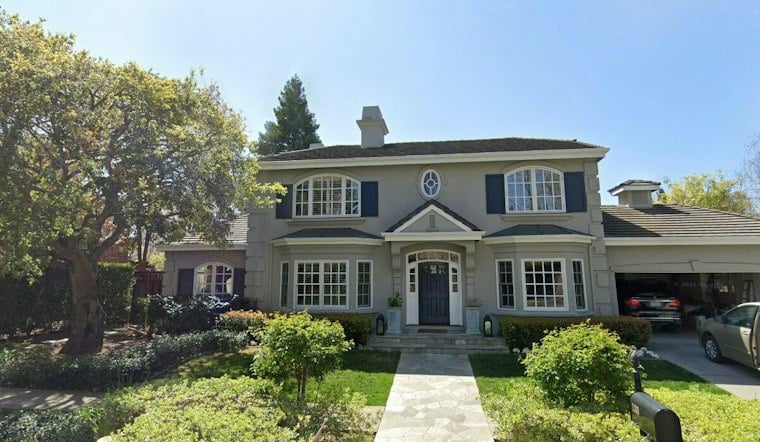
Homes in Palo Alto, Los Altos and Menlo Park are selling in single-digit days, often for $1 million or more above asking price, yet the supply of homes coming onto the Midpeninsula market varied by city in 2026. Buyer demand has intensified since fall 2025 across all four cities, but the number of sellers willing to list simply hasn't kept pace, leaving the region locked in a stark imbalance between hungry buyers and available houses.
According to Palo Alto Online, new single-family-home listings in Palo Alto actually declined 9% during January through August 2026 compared with the same period a year earlier, while Los Altos listings stayed essentially flat and Menlo Park rose 2.2%. Homes sold in Palo Alto, Los Altos and Menlo Park changed little and slipped slightly year over year during that same stretch, the outlet reports, even as limited inventory, quick sales, multiple offers and upward price pressure continued to define the market.
The numbers on how fast and how high homes are selling are striking. Nearly 80% of single-family homes in Palo Alto, Los Altos and Menlo Park sold at or above asking price, per the same report, with median days on market running just 8 to 9 days. More than 70% of homes listed in those three cities found buyers, and roughly one-third of sales in Palo Alto and Los Altos closed more than $500,000 above asking.
Atherton's Bidding Wars Reach New Extremes
Atherton stands out as the most extreme example of buyers chasing too few homes. The town saw 19.3% of its single-family home sales close more than $1 million over asking during 2026, up sharply from 7.2% in 2025, the outlet's analysis found. Atherton's median sale price jumped to $11.3 million, up 17.1% from $9.65 million, even as new listings there declined roughly 11% during the first eight months of the year.
Palo Alto and Menlo Park saw similar, if less dramatic, spikes in blowout sales. Palo Alto's share of homes selling more than $1 million over asking rose to 6.6% in 2026 from 2.7% in 2025, while Menlo Park went from zero such sales in 2025 to 3% in 2026, according to Palo Alto Online's figures. Los Altos held closer to steady, with 10.6% of sales landing $1 million or more over asking compared with 10.5% a year earlier, alongside a median sale price of $4.92 million, up 2.5% from $4.8 million.
Neighborhood Snapshots Show Widening Gaps
Within Palo Alto, the report highlights sharp neighborhood-level swings. Old Palo Alto's median sale price climbed to roughly $9.1 million, up 58% year over year, with 15 homes listed above $10 million compared to 10 during the same period last year. Crescent Park's median reached nearly $7 million, about 9% higher than a year earlier — a trend that tracks with a $17.5 million Crescent Park sale Hoodline reported in January.
Barron Park's median sale price rose to approximately $4.3 million, up about 21%, with one newly constructed home selling for more than $7.4 million and an older home fetching nearly $5 million, more than $1.4 million above its asking price, per the same account. Green Acres posted a median sale price of roughly $4.6 million, up 31%, while in Atherton, older homes on roughly 1-acre lots in Lindenwood crossed the $11 million threshold.
Why Sellers Won't List, Even at These Prices
Cash is fueling much of this frenzy. Nearly 40% of Palo Alto purchases during the first eight months of 2026 were all-cash, alongside about 37% in Menlo Park and roughly 33% in Los Altos, the outlet's data shows. Yet higher prices haven't been enough to motivate homeowners to sell, and the structural reasons why run deeper than simple reluctance.
Federal tax rules can create a financial disincentive for longtime homeowners to sell. Under federal tax law, homeowners selling a primary residence can exclude only up to $250,000 in capital gains for single filers or $500,000 for married couples, according to the California Franchise Tax Board, caps set in 1997 that were never indexed to inflation. After decades of home-price appreciation, longtime homeowners may face federal tax exposure when they sell.
Separately, California's Proposition 13 limits annual property tax assessment increases to 2% or the rate of inflation, whichever is lower, based on a home's original purchase price, per the Santa Clara County Assessor's Office. Its treatment of an owner who sells and buys another California home is not addressed here.
Policy Fixes Underway, But Relief Is Limited
Some relief already exists for older residents. Proposition 19 is also part of the policy discussion, but its relevant eligibility rules and tax-base calculation are not detailed here.
At the federal level, Rep. Jimmy Panetta has reintroduced the More Homes on the Market Act, bipartisan legislation that would double the primary residence capital gains exclusion to $500,000 for single filers and $1 million for married couples while indexing the thresholds to inflation, according to the Atlanta Realtors Association. The National Association of Realtors estimates nearly 13 million U.S. homeowners face potential tax penalties upon selling under the current caps. Federal proposals to expand capital-gains exclusions could encourage longtime owners to finally sell.
Mortgage rates add another layer of lock-in. Mortgage rates have generally remained in the 6% range, according to Redfin. On the Midpeninsula, mortgage rates add another layer to the tax-driven reluctance to move.
State Mandates Push Density, But Not Single-Family Supply
Meanwhile, state housing mandates are reshaping what gets built, even if they haven't loosened the single-family logjam. Palo Alto must plan for 6,086 new housing units under the state's 6th-cycle Regional Housing Needs Allocation covering 2023 through 2031, a 206% increase over its prior target, according to the City of Palo Alto. Menlo Park must accommodate nearly 3,000 new units, while even low-density Atherton is required to plan for 348, per the City of Menlo Park. Those mandates have already prompted one developer to file a 30-unit townhome proposal on a one-acre Atherton parcel, as Hoodline detailed in an August report on SB 79-driven Atherton development.
Locally, Palo Alto's City Council has floated its own creative fix: in August, the council voted 4-3 to direct its Planning and Transportation Commission to study allowing backyard accessory dwelling units up to 1,200 square feet to be sold separately as standalone starter homes, a move Hoodline covered in its report on the ADU sales vote. The underlying wealth concentration in the region remains staggering regardless: San Mateo County's assessment roll hit a record $357.6 billion for the 2026-27 tax year, with growth rates reported for Menlo Park and Atherton, according to the San Mateo County Assessor's Office. Palo Alto Online's analysis also points to AI-industry wealth creation as a potential force that could eventually encourage existing homeowners to trade up, adding more homes to a market where, for now, desirable houses remain far scarcer than the buyers chasing them.





