

























































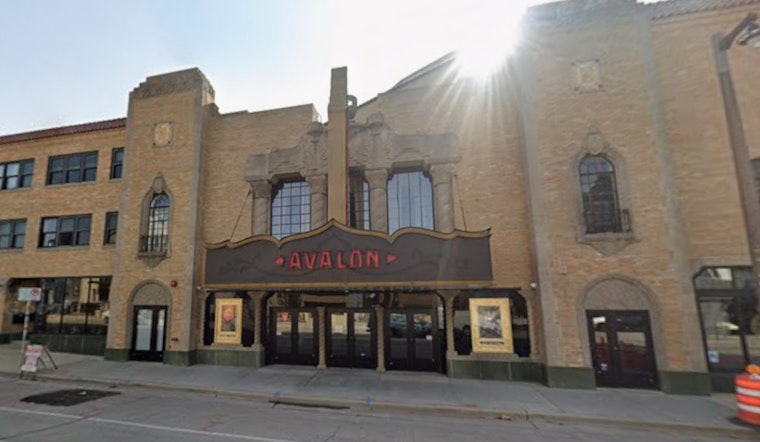
Milwaukee's longest-running film festival is throwing what may be its biggest party yet, and it comes with a bittersweet twist. The 28th Milwaukee International Short Film Festival lands at the Avalon Atmospheric Theater in Bay View September 11-12, 2026, featuring 35 short films, a 50th-anniversary tribute to Wisconsin's cult classic The Giant Spider Invasion, and a farewell of sorts from the festival's longtime leader.
Festival director Ross Bigley announced in July that he is entering semi-retirement due to health issues and that the festival will not take place in 2027, making this year's edition its final main event for the foreseeable future, according to Milwaukee Record. Health challenges over the past five years prompted Bigley to pause the main festival, though future plans for its sub-programs remain under evaluation. Bigley said this year's festival is especially meaningful because it continues a decades-long legacy of championing emerging filmmakers and diverse perspectives, according to TMJ4 News.
From Public Access TV to Milwaukee's Longest-Running Festival
Bigley founded what became the Milwaukee Short Film Festival on public access television in the 1990s before it rebooted in 2003 at neighborhood art-house theaters, growing into Milwaukee's longest-running film festival. The event was named Best Local Festival by MovieMaker Magazine in 2006, the same recognition noted decades into its run.
This year's lineup features 35 short films spanning world and Wisconsin premieres, with 90% produced by Wisconsin-based filmmakers and nearly half of the new entries directed by women, per the same Record report. The festival champions emerging filmmakers, women creators, LGBTQ voices, and diverse perspectives, and short film submissions were capped at a 15-minute maximum runtime.
Voices Heard Marks 11 Years of Spotlighting Local Filmmakers of Color
Among the festival's programming is the 11th annual Voices Heard showcase, which highlights local filmmakers of color. The block was launched in 2015 and curated by Rubin Whitmore as Milwaukee's first dedicated film showcase specifically for local multicultural filmmakers, created to address a lack of dedicated representation for local minority storytellers, according to the showcase's own Voices Heard site. Filmmaker Madeline James McGuire joined The Morning Blend to discuss her Voices Heard short ahead of the screening, per TMJ4.
A 50-Year-Old Wisconsin Cult Classic Gets New Life
The festival's marquee event is a 50th-anniversary celebration of The Giant Spider Invasion, the 1975 B-movie shot around Merrill and Gleason, Wisconsin, on a $300,000 budget that went on to gross more than $15 million, becoming one of the top 50 highest-grossing films in North America that year, according to background compiled from the Wikipedia entry on the film. Local residents and University of Wisconsin-Stevens Point students worked on the crew and prop operations, and the film later gained a second life as a Mystery Science Theater 3000 staple.
This year's screening features a reimagined Special Edition with updated visual effects and newly shot scenes, directed once again by 89-year-old Bill Rebane alongside Wisconsin actor Dan Davies, according to Rogers Cinema. Rebane, an Estonian-Latvian immigrant who moved to Wisconsin in the 1960s, will also receive the festival's Pace-Setter Award. He established The Shooting Ranch in Gleason, a 200-acre facility with purpose-built sound stages, mixing suites, and guest quarters that operated for two decades as the state's first full-service independent movie studio, per the Northwoods News.
Inside the Avalon, Bay View's Last Atmospheric Movie Palace
The screenings unfold inside the Avalon Atmospheric Theater at 2473 S. Kinnickinnic Ave., which opened in May 1929 as one of five original 1920s atmospheric movie palaces in Milwaukee and is the only one still standing, according to the Milwaukee Journal Sentinel. Those atmospheric theaters were known for Spanish and Moorish-style outdoor courtyard decor and starlit fiber-optic ceilings. After sitting dark for more than a decade, the theater underwent a $2 million restoration led by Neighborhood Theater Group owner Lee Barczak, reopening in December 2014 with two screens, reclining seats, digital projection, and full food and bar service while preserving its historic plasterwork.
A Statewide Push to Rebuild Wisconsin's Film Industry
The festival's heavy tilt toward homegrown talent arrives alongside a broader state effort to rebuild Wisconsin's film industry. In January, Wisconsin officially reestablished the statewide Wisconsin Film Office and introduced a 30% film production tax credit funded at $5 million annually, according to Volume One. Wisconsin had previously been one of few Midwestern states without an active film office or production tax incentive, making the festival's 90% Wisconsin-made slate feel connected to a wider policy shift rather than a coincidence.
Tickets for the September 11-12 festival are available on the Avalon Theater's website. With Bigley stepping back and the main festival off the calendar for 2027, it remains an open question whether community organizers or local institutions will step forward to keep programs like Voices Heard running in the years ahead.




