

























































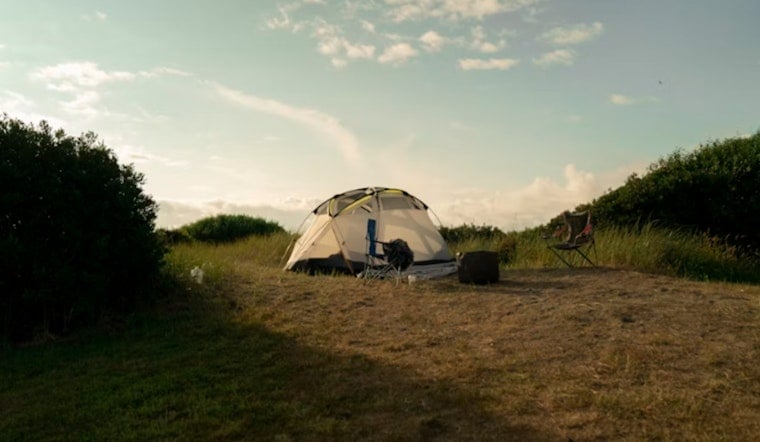
For decades, Missourians have been able to pitch a tent on any of the state's 320 conservation areas that allow overnight stays without paying a dime or filling out any paperwork. That could change under a proposal from the Missouri Department of Conservation that would require a $5 permit good for five days and up to 10 people, and the public reaction so far has been overwhelmingly negative.
According to a review of more than 100 public comments by the St. Louis Post-Dispatch, opposition to the plan outpaced support by more than 10 to 1. Kevin Thompson, one of the commenters cited in the paper's reporting, said camping had been available throughout his life without issues and called the fee plan one of the worst ideas he had ever heard, adding that the department should be ashamed for suggesting it.
The Missouri Department of Conservation manages hundreds of conservation areas across the state, and camping on the roughly 320 that permit overnight stays is currently first-come, first-served, with no permit, fee, or registration required. That would end under the proposal, which cleared its first hurdle when the Missouri Conservation Commission gave initial approval to the regulation changes during a meeting in Washington, Missouri, on May 29, 2026, according to reporting reviewed for this story.
Why MDC Says It Needs the Fee
MDC's stated rationale is not about raising money but about identifying who is on its land. The agency argues the $5 permit would let it address dumping and other illegal activities at conservation areas, and would allow staff to identify violators and stop extended stays that have become a persistent problem.
That problem appears to be growing. MDC staff issued just 11 violations and two warnings in 2015, but by 2024 the department issued 30 citations and 153 warnings, a significant increase reflected in the reporting. Separately, MDC official Tyler Blake told the Conservation Commission in May that staff and visitors frequently report feeling unsafe at conservation campgrounds due to rule violations, long-term squatter residency, drug use, and individuals hiding from law enforcement, according to Missourinet.
The proposed regulation package also includes a rule barring campers from leaving personal property unattended at conservation campsites for more than 24 consecutive hours, a measure meant to stop the practice of leaving gear behind to informally reserve free spots, according to reporting from John J. Winkelman. Under the new rules, each person would be limited to three consecutive five-day permits and six permits annually, tightening the current standard that allows up to 14 consecutive days in any 30-day period, capped at 30 total days per year statewide.
Residents Question the Tax-Funded Logic
Much of the resistance centers on how MDC is already funded. The agency draws over 60% of its total revenue, $174.8 million in fiscal year 2025, from a dedicated one-eighth of 1% conservation sales tax that Missouri voters approved by constitutional amendment in 1976, with additional money coming from permit sales and federal reimbursements. MDC receives 0% of its budget from the state's general revenue fund.
William Runyon argued that residents should not have to pay to camp on land already funded by that tax, saying the department should instead fund enforcement and cleanup with current tax revenues. Crystal Boschert said free primitive camping keeps outdoor recreation accessible to everyone, while Kenneth Jones Jr. said he opposes fees for conservation areas without bathrooms or other amenities but supports them for sites that do have such facilities. Kevin Gregory raised a related concern, saying the fee and permit process would burden low-income families, seniors on fixed incomes, and frequent campers.
Not every commenter opposed the idea. Charles Eugene Rager said he supports the proposed change but would prefer an annual pass over site-specific registration. The conservation areas in question offer no RV hookups anywhere in the system and are largely undeveloped, walk-in or primitive campsites, a point several commenters raised in arguing the $5 fee doesn't fit the amenity level of the land.
How the Fee Would Work, and What Comes Next
Under the proposal, permits would be purchased online, from a permit vendor, or by phone through MDC's existing permit system. Groups larger than 10 people would need a special use permit rather than the standard $5 pass. For comparison, the fee is modest next to nearby options: Missouri State Parks charge $10 to $36 per night depending on amenities, and Mark Twain National Forest runs $10 to $25 per night per person, according to St. Louis Public Radio.
St. Louis-area campers would feel the change most directly at nearby properties such as William R. Logan Conservation Area in Lincoln County, Little Lost Creek Conservation Area in Warren County, and Pea Ridge Conservation Area in Washington County, since St. Louis County itself has no free year-round MDC camping option.
The public comment period closed on August 14, and MDC deputy director Aaron Jeffries said the commission and department will evaluate the comments, calling the level of citizen engagement on the proposal a positive sign. A decision could come later in the fall, with reporting indicating a final commission vote is expected in September 2026 and, if approved, an effective date of March 2027, timed just ahead of the spring camping season.
The camping fee is not moving alone. The commission also gave initial approval in May to new permit requirements for unstaffed firearms shooting ranges and a $165 Nonresident Public Land Deer Hunting Permit set to begin in 2027, with public comment on all three proposals running concurrently from July 16 to August 14. The push toward user fees comes as MDC's spending authority over its dedicated tax revenue has drawn separate scrutiny, after Missouri State Auditor Scott Fitzpatrick launched an audit of the department in June 2024 following a Missouri Supreme Court ruling that limited legislative oversight of how the agency spends that money.




