

























































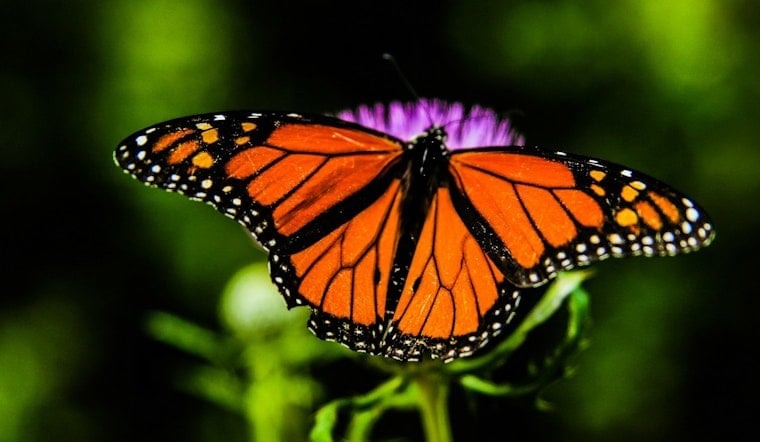
A high-profile plan to turn Interstate 35 into a 1,568-mile ribbon of butterfly habitat stretching from Laredo, Texas, to Duluth, Minnesota, never got the dedicated federal funding it needed. But years after the Monarch Highway brand quietly faded, state transportation departments from Texas to Minnesota are still doing much of the work anyway, one roadside seed mix at a time.
The Monarch Highway got its start when the Federal Highway Administration signed a memorandum of understanding with the transportation departments of Texas, Oklahoma, Kansas, Missouri, Iowa and Minnesota, according to KCUR. The idea traced back to a proposal from researcher Orley “Chip” Taylor to plant strips of milkweed and native habitat along interstate highways, and it later became part of a national pollinator plan the White House released in 2016, per the same account. The concept had roots in an even earlier push: the Obama administration had formed a task force aimed at reversing monarch and pollinator declines, and partners eventually released a project logo to promote the effort.
Despite the fanfare, state transportation departments did not receive additional federal funding to implement the plan, KCUR's reporting notes, and the branded effort lost momentum. What has continued, according to the outlet, is a patchwork of state-level changes to how highway shoulders and medians get mowed and seeded — changes that predate and outlast the Monarch Highway name itself.
Why Milkweed Disappeared From the Landscape in the First Place
The stakes trace back to a documented decline in the plant monarch caterpillars depend on entirely. Milkweed across the Midwest declined 58% between 1999 and 2010, the article reports, a drop that coincided with the widespread adoption of herbicide-resistant genetically modified corn and soybeans. The eastern monarch population, which migrates across multiple generations from central Mexico to the northern United States and southern Canada before the so-called super generation flies back to Mexico each fall, reached its lowest recorded level during the winter of 2013.
That crisis is part of what pushed states like Iowa to act well before any highway branding effort existed. Iowa lawmakers enshrined native-grass and wildflower roadside management into state code by 1988, long predating the Monarch Highway concept, according to the same reporting. That history matters because roughly 85% of Iowa's landscape is used for agriculture today, even though tallgrass prairie historically covered 70 to 80% of the state — and Iowa and Illinois now retain less than 0.1% of their original prairie.
Iowa and Illinois Take Different Roads to the Same Goal
Iowa has led on restoring roadsides to native plants, per KCUR's reporting, seeding roadsides with more than 50,000 acres of prairie grasses and wildflowers over time. Since 2020, the Iowa Department of Transportation has seeded between 500 and 750 acres of roadsides with native plants annually, while also requiring erosion-control plans for its road projects. Native prairie plants stabilize roadsides with massive root systems, are better adapted to local climate and soil than many non-native species, and help absorb heavy rainfall, tolerate drought, prevent erosion and support wildlife, the outlet notes.
Illinois has taken its own approach. The Illinois Department of Transportation pauses mowing when monarchs head south, and it has changed its mowing practices more broadly to let existing seed banks regenerate rather than plant everything from scratch. Under Illinois Monarch Project guidelines, mowing is limited to windows from July to mid-August and after September 30, with exceptions for invasive brush, safety issues and construction. The agency typically mows only one-third of its right-of-way each year, leaving two-thirds of the vegetation available for pollinators and seed spread, and it has worked with University of Illinois Urbana-Champaign researchers to identify beneficial roadside seed mixes. Illinois has also planted native seed directly and issues permits allowing conservation groups to establish and manage their own roadside pollinator habitat.
The Money and Labor Case for Less Mowing
Part of the appeal for cash-strapped transportation departments is practical. Reduced mowing cuts fuel, labor and equipment wear costs, according to KCUR's reporting, and less mowing and chemical use both reduces costs and benefits the environment, Rachel Harris told the outlet. Still, the work is not free: Taylor said maintaining roadside habitat requires money, personnel, knowledge and training, and Susan Helm, co-president of the Route 66 Monarch Flyway project, said pollinator gardens require ongoing maintenance regardless of how they are funded.
Grassroots and regional projects have sprung up alongside the state-agency work. The Route 66 Monarch Flyway connects Chicago and St. Louis with a 66-mile-wide corridor in Illinois, while the Highway 13 Butterfly Trail, which started in 2017, stretches 300 miles through Missouri and aims to add butterfly habitat within roughly 13 miles of each side of the highway. Partners behind the Highway 13 project also view it as a way to boost tourism, per the reporting, showing how conservation and local economic interests have become intertwined along these routes. Some states, the outlet notes more broadly, are effectively creating butterfly rest stops along roads even without a unifying federal brand.
A Fragile Rebound and an Unresolved Federal Decision
The renewed roadside push comes as monarch numbers show a tentative rebound layered over long-term decline. Survey data released in March 2026 by World Wildlife Fund-Mexico and Mexico's National Commission of Protected Natural Areas showed eastern monarchs occupied 2.93 hectares of forest during the 2025–2026 winter, a 64% increase from the 1.79 hectares recorded the prior season, according to the World Wildlife Fund. Scientists still caution, per the Monarch Butterfly Fund, that long-term species resiliency requires an average overwintering area of at least 6 hectares — meaning even this rebound leaves the population well short of stability.
Meanwhile, federal protections remain in limbo. The U.S. Fish and Wildlife Service proposed classifying monarchs as threatened under the Endangered Species Act in December 2024, but the Department of the Interior delayed a final decision in late 2025 by reclassifying the rulemaking as a long-term action, according to the Iowa Monarch Conservation Consortium, pushing regulatory evaluation into late 2026 or beyond. Roadside restoration hasn't waited for that decision: the University of Illinois Chicago-led Nationwide Candidate Conservation Agreement with Assurances had reached more than 100 energy and transportation partners covering roughly 1.3 million acres of rights-of-way across 47 states as of June 2026, per UIC Today. The Federal Highway Administration also opened applications through May 2026 for its Roadside Pollinator Program, offering up to $2 million per fiscal year in fully federally funded grants for state transportation departments and tribal governments to plant native wildflowers and milkweed, authority that traces back to Section 1415 of the 2015 FAST Act.
Not everyone agrees roadside habitat is an unambiguous win. Texas A&M AgriLife researchers reported in November 2025 that field surveys mapping monarch flight along major Texas highways identified nearly a dozen specific vehicle collision hotspots causing concentrated mortality during autumn migration, a tension that complicates the push to plant more habitat directly alongside heavy traffic. Similar tradeoffs are playing out beyond the old Monarch Highway route: Pennsylvania converted 26 acres of hayfield into wildflower meadow this year, while cities like San Antonio, Columbia and Oklahoma City have leaned on festivals, tagging programs and fundraising runs to support monarchs along the central flyway even as the branded highway concept remains stalled.




