

























































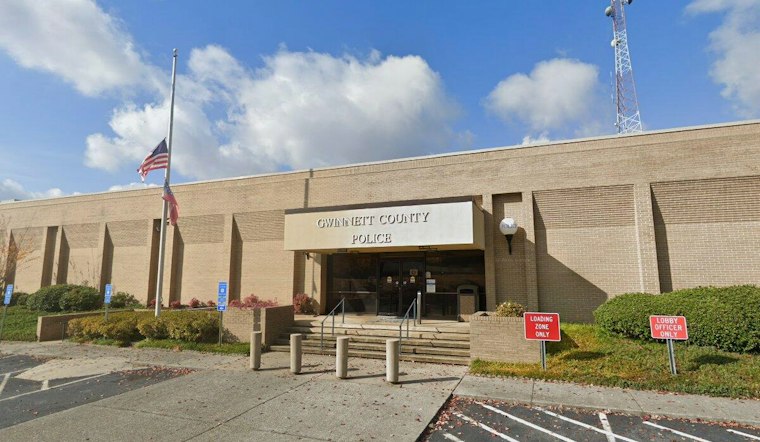
Gwinnett County's newest city is weighing whether to break away from county police altogether and build its own department, funding it with tax dollars currently sent to Gwinnett County Police. Mulberry's Public Safety Advisory Committee, chaired by Councilman Doug Ingram, spent the summer evaluating three options for law enforcement in the city and has ranked creating a standalone Mulberry Police Department as its top choice.
According to 95.5 WSB, the committee also considered continuing to rely solely on Gwinnett County Police and expanding the city's marshal's office, but ranked a dedicated department highest. Mulberry currently uses Gwinnett County Police for coverage, and city officials say any shift to a local force would be funded by redirecting the taxes residents already pay for that county service. Mayor Michael Coker has said the decision will ultimately be presented to voters, and officials confirmed that residents — not the city council — will decide the future of policing in Mulberry.
The numbers behind that choice are where things get complicated. Committee financial documents reported by WSB-TV show Mulberry residents currently contribute roughly $10 million in county taxes toward police coverage. A preliminary municipal budget presented by the city manager in July 2026 estimated that standing up a dedicated city police department would cost $12.5 million annually — a $2.5 million gap that has stoked resident concern, given that Mulberry collects no property tax of its own.
A City Born Out of Zoning Fights
Mulberry's very existence traces back to a fight over development, not policing. Georgia lawmakers created the city through Senate Bill 333 in 2024, a move driven largely by community opposition to a proposed 700-unit apartment complex near Seckinger High School and a desire for local control over planning and zoning decisions, according to The Atlanta Journal-Constitution. Voters approved incorporation in May 2024 with 57% support, making Mulberry Gwinnett County's second-largest municipality with roughly 41,000 residents when official operations began in January 2025, as reported by Axios Atlanta. The city sits in northeastern Gwinnett County near the Hall and Barrow county lines. Hoodline covered the earliest stages of that push, from the original tax-free city pitch to Governor Kemp's signing of the bill that sent the question to voters.
Not everyone accepted that the city could legally exist on the terms voters approved. Resident Stephen Hughes filed lawsuits in 2024 seeking to invalidate Mulberry's creation, arguing that state constitutional law prohibits municipal charters from permanently capping or banning property taxes. Courts allowed the incorporation vote to proceed while that constitutional dispute continued, the AJC reported.
A Legal Fight Over Who Pays for the Transition
The financial tension didn't end with incorporation. On May 14, 2025, Governor Brian Kemp signed Senate Bill 138, sponsored by state Sen. Clint Dixon, which mandated how municipal services would transition from Gwinnett County to Mulberry and required the county to audit police service costs and refund Mulberry any tax revenue exceeding actual service costs. Gwinnett County responded by filing a lawsuit in Fulton County Superior Court that same month, contending the statute unconstitutionally stripped the county of sovereign immunity for one year and forced countywide taxpayers to subsidize Mulberry's transition. County officials called the legislation unworkable and precedent-setting, per WSB-TV's coverage at the time.
That legal battle appears to have pushed Mulberry toward a significant charter change. In April 2026, city leaders began amending Mulberry's charter to remove language explicitly barring property taxes without a voter referendum, an effort aimed at resolving the lawsuits with Gwinnett County. Mayor Coker reiterated at the time that the city intended to maintain its “no new property tax” commitment even as the charter language changed, according to WSB-TV's reporting.
Independent Study Warned of Steep Costs
The police funding gap isn't the first fiscal warning sign for Mulberry. A 2024 feasibility study from Valdosta State University, commissioned by Gwinnett County, projected that the new city would face $16.2 million over five years in stormwater pipe repairs and $7.86 million annually in road maintenance. That contrasted with an earlier study from proponents' KB Advisory Group, which had projected $9.4 million in revenue against $8 million in operating expenses for the fledgling city.
Whatever Mulberry decides, it would be replacing a force with far more scale than anything the city could stand up on its own. The Gwinnett County Police Department is Georgia's second-largest law enforcement agency, with an authorized strength of more than 1,000 sworn officers and civilian support staff, and it currently patrols Mulberry as part of its coverage of unincorporated Gwinnett County. For now, the choice between keeping that county coverage, expanding the city marshal's office, or building an entirely new department rests with Mulberry voters, who officials say will have the final say.



