

























































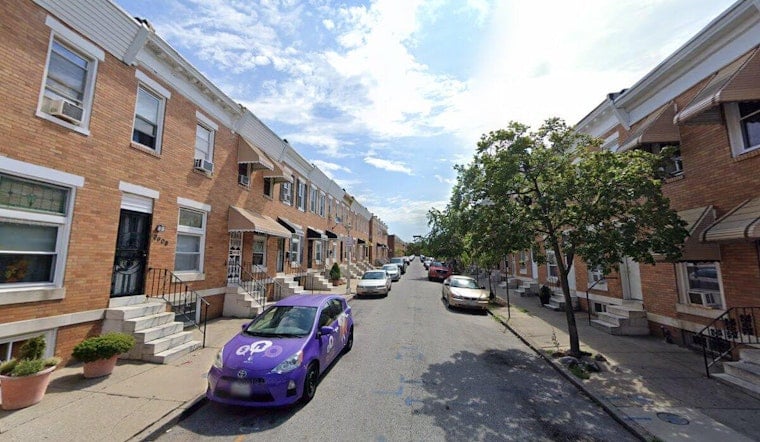
A stolen Lime scooter, an 8-year-old boy, and a threat to shoot a teenager in the head all collided on one Baltimore block Sunday night, leaving residents of the 2600 block of Mura Street shaken and demanding to know why the city cannot get a handle on repeat youth trouble. Baltimore Police say the boy was playing with the scooter around 8:30 p.m. when a second boy, believed to be between 12 and 14 years old, took it and rode off.
A 14-year-old family member of the 8-year-old went looking for the scooter, and that search is what turned frightening, according to Baltimore Police. Officers reported that the boy believed to be 12 to 14 years old threatened the 14-year-old with being shot in the head. As FOX45 News reported, police said no weapon was ever seen or displayed during the confrontation, and the three teenagers involved in the incident have not been identified.
Minutes after the threat, a third teenager returned the scooter, per the outlet's account of the police report. The 8-year-old boy was located in the 2600 block of Mura Street, where the scooter theft and shooting threat left people in the area unsettled, according to the same report.
A Neighbor's Frustration Boils Over
Ricardo Prout, who lives on the block, told the outlet that stolen Lime scooters regularly turn up dumped in the alley behind his house before neighborhood kids ride them up and down the street. He said Lime scooters are often stolen in the neighborhood, a recurring nuisance he has watched play out long before Sunday's threat.
Prout raised pointed questions about how the city handles youth accused of crimes, saying the cycle of worsening youth problems will not end until real accountability is in place. He said the court system has no room or time for youth accused of crimes, and argued flatly that the city is giving up on its youth. Prout also said that as a child he had a criminal mindset himself but did not get off easy, framing his concern as one rooted in his own experience with consequences.
Wider Baltimore Debate Over Juvenile Accountability
The Mura Street incident lands in the middle of a long-running fight in Annapolis and Baltimore over how young is too young to formally charge. Maryland's 2024 Juvenile Law Reform Act, House Bill 814, expanded state jurisdiction to allow children as young as 10 to 12 to be charged with specific offenses like illegal handgun possession, auto theft, sexual offenses, and animal cruelty, according to CBS Baltimore. But minor property disputes and verbal threats involving pre-teens, like the scooter theft on Mura Street, still fall outside what police can easily charge under that framework.
Testimony submitted by the R Street Institute in February 2024 noted that under HB 814, officers taking a youth into custody must write a report and send it directly to the Department of Juvenile Services for intake, a process critics said reduced police discretion to steer kids toward local diversion programs before a formal state referral. Department data cited by CBS Baltimore showed statewide juvenile crime complaints surged nearly 75 percent between 2021 and 2023, climbing from 7,100 to 12,363 complaints, with Maryland carjacking offenses up more than 85 percent from 2020 to 2023.
House Bill 814 rolled back some juvenile-justice reforms. According to the Maryland Department of Juvenile Services' Data Resource Guide for Fiscal Year 2025, juvenile complaints and detention decreased again in FY 2025.
Baltimore City State's Attorney Ivan Bates has kept up a steady drumbeat of criticism of the system meant to handle cases like this one. In a July broadcast interview with FOX45 Baltimore, Bates described Maryland's juvenile justice system as “broken from top to bottom” due to a lack of effective programs and accountability for repeat young offenders.
New DJS Leadership Amid Ongoing Scrutiny
Maryland's juvenile justice system has prompted debate over juvenile detention and community-based diversion.
The Mura Street case is not an isolated flashpoint. In August, a group of teenagers estimated between 12 and 17 years old robbed a resident in Baltimore's Canton neighborhood, threatening him with a firearm and pelting him with rocks. That incident, like Sunday's on Mura Street, has fueled community calls for enhanced parental accountability and stiffer penalties for young offenders.
Baltimore's citywide violent crime numbers tell a more encouraging story even as these localized disputes rattle individual blocks. Mid-year 2026 figures from the Baltimore Police Department showed homicides down 23 percent and non-fatal shootings down 2.5 percent compared to the same period in 2025, with city leaders crediting targeted deterrence and community violence intervention partnerships for the decline.
Scooters, Access, and Neighborhood Friction
Part of what makes scooter theft such a persistent irritant in neighborhoods like Prout's is sheer volume. Shared dockless micro-mobility rides in Baltimore exceeded 3 million in 2025. Vendors including Lime and Spin operate under the city's dockless vehicle rules, which include municipal permits and designated parking corrals, but that expanded footprint has also meant more devices left unattended and, per Prout's account, more of them ending up stolen and ridden through alleys.
Baltimore Police have asked anyone with information about the incident to contact them, as the three teenagers involved have not yet been identified. For now, the case adds one more data point to a debate that shows no signs of resolving: whether the answer to youth crime in Baltimore lies in swifter formal charges or in the diversion-focused approach state juvenile officials continue to defend.





