

























































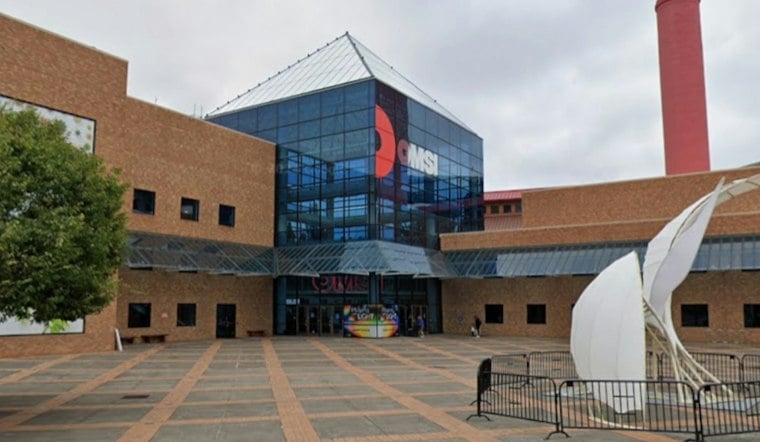
A NASA astronaut who once built his first telescope inside the Oregon Museum of Science and Industry is coming back to the place that helped launch his career. Michael Barratt, a physician and scientist who has flown to space three times, will appear at OMSI on October 3 and 4 from 2 to 3 p.m. for a presentation and meet-and-greet, with doors opening at 1:45 p.m. in the museum's auditorium, according to The Portland Tribune.
The event is free, but attendees need to RSVP in advance, according to OMSI. Barratt's connection to the museum began in childhood: He visited OMSI frequently, attended classes there and built his first telescope with guidance from the museum's planetarium director. His mother also volunteered at OMSI, according to the Portland Tribune.
From Flight Surgeon to Astronaut Corps
Barratt joined NASA in 1991, initially serving as a flight surgeon and medical operations lead, as reported by NASA. He worked on medical operations for the developing International Space Station program, and his work helped NASA understand the health challenges astronauts face while also helping the agency prepare for longer-duration missions, according to the Portland Tribune's reporting. He collaborated with researchers and spaceflight officials at the Gagarin Cosmonaut Training Center and Institute of Biomedical Problems while working in Russia, the outlet reports.
NASA selected Barratt for its astronaut corps in 2000, as noted by NASA. He served as lead crew surgeon for the very first International Space Station expedition before making his own first spaceflight in 2009 as part of Expeditions 19 and 20, during which he participated in two spacewalks, NASA reported. During that same mission, he helped oversee the space station's transition from a permanent crew of three to six astronauts — a shift OMSI describes as a historic transition that doubled the station's permanent crew.
The museum's broader educational and riverfront setting
OMSI's east-bank location sits within a larger riverfront development intended to connect Portland neighborhoods and bridges. Portland Parks & Recreation records show that the Eastbank Esplanade was planned as a riverfront connection with docks, piers, overlooks, gathering spaces and public art; construction ran from October 1998 through May 2001, according to Portland Parks & Recreation. The event also reflects a broader approach to hands-on science education in Oregon. The state's 2026-2032 STEM Education Plan frames STEM learning as an ecosystem involving schools, STEM hubs, community organizations, employers, higher education and state agencies, according to the Oregon Department of Education.
A Space Shuttle Flight and a SpaceX Mission
Barratt later flew aboard the final mission of Space Shuttle Discovery in 2011, according to the Portland Tribune. In March 2024, he served as pilot for NASA's SpaceX Crew-8 mission to the International Space Station. He spent nearly eight months aboard the station conducting scientific research and helping with station operations, according to NASA. Across his three spaceflights, Barratt has spent nearly 212 days in orbit studying how the human body responds to the conditions of spaceflight.
Carrying OMSI Into Orbit
Barratt didn't leave his hometown museum behind when he left Earth. He wore an “I am OMSI” T-shirt and displayed an OMSI poster aboard the International Space Station, mementos that now sit in the office of Jim Todd, OMSI's director of space science education, according to the Portland Tribune.
Todd described Barratt's return as a milestone for the museum that helped nurture his early interest in science. “This is a great homecoming for Dr. Barratt,” Todd said, according to the Portland Tribune.





