

























































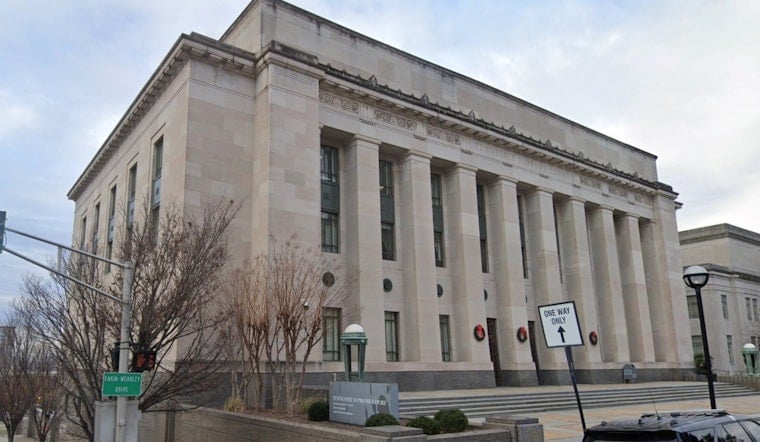
Russell Maze has spent more than two decades in prison for the death of his infant son, convicted twice in connection with injuries the state said killed the boy in 1999. Now the Tennessee Supreme Court has cleared the way for Russell and his wife, Kaye Maze, to pursue post-conviction relief, after the doctor who performed the original autopsy recanted his own testimony about how their son died.
The case centers on Bryan Alexander Maze, known as Alex, who stopped breathing while alone with his father on May 3, 1999, and died in October 2000, about 17 months later, according to facts reported by the Nashville Banner. Alex was placed in foster care after the initial incident, per the same reporting. Russell Maze was convicted twice of abusing his son and causing injuries that ultimately killed him, while Kaye Maze accepted a best-interest plea deal for reckless aggravated assault and received a two-year suspended sentence with three years of probation.
A Medical Examiner Changes His Mind
Dr. Bruce Levy, who performed the original autopsy, recanted his prior sworn testimony about Bryan Alexander's death in September 2024, according to the Banner's account of the case. Levy concluded that Bryan Maze's brain showed no indication of prior trauma or abuse at the time of death, and he attributed the residual brain lesions to a natural disease process rather than to inflicted trauma. Separately, according to the dossier's timeline, Levy stated in a recantation affidavit that he had never been provided critical medical records during his initial 2000 autopsy, including maternal obstetric records detailing a troubled pregnancy and neonatal intensive care logs, as reported by ProPublica.
Those medical gaps carry extra weight given how fragile Alex's health already was. The infant was born prematurely in 1999 and spent 13 days in a neonatal intensive care unit, undergoing seven separate medical evaluations over his first five weeks of life before he stopped breathing on May 3, 1999, according to FindLaw. Medical experts testified in March 2024 that Alex likely died because of a birth defect, per the Banner's reporting.
Prosecutors Who Already Believe the Convictions Were Wrong
The Davidson County District Attorney's Conviction Review Unit asked Judge Steve Dozier's trial court to vacate both Mazes' convictions in December 2023. District Attorney Glenn Funk said at the time that his office knew of clear and convincing evidence that Kaye and Russell Maze were convicted of crimes they did not commit. That request drew on a report incorporating findings from five independent medical experts who all rejected shaken baby syndrome in favor of natural disease causes, according to the Nashville Scene.
Two state prosecutors uninvolved in the Maze case, Amy Hunter and Jeff George, submitted sworn affidavits supporting review of the convictions. Hunter said a responsible prosecutor would not proceed with a homicide prosecution based on inflicted head trauma without addressing evidence that the death was natural. George said he would not continue a prosecution if medical examiners concluded the death resulted from natural disease rather than homicide, according to the Banner's account.
Even law enforcement's own investigators have acknowledged missteps. A detective who investigated the 1999 incident submitted a statement to the court in early 2024 acknowledging that police erred during the initial inquiry by relying heavily on an early hospital prognosis of shaken baby syndrome, which led them to exclude other medical possibilities, the Nashville Scene reported.
Judge Dozier Declined to Reconsider
Despite that mounting agreement among prosecutors and outside experts, Judge Dozier declined to change his ruling after a March 2024 post-conviction hearing. Kaye Maze's attorneys had requested an evidentiary hearing on the credibility of Levy's testimony, and later requested a new trial, but Dozier has not personally seen Levy's affidavit inside his own courtroom, per the dossier's account of the proceedings.
The Tennessee Court of Criminal Appeals then took up the matter and, in a decision authored by Judge Kyle Hixson on October 31, 2025, ruled that Levy's affidavit did not qualify as truly new scientific evidence of innocence. That three-judge panel split 2-1, with a dissenting judge arguing that a medical examiner recanting the cause and manner of death does constitute genuine new scientific evidence warranting reconsideration, according to CaseMine's summary of the ruling. The majority, by contrast, treated the recantation as competing expert opinions rather than definitive new proof.
Russell and Kaye Maze appealed that Court of Criminal Appeals decision to the Tennessee Supreme Court in December 2025. On August 27, 2026, the state's high court opened the way for the couple to pursue further legal action seeking post-conviction relief, and designated the Court of Criminal Appeals opinion as not for citation. Kaye Maze filed a petition with Dozier's court on September 8, asking him to review his ruling, correct the original convictions, and grant a new trial, claiming that Levy's testimony would establish that she is actually innocent because no homicide occurred.
A High Bar for Actual Innocence
Any relief will still have to clear a demanding legal standard. The applicable post-conviction standard requires factual allegations to be established by clear and convincing evidence. That threshold is now squarely in front of Judge Dozier as he weighs whether Levy's recantation, combined with the newer pediatric evidence, meets it.
The Maze case is not happening in isolation. Views of shaken baby syndrome have continued to evolve, ProPublica has reported. Levy himself served as Nashville's medical examiner for 13 years. According to a 2021 systematic review available through the National Institutes of Health's PubMed Central, shaken baby syndrome was the most commonly used definition in recent decades, while abusive head trauma had been proposed as newer terminology. According to a 2025 NCBI Bookshelf entry, pediatric abusive head trauma—commonly known as shaken baby syndrome—can result from violent shaking, blunt-force trauma, or both.
For Russell Maze, who entered prison in 1999 at age 33 and has spent more than two decades behind bars maintaining his innocence, the Tennessee Supreme Court's ruling represents the first real procedural opening in years. Whether it ultimately translates into a new trial, or into the exoneration his family has long sought, now rests with Judge Dozier's court.





