

























































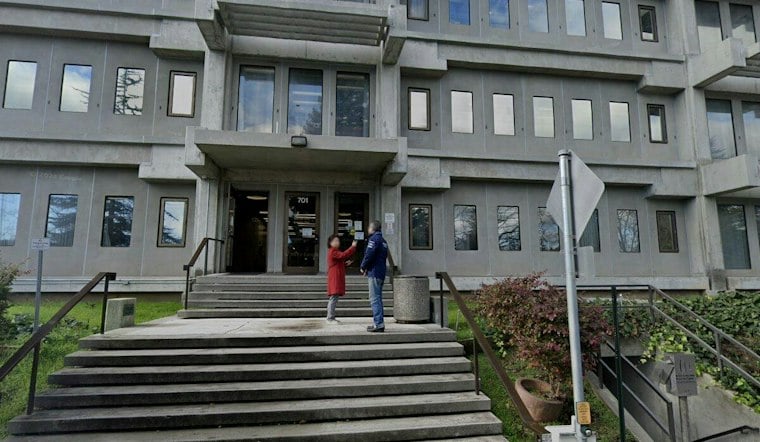
Precinct-based polling places have quietly disappeared across most of California, replaced by countywide vote centers where any registered voter can cast a ballot regardless of which neighborhood they live in. Thirty counties, including Sonoma, Napa, Marin, Alameda, San Mateo, Santa Clara and Santa Cruz, now run elections this way under a law state lawmakers passed a decade ago, and those counties account for roughly 78% of California's roughly 23 million registered voters.
The law, known as the Voter's Choice Act, was passed by California lawmakers in 2016 and requires participating counties to mail a ballot to every registered voter while consolidating what used to be neighborhood polling places into fewer, larger vote centers open to any voter in the county, according to The Press Democrat. Those centers can open as early as 10 days before Election Day, giving voters more time to cast ballots in person than they would get in a county that still relies on traditional single-day polling places. Former Napa County registrar John Tuteur described the basic mechanics simply: any voter from any precinct anywhere in the county can go to any vote center and vote, he told the paper.
A System Built Around the Mail Ballot
Mail ballots remain the most popular way Californians vote, and the state has sent a ballot to every registered voter since 2020, a policy that predates and overlaps with the Voter's Choice Act's own mail-ballot mandate. That overlap shows up starkly in Napa County, which already had about 90% of its voters casting ballots by mail before it adopted the system, per the seed reporting. Napa's vote centers now serve only about 5% of the county's voters, even after the county spent roughly $100,000 in startup costs on equipment and vote-center space.
Sacramento County offers a similar picture from elsewhere in the state: about 94% of its voters still vote by mail, according to CapRadio. That county adopted the Voter's Choice Act in 2018 after equipment failures on Election Night 2016 and the expense of staffing 550 separate polling locations, according to The Sacramento Bee. El Dorado County made a similar switch in 2020 after its elections office found most ballots were already arriving by mail and staffing 128 polling places no longer made financial sense, the Bee reported, while Sonoma County began phasing in a similar model that same year partly out of concern it would struggle to recruit enough poll workers and wanted flexibility in case of natural disasters.
Turnout Effects Are a Mixed Bag
Despite the promise of more in-person voting days, the evidence on whether the system actually drives up participation is murky. Between the 2018 and 2022 midterm elections, turnout fell about 1.5 percentage points more in counties that switched to the Voter's Choice Act than in counties that didn't, according to a policy brief from the Public Policy Institute of California. The reverse held true between the 2020 and 2024 presidential elections, when turnout was slightly higher in the switching counties. The institute also found that simply spending more years under the system didn't reliably improve turnout, and that changes in distance to the nearest polling place, vote center or drop box had little overall effect either way.
Tricia Webber, cited in the Press Democrat's reporting, put it bluntly: California hasn't actually seen more people voting earlier despite the added days of in-person voting. She wants the state to amend the Voter's Choice Act to let counties tailor the model to local needs rather than applying one framework statewide.
Concerns Over Black, Latino and Young Voters
The turnout math looks different when broken out by race and age. The Voter's Choice Act appeared to hurt turnout among Latino voters and newly eligible 18- and 19-year-olds during the 2022 midterm, per the PPIC brief. That finding sits alongside earlier research examined by KQED, which found that California's 2020 consolidation of in-person voting locations had an outsize impact on Black and Latino turnout that year, partly because a USC survey found Black voters were twice as likely as other groups to rely on public transportation to reach the polls. Only 16 counties kept the traditional precinct-based model that year, per the same KQED report.
More recent Press Democrat reporting points a different direction: Voter's Choice Act counties have seen higher turnout among Black and Latino voters than traditional-polling-place counties since 2022, with Latino turnout climbing by up to 2.5% in those counties. The UCLA Voting Rights Project, commissioned by the California Secretary of State's Office to assess the law's effectiveness, has studied how voters whose primary language isn't English cast ballots in Voter's Choice Act counties, alongside a survey of county accessibility features like translated election materials. The Voting Rights Project also plans to study voting habits based on which days voters actually cast their ballots, according to the seed reporting.
Santa Cruz's Budget Squeeze
Not every county running the system has money to spare. Santa Cruz County, one of the 30 participating counties, faces financial distress and a shrinking budget, and it cut close to 15% of its budget for the current fiscal year with a similar reduction planned for next year, per the Press Democrat's reporting. That kind of budget pressure underscores why several counties, including Sacramento and El Dorado, have pointed to cost savings from closing dozens of small precincts as a driving factor behind adopting the vote-center model in the first place.
What California Voters Need to Know This Fall
For voters navigating the 2026 general election, the calendar is already moving. Voter guides began arriving in mailboxes in the last week of September, and ballots are set to begin mailing October 5, with official drop boxes opening the following day. The online voter registration deadline falls on October 19. The first vote centers open October 24, with the full slate up and running by October 31 ahead of Election Day on November 3 — historically the single busiest day for voter activity, and the day the state's minimum vote-center ratios are most tightly enforced.
Those staffing requirements are spelled out in state law: participating counties must provide at least one vote center for every 10,000 registered voters on Election Day and the three preceding days, and at least one for every 50,000 registered voters beginning 10 days before the election, according to California Legislative Information. Even with drop boxes and mail ballots dominating how Californians vote, the state's most recent statewide special election in 2025 saw almost 9% of ballots returned directly to vote centers, a reminder that in-person options still matter to a meaningful slice of the electorate even as precinct-based polling fades from most of the state.


