

























































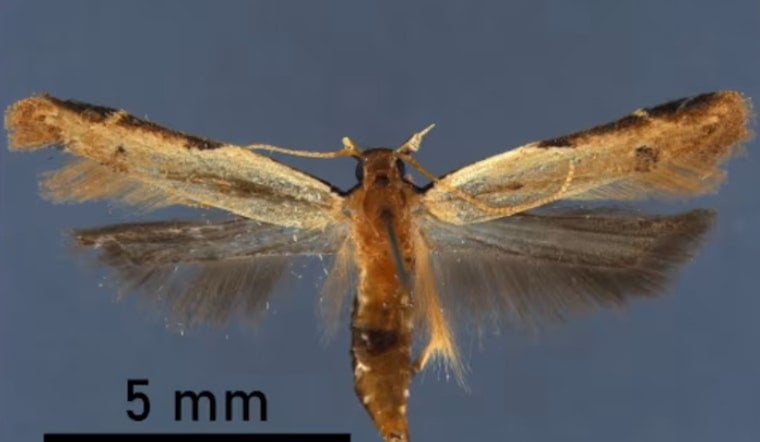
A tiny moth pulled from a traveler's luggage at Detroit Metro Airport has turned out to be a species never before recorded at any U.S. port of entry, federal officials confirmed this week. U.S. Customs and Border Protection agriculture specialists discovered the insect during a routine inspection of corn and seeds packed in luggage arriving from Ghana, after a trained detector dog alerted handlers to the bag.
The insect was identified by U.S. Department of Agriculture specialists as a non-native straw crest moth, or Mesophleps silacella, a species found in Europe and parts of Africa, according to ClickOnDetroit. The initial detection happened when the canine flagged the luggage from Ghana, but it took until August 12 for the identification to be officially confirmed, according to CBS News, reflecting the months of laboratory analysis and entomological review federal scientists typically conduct before logging a new species in official records.
CBP's own release on the find, issued Tuesday, framed it as proof of how carefully agriculture specialists comb through arriving baggage. Pastilong also noted that specialists intercept hundreds of pests each year that could threaten U.S. agriculture.
Why a Single Moth Raises Alarm
The straw crest moth belongs to the Gelechiid family, a group that includes roughly 4,700 known species worldwide and counts several invasive and destructive pests among its ranks. The moth primarily feeds on plants in the rockrose family, and in its native range, natural predators in Europe and Asia help keep those populations in check, per the CBS News report.
That balance disappears once a pest arrives somewhere new. Insects introduced to areas without their natural predators can grow unchecked, disrupting the ecological controls that normally keep them in check, the same report notes. It's the same underlying risk that federal officials flagged with an Afrotropical bark beetle intercepted at the same airport in December 2025, when a passenger arriving from the Ivory Coast was found carrying the 3-millimeter insect inside medicinal tree bark, as reported by CBS News.
A Traveler Sent On With a Warning
The traveler carrying the moth was released without further issue after being told about agricultural import requirements, according to the CBS News account. CBP's own release on the interception was posted Tuesday.
It's not the first time Detroit Metro's international arrivals terminal has produced a headline-grabbing insect discovery. Back in May 2022, agriculture specialists there intercepted live moth larvae and pupae hidden inside Filipino medicinal tea pods — a Pyralidae moth species that hadn't been documented anywhere in the world since 1912, according to Newsweek. And in July 2025, inspectors there found fresh cherries infested with European cherry fruit fly maggots, following earlier discoveries of Mediterranean fruit flies from Albania, caper fruit fly larvae from Italy, and a Southern cattle tick nymph from Vietnam.
The Bigger Biosecurity Picture
Federal officials say these individual finds add up to a much larger national effort. Nationwide, CBP agriculture specialists intercepted more than 100,000 plant and animal pests and interdicted roughly 1.7 million prohibited agricultural items across U.S. ports of entry in Fiscal Year 2025, according to CBP testimony. CBP Director of Field Operations Marty C. Raybon has emphasized that declaring food and agricultural items upon international arrival remains the primary line of biosecurity defense against threats that can ruin domestic crops, compromise food safety, and destabilize the economy.
Detroit Metro has built something of a track record for these first-in-nation discoveries. Agricultural inspectors there previously intercepted seeds infested with Khapra beetles from Iraq back in 2017, one of the world's most destructive stored-grain pests, and detected additional Khapra remains again in 2025 — a case Hoodline covered in its report on a similar Austin airport bust. The airport's screening operation has also turned up far stranger contraband this year, including a whole cooked pig brought from Togo in violation of African swine fever restrictions and a monkey skull dreamcatcher threaded with python bones, both intercepted in May.
For now, the straw crest moth's journey ends in a federal lab rather than in the wild. But officials say the case is a reminder that ordinary suitcases — packed with seeds, produce, or dried goods — remain one of the most common ways invasive species slip toward U.S. farmland if inspectors and their detector dogs don't catch them first.





