

























































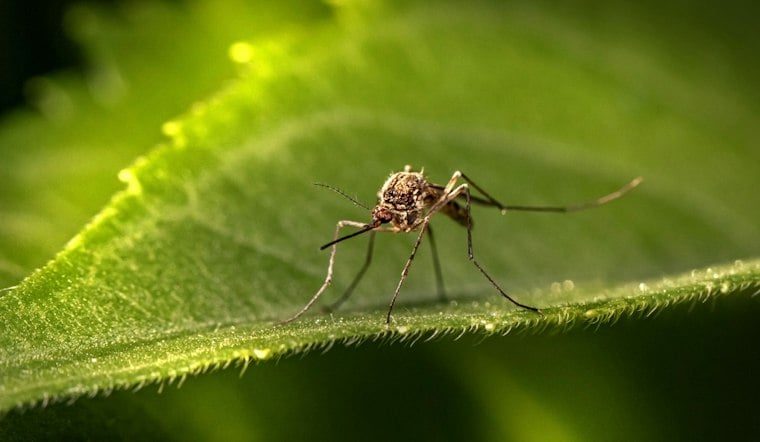
A mosquito species that has never been officially recorded anywhere in the United States has turned up in the remote mountain ranges of southeastern Arizona, and scientists still don't know whether it can make people sick. University of Florida entomologist Lawrence Reeves confirmed the discovery of Aedes amateuri, a species first collected by UF/IFAS researchers in the Santa Rita and Dragoon Mountains back in 2022, with additional specimens gathered as recently as July and August of this year.
According to News4JAX, researchers found one Aedes amateuri specimen in the Santa Rita Mountains and 19 more in the Dragoon Mountains in 2022, before Reeves later found the species in the Peloncillo Mountains, within a mile of the New Mexico border. That finding, published in the Journal of Medical Entomology on September 4, marks both the first documented U.S. record of the species and its northernmost known location, according to the study. Reeves, lead author and an assistant professor of entomology at the UF/IFAS Florida Medical Entomology Laboratory, confirmed the mosquito's identity using physical characteristics and DNA analysis.
A Species Barely Five Years Old on the Books
Aedes amateuri isn't an old discovery anywhere. It was first described as a distinct species only in August 2019, when researchers Aldo I. Ortega-Morales and Thomas J. Zavortink identified it in PLOS One based on collections in Nuevo León and Tamaulipas, Mexico. DNA barcoding of the Arizona specimens' cytochrome c oxidase subunit I gene has since shown the mosquito's genetic range stretches even farther south than previously known, reaching as far as Honduras, per the same journal article.
Physical voucher specimens collected in Arizona have been deposited in the Reeves Lab Reference Collection in Vero Beach and the Florida State Collection of Arthropods in Gainesville, the study notes. Reeves suspects the mosquito may have spread into New Mexico as well, though that has not been confirmed. Aedes amateuri appears to be rare in Arizona, and its immature stages have been associated with temporary pools of water in Mexico, while adults may only be present for short windows after sufficient monsoon rainfall in suitable locations, per News4JAX's report.
Established Resident or New Arrival? Nobody's Sure
One of the thorniest questions facing researchers is whether this Aedes amateuri population has quietly lived in Arizona for years without being noticed, or whether it represents a recent northward push out of Mexico. The discovery may represent either an established population or a recent range expansion, the study states, and researchers generally find it difficult to determine whether a species arrived from elsewhere or simply went undetected for years, the outlet reports.
Reeves told News4JAX that new mosquito species are still turning up even in well-studied regions like the U.S., calling that pattern significant given how intensively the country has been studied for more than a century of mosquito research. He added that understanding mosquito diversity and distribution remains essential for mitigating the impacts mosquitoes have on people. Researchers currently know little about Aedes amateuri, including whether it can transmit disease, though it has been documented feeding on humans and other large mammals, including deer.
Why the Sky Islands Matter
The mountains where the mosquito was found sit within the Madrean Sky Islands, a globally recognized biodiversity hotspot made up of more than 50 isolated mountain ranges rising out of the desert, home to 56 recorded mosquito species, according to the Journal of Medical Entomology study. Those high-elevation pine-oak habitats, surrounded by desert on all sides, create isolated ecological niches where Neotropical species can reach the northern edge of their range undetected for years.
The pattern isn't unique to Arizona. Florida, with its extensive connections to the Caribbean, Latin America and other parts of the world, has long served as a focal point for U.S. mosquito surveillance. Since 1999, 14 mosquito species not previously recorded in Florida have turned up in the state, and eight species never before recorded anywhere in the mainland U.S. have been detected nationally in that same span. Faculty at the Florida Medical Entomology Laboratory were involved in the initial detection of 11 of Florida's new species and six of the eight mainland U.S. discoveries, according to News4JAX's reporting. Researchers believe two of those species moved east into Florida from the southwest — a migration pattern that echoes what may now be happening with Aedes amateuri in reverse.
Reeves has built something of a track record for these finds. In March 2021, he documented the establishment of Aedes scapularis, a tropical mosquito capable of transmitting yellow fever virus and equine encephalitis, near Everglades National Park, according to UF/IFAS. Two years later, in March 2023, UF/IFAS scientists reported that Culex lactator, a tropical mosquito native to Central and northern South America, had established permanent breeding populations across Miami-Dade, Collier and Lee counties. That same report noted Florida is home to roughly 90 mosquito species, including at least 17 nonnative ones, 11 of which arrived within the last two decades.
Surveillance Gaps and What Comes Next
A UF/IFAS survey of Florida's 66 mosquito control districts, published in July 2025, found that a majority of mosquito species in the state remain understudied, leaving gaps in control strategies that often prioritize well-known nuisance and disease vectors over newly arrived ones. That systemic challenge helps explain why researchers are emphasizing continued surveillance of Aedes amateuri rather than any immediate control response — there simply isn't enough known yet about whether the species poses any risk.
Vector control strategies elsewhere in the country continue to evolve alongside these discoveries. In May, the EPA published a notice for a Google application seeking an experimental use permit to release up to 32 million Wolbachia-treated male Culex quinquefasciatus mosquitoes in Florida over two years, according to the Federal Register. For now, researchers say the priority with Aedes amateuri is simply watching and waiting. As Reeves put it, ongoing mosquito monitoring remains important because species previously unknown in the U.S. are still being detected — a reminder that even in a country that has studied mosquitoes for more than a hundred years, the map isn't finished yet.





