

























































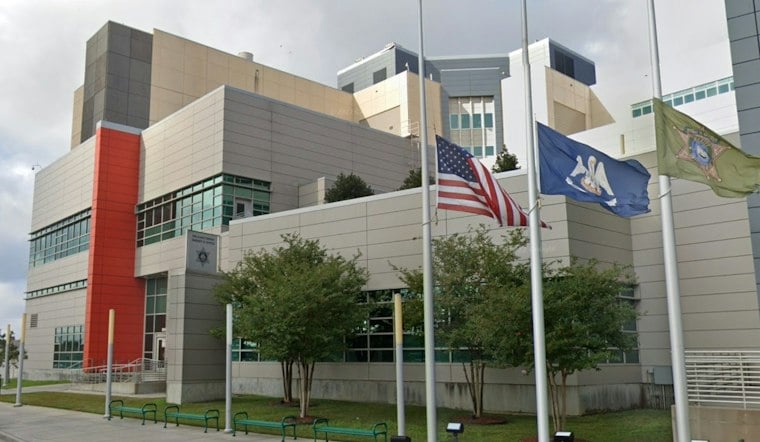
The long-awaited mental health wing at the Orleans Justice Center is expected to open by the end of November, Sheriff Michelle Woodfork announced Wednesday, even as she warned that staffing the 89-bed annex remains a serious challenge amid a shrinking budget. The facility, known as Phase III, includes housing for inmates with acute mental health issues along with an infirmary, and it has been years in the making under a federal court order.
Woodfork made the announcement at a press conference in the Central Business District, according to NOLA.com, which reported the sheriff calling staffing the new unit a challenge even as the project nears completion. Phase III is meant to help the jail come into compliance with a federal consent decree stemming from the 2012 class-action lawsuit *Jones v. Gusman*, filed on behalf of detainees over unconstitutional jail conditions, according to the Bureau of Governmental Research. U.S. District Judge Lance Africk issued the consent judgment mandating systemic reforms in June 2013, and the jail has been operating under federal oversight ever since.
The need for a dedicated psychiatric wing traces back to the main Orleans Justice Center's 2015 opening, when the facility was built without adequate housing or medical infrastructure for detainees with severe mental health needs, according to The Lens. That gap forced the jail to transfer detainees requiring acute psychiatric care to the Elayn Hunt Correctional Center in St. Gabriel, Louisiana, the outlet reported.
A Project Plagued by Cost Overruns and Legal Fights
Phase III's price tag has ballooned since it was first proposed, climbing from an initial estimate of $51 million to later estimates ranging from $109 million to $114 million, with roughly $36 million in FEMA funding, per prior reporting by WWL-TV. The cost growth and federal funding entanglements were part of years of disputes involving city officials, the Sheriff's Office and the federal court.
Former Sheriff Susan Hutson tried to block construction of the annex, but the U.S. 5th Circuit Court of Appeals dismissed her legal challenge in August 2024, affirming federal court authority to enforce the mental health annex under the Prison Litigation Reform Act, according to Prison Legal News. Not everyone agrees the annex was the right investment in the first place. Criminal justice reform organizations including the Vera Institute of Justice and the Orleans Parish Prison Reform Coalition have publicly opposed Phase III, per the Vera Institute of Justice.
Budget Cratered as Jail Population Climbed
Woodfork, who took office in May 2026 after winning 53% of the vote against Hutson in the October 2025 election, inherits a jail system under strain. Hutson was later indicted by a special grand jury on 30 felony counts following a May 2025 jailbreak involving 10 inmates, as previously reported by Hoodline in its coverage of a 28-second escape attempt.
Woodfork has discussed funding pressures as the jail population grew. That squeeze comes as the jail remains under scrutiny, with 1,482 people incarcerated as of Wednesday, approximately 200 above the City Council's loose 1,250 capacity cap, per Corrections1.
Woodfork Leans on Outside Help
To navigate the operational overhaul, Woodfork has hired consultant James “Jimmy” LeBlanc, who served 16 years overseeing state prisons before stepping down in 2024. Separately, the Business Council of New Orleans & The River Region — a nonprofit advocacy group made up of top executives and CEOs — is assisting the Sheriff's Office in developing both a staffing plan and a pay study for jail employees.
Woodfork has said she hopes that staffing plan and pay study could help make the case to City Hall for more funding in next year's budget. The city provides most of the jail's funding, including salaries for jail staff, while the Sheriff's Office oversees day-to-day jail operations — a split that has long been a source of tension.
Fractured Governance Under Scrutiny Again
That tension is not new. A 2022 Bureau of Governmental Research report titled “Keys to the Jail” concluded that chronic jail deficiencies stem from a fractured governance structure in which the state-chartered Sheriff runs the facility while City Hall controls much of its funding, leading to recurring fiscal conflicts. The Sheriff's Office has attributed jail deficiencies to inadequate funding, while city leaders have at times blamed those same deficiencies on mismanagement — a dispute the BGR report frames as rooted in the divided governance structure itself rather than either party alone.
Woodfork said she has had positive discussions with Chief Administrative Officer Joe Giarrusso and others in Mayor Helena Moreno's administration, and that talks toward a formal Cooperative Endeavor Agreement between the Sheriff's Office, the city and other agencies are ongoing. Such an agreement would lay out a strategic plan for the jail, something the Bureau of Governmental Research has recommended as a way to give the Sheriff's Office more say over funding decisions it currently has little control over.
Woodfork spoke with BGR President and CEO Rebecca Mowbray in the Central Business District and praised the organization, which describes itself as a good-government nonprofit. She has set a goal of reaching full compliance with the decade-old federal consent decree within her first year in office and has promised to lead an effort to formalize a shared strategic framework for the jail going forward.





