

























































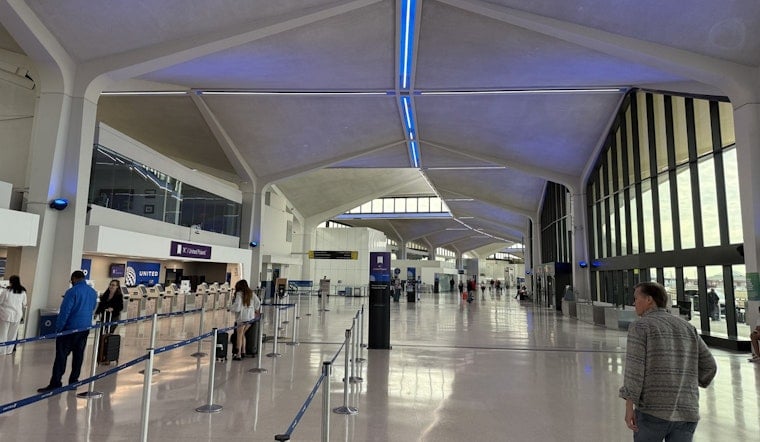
Travelers moving through Terminal C at Newark Liberty International Airport can now walk up to a security checkpoint, look into a camera, and skip the boarding pass scan entirely. The Transportation Security Administration activated three biometric e-gates there this week for TSA PreCheck customers, marking what officials describe as the first touchless facial-scanning gates of their kind in the country.
The gates verify a passenger's identification and travel documents by comparing a live facial scan against the traveler's image and documents already on file, according to NJ.com. United Airlines worked with TSA on the new gates, which sit inside Terminal C at Newark, the airline's largest hub and the airport's biggest carrier by market share.
Eligible travelers are frequent fliers already registered with TSA PreCheck who must separately opt in after signing up with both the program and the airline, and passengers can upload the required documents through the United Airlines app ahead of time. Participation in the biometric e-gate system is voluntary. During a 30-minute observation described in the NJ.com report, the gates ran into one passenger problem, which was resolved using a different biometric scanner nearby.
How the Terminal C Trial Fits Into a National Push
Newark's e-gates are part of the airport's use of biometric checkpoint technology. TSA's second-generation Credential Authentication Technology, or CAT-2, units already operate at roughly 350 airports nationwide, according to the Transportation Security Administration.
The Newark demonstration is currently limited to Terminal C.
What Happens to Your Face Scan Afterward
Privacy has become a central question as facial recognition spreads through U.S. airports. Under TSA's standard operating procedures, live traveler photos captured at basic CAT-2 checkpoints are deleted immediately after identity verification, the agency says. Records tied to TSA PreCheck Touchless ID participants are handled under a related but separate program.
Travelers who prefer not to be scanned still have options. Air travelers maintain the legal right to decline facial recognition screening without penalty or losing their place in line, as long as they tell a Transportation Security Officer before presenting their physical ID, according to TSA. Those who opt out undergo traditional manual document checks instead.
That opt-out right hasn't quieted concerns in Washington. Senators John Kennedy, Jeff Merkley, Roger Marshall and Ed Markey introduced the Traveler Privacy Protection Act of 2025 in May 2025 to address involuntary facial-recognition screening at airports, according to the Office of Sen. John Kennedy. TSA's PreCheck Touchless ID program is a related program offered through airline partnerships.
United Also Testing Food Pre-Orders at the Same Terminal
Alongside the biometric trial, United Airlines launched a pilot program letting passengers pre-order food, drinks and travel essentials before they even reach the gate. Newark is the first airport in United's network to test the advance-ordering service, which covers select flights departing from or connecting through up to nine designated Terminal C gates. The menu includes sandwiches, salads, drinks, kids' meals, chips and candy, along with over-the-counter medications, travel pillows and charging cords.
Customers can receive pre-departure push notifications through the United app or by email letting them know when to place an order. United is testing the pre-ordering service at Newark alongside the biometric trial.
The timing lines up with the Labor Day travel period. The push toward faster, touchless processing accompanies the airport's current trials of touchless processing and food pre-ordering.
Newark, JFK and LaGuardia are part of the Port Authority's airport system. TSA's checkpoint devices are also built to read state-issued mobile driver's licenses and digital IDs that meet international standards, a feature the agency is evaluating alongside facial comparison as it works to cut down on physical document handoffs at security.





