

























































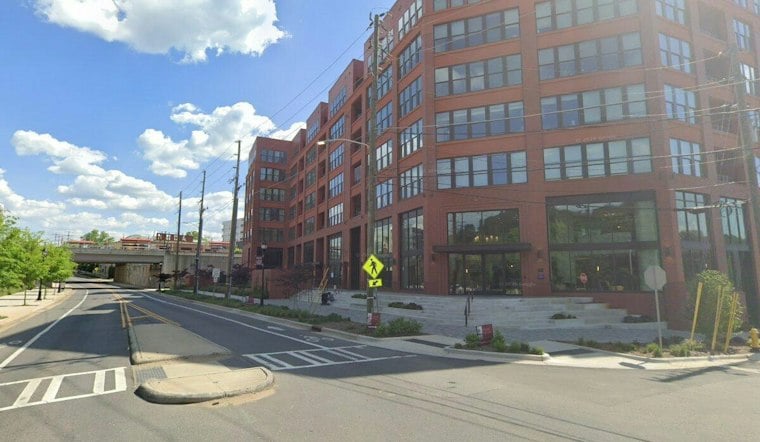
The intersection of E. 36th Street and Cullman Avenue is in NoDa.
The Charlotte Department of Transportation is pursuing broader Vision Zero efforts to make streets safer for everyone.
E. 36th Street at Cullman Avenue sits right next to the CATS LYNX Blue Line's 36th Street Station and new mixed-use developments like the 294-unit Cullman House complex, according to Ferrari Associates. Cullman House features ground-floor retail along E. 36th Street with townhouse units lining Cullman Avenue.
A Corridor With A Painful Recent History
The crash occurred in the 3300 block of The Plaza at East 36th Street this past January and reignited debate at Charlotte City Council over automated enforcement tools. That fatal crash, previously reported by Hoodline in Deadly Plaza hit-and-run puts red light cameras back in crosshairs, involved a driver who ran a red light and fled.
Federal research backs up why pedestrian-actuated rectangular rapid flashing beacons matter. According to the Federal Highway Administration, pedestrian-actuated rectangular rapid flashing beacons can push driver yield rates up to 98% and cut pedestrian crash rates at marked crosswalks by as much as 47%.
State law already requires drivers to yield. Under North Carolina General Statute § 20-173(a), motorists must slow or stop for pedestrians crossing within marked crosswalks or unmarked intersection crosswalks where no traffic signal is present. A related provision, § 20-173(b), bars drivers approaching from behind from passing a vehicle that has stopped at a crosswalk to let someone cross, a rule aimed squarely at preventing multi-lane collisions where a pedestrian is struck by a second car after the first one yields.
Part Of A Citywide Push, With Mixed Results So Far
Charlotte's Vision Zero program includes a much larger rollout. Between July 2024 and June 2025, Charlotte's transportation department installed 10 new rectangular rapid flashing beacons, five pedestrian hybrid beacons, 20 new traffic signals, and 22 leading pedestrian intervals citywide under its Vision Zero program, according to reporting by WCNC.
Yet the city's own numbers show the crisis hasn't eased. Charlotte's FY2025 Vision Zero report recorded 81 traffic deaths and 111 severe injuries citywide, a 9% increase in fatalities over the previous year even as total collisions dropped, the outlet's reporting found. City safety metrics show that 80% of Charlotte's fatal and severe injury crashes happen on just 13% of street corridors, the stretches officials have designated the city's High Injury Network, as Hoodline reported in coverage of new crossings recently added to Southwest Charlotte's Arrowood corridor.
The regional picture is similarly troubling. The 2026 Dangerous by Design national report ranked the Charlotte-Concord-Gastonia metro area 50th among the country's 101 largest metros for pedestrian fatality risk, documenting 287 pedestrian deaths between 2020 and 2024.
Charlotte's Vision Zero program includes targeted fixes along the city's most dangerous corridors.





