

























































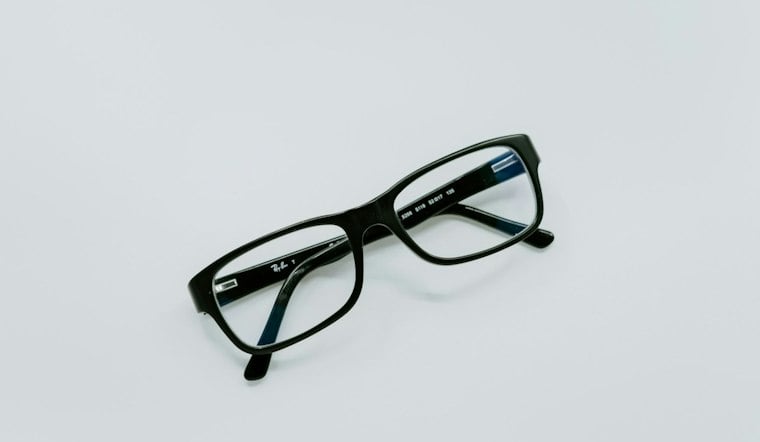
Brady Nevels used to rely on his parents for help with everyday tasks. Now the Norman, Oklahoma man points a pair of $500 smart glasses at his closet, and an AI voice tells him. Nevels has retinitis pigmentosa, a degenerative eye disease that has gradually stolen his vision over the years, and he says a pair of Ray-Ban Meta glasses has changed how much he depends on other people to get through the day.
Nevels bought the AI-powered glasses, which include a built-in camera, and has used them since November, according to KFOR. During a demonstration for the station, the glasses read an entire store flyer aloud, identified a playing card, and described a display of sunglasses. Nevels said the technology also helps him match his own clothes and determine the color of a shirt without asking someone else first.
Retinitis pigmentosa is an inherited retinal disease that affects roughly 1 in every 3,000 to 4,000 people worldwide — more than a million people globally — and typically causes progressive loss of night and peripheral vision that can lead to legal blindness in adulthood, according to the Foundation Fighting Blindness. In the condition, light-sensitive rod photoreceptors degenerate first, causing night blindness and peripheral vision loss, before cone photoreceptors are eventually affected, which impairs color perception and the ability to make out fine detail — the same struggles Nevels describes with reading labels or picking out a shirt.
From Family Calls to a Connected Assistant
Before the glasses, everyday tasks required help from Nevels's family, the KFOR report notes. He used to FaceTime his parents for help cooking, pointing his phone's camera toward instructions so they could read them to him. His mother, Bonnie Nevels, took him to try the glasses at a store in Oklahoma City, and she said the technology made it seem as though her son had regained some sight.
Bonnie Nevels said the glasses have made a noticeable difference for the entire family, and that watching her son use the technology has been emotional. A family friend in North Dakota even sent her videos and articles about the glasses after hearing about the technology. The glasses have cut down significantly on the calls Nevels makes to his family for help with small tasks throughout the day.
Why Consumer Tech Beats Medical-Grade Price Tags
The Ray-Ban Meta glasses Nevels wears use artificial intelligence to describe what is in front of him, and he paid about $500 for the pair. That price point sits well below dedicated medical visual aids: commercial AI smart glasses like the Ray-Ban Meta typically retail between $299 and $500, while specialized devices such as the OrCam MyEye or eSight can run $4,000 to $6,000, according to a comparison from LowVisionSource.
An evaluation published in AccessWorld noted that the glasses were developed primarily as commercial social-media wearables rather than purpose-built medical devices, meaning their accessibility features are something of a fortunate secondary benefit that has kept retail costs low. The glasses must be connected to a smartphone or tablet, with AI processing occurring on that connected device. Meta has also expanded the glasses' capabilities, according to Meta. The glasses can also be connected to Be My Eyes for calls to volunteers.
According to a 2026 scoping review hosted by the National Institutes of Health’s PubMed Central, artificial-intelligence-enabled smart glasses may contribute to quality of life, independence and autonomy among older adults. According to a 2025 systematic literature review hosted by the National Institutes of Health’s PubMed Central, researchers are examining AI-powered smart glasses in healthcare, including their potential benefits.
Employment Hopes Amid a Wide National Gap
Nevels said the glasses help him gain independence, and that he no longer has to rely on somebody all the time. He hopes the technology can eventually help him find employment — a goal set against a stark national backdrop. Only about 44% of working-age adults who are blind or visually impaired are employed nationally, compared with roughly 60% of the general working-age population, according to data cited by The Standard.
In Oklahoma, roughly 1 in 6 residents lives with a disability. Nevels said blindness does not mean someone is incapable, and that people who are blind are capable of learning and retaining knowledge through alternate methods. He hopes other blind or low-vision people will try similar technology themselves.
A Guide Dog and a Growing Trend
Nevels also relies on his guide dog, Conway, to help him navigate where he's going day to day — a partnership that works alongside, not in place of, the glasses. His story raises questions about AI glasses for blind veterans. Whether state vocational rehabilitation agencies or health insurers will begin subsidizing mainstream AI wearables as official assistive devices remains an open question, but for Nevels, the technology has already reshaped daily life — from reading ingredients on a food package to simply matching his own clothes without a phone call home.





