

























































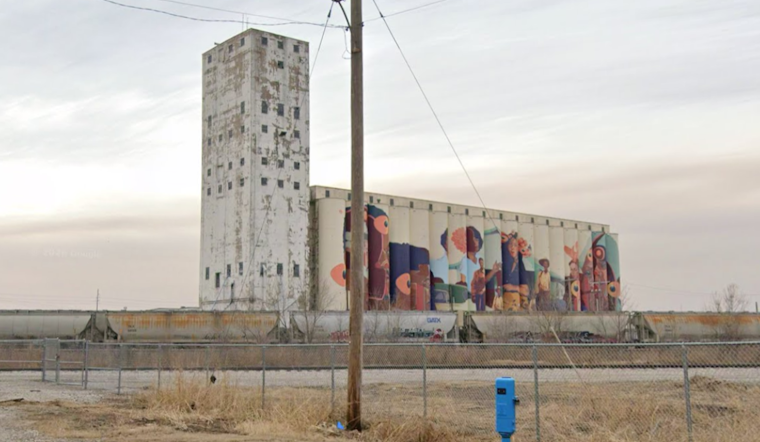
The century-old grain mill that has loomed over North Kansas City for generations is finally coming down — not with a dramatic implosion, but piece by piece, over six to eight months, using crusher trucks to knock the structure apart and sprayer trucks to keep the dust down. The city is spending about $2.8 million on the job, and officials say the building has become too dangerous, too full of asbestos, and too visually rough to leave standing any longer.
Built in 1913 by the Wabash Railroad, the building sits between two sets of active railroad tracks in North Kansas City, a detail that has shaped nearly every decision about how to take it down. As reported by KCTV5, Purina acquired the building in 1960, and it eventually became known locally simply as the Purina Mill. The property sits at 1400 Nodaway Drive in North Kansas City, according to a LoopNet listing for the site.
North Kansas City took possession of the building in 2022, and the same year, the city determined it was a dangerous structure, Mayor Jesse Smith said, per the station's report. Over the past few years, crews have already removed rusted metal and access points from the site, but the building kept falling further into disuse and disrepair, growing less visually appealing over time as graffiti spread across its surfaces.
Why Crews Skipped the Implosion
Crews are avoiding implosion entirely because of the active rail lines flanking the site and the asbestos woven through the structure, opting instead for piece-by-piece deconstruction. The Missouri Department of Natural Resources lists the site in an asbestos demolition notification filed with the agency at Missouri Department of Natural Resources.
According to the U.S. Environmental Protection Agency's Environmental Compliance Handbook for Short Line Railroads, renovations or demolition operations involving asbestos-containing material are regulated by the Clean Air Act's National Emission Standards for Hazardous Air Pollutants. The U.S. Environmental Protection Agency's Asbestos Fact Book says all friable asbestos materials must be removed before any demolition.
“It is a very challenging site to work at,” Smith said, according to the same account, pointing to the eroding condition of the building, its asbestos content, and the danger it poses as reasons the structure needs to come down. He added that the city does not want risk to the public or to the railroad running alongside it. Smith took office as mayor in April 2025 after three consecutive terms on the North Kansas City Council dating back to 2019, according to the City of North Kansas City.
A Long Municipal Process
The city formally advertised for bids on the “Turn-Key Demolition and Removal of Structures” project on March 19, 2026, setting an April 30, 2026 deadline for submissions, per city procurement records. Notably, the demolition is not tied to any redevelopment plan for the site — officials have acknowledged the parcel has little utility beyond removing the structure, given how tightly it is boxed in by the surrounding rail rights-of-way.
The demolition cost has been budgeted as part of North Kansas City's annual spending of between $4 million and $5 million since Smith took office, the mayor said. Once the mill is gone, Smith said, removing it will improve the skyline — a notable shift for a building that has long served as a visual landmark for drivers entering North Kansas City.
Part of a Broader Industrial Cleanup Pattern
This isn't the first time North Kansas City has torn down a legacy grain facility to clear industrial land. In January 2012, crews demolished the century-old Archer Daniels Midland mill, built in 1910, on Armour Street near North Kansas City Hospital, according to KCUR, a project intended at the time to pave the way for future commercial development.
The Mid-America Regional Council's Connected Freight KC 2050 plan says regional land-use policy regulates and directs freight development to specific areas, underscoring the continuing role of industrial and rail-connected land in the region.
The Purina Mill's removal also comes as North Kansas City navigates rapid growth. The 4.6-square-mile enclave has seen its population grow by more than 20% since 2020, surpassing 5,500 residents, KCUR reported in late August. City leaders have also spent nearly a decade assembling land for the 64-acre One North Redevelopment Area near Armour Road and I-29/35, a corridor that recently landed a new Chipotle location, as Hoodline previously reported. Separately, municipal leaders held discussions in late 2025 about a potential new stadium and commercial district tied to the Kansas City Royals, according to city officials, underscoring the broader development momentum surrounding the small city even as the Purina site itself remains earmarked only for demolition for now.





