

























































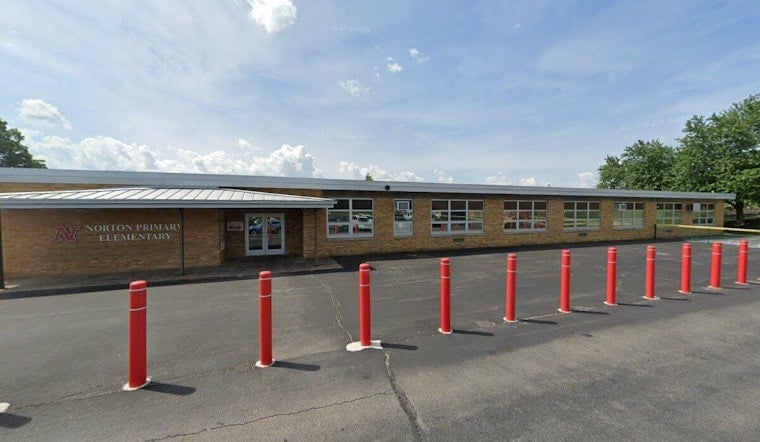
Norton Elementary, Norton Middle School and the Norton City Schools masonry program all shut their doors Thursday as a punishing late-summer heat advisory settled over Northeast Ohio, forcing districts across five counties to cancel classes for buildings without air conditioning. Norton High School, however, stayed open even as its sister schools closed, underscoring how much a single building's cooling system now determines whether kids show up for class.
The closures stretched across Cuyahoga, Portage, Wayne, Summit and Stark counties Thursday, according to FOX 8 News. Among the schools sending kids home or canceling outright were the LEAP Program in Garfield Heights, the Super Learning Center, Wings Academy, LEAP Program-Kent, LEAP Program-Rittman, North Intermediate Elementary, and Norton Middle. Norton City Schools told FOX 8 that Norton Elementary and Norton Middle School were closed Thursday specifically because of the excessive heat, while reasons for some of the other closures were not immediately available.
The National Weather Service in Cleveland had a Heat Advisory in effect for the region from 2 p.m. to 8 p.m. Thursday, and FOX 8 Weather forecast highs around 85 degrees with high humidity. That relatively modest air temperature masked a much harsher reality inside older school buildings, where a lack of ventilation and dozens of bodies packed into a room can send indoor readings well past what's happening outside.
How Hot Classrooms Get Without Air Conditioning
The scale of the problem became clear a day earlier, on September 2, when the National Weather Service's broader advisory across Northeast Ohio warned that humidity would push heat index values as high as 98 to 102 degrees, with overnight lows staying in the mid-70s, according to WKYC. Inside an un-air-conditioned classroom at Independence Primary School in Cuyahoga County, temperatures hit 83 degrees by 10:30 a.m. and climbed to 85 degrees before noon, the station reported. District officials noted that filling those rooms with students only pushes the heat higher.
Farther south in north-central Ohio, Tiffin City Schools called off classes September 2 after triple-digit heat indices in uncooled buildings left students dizzy and nauseated, according to WTOL 11. The report did not specify which Tiffin buildings lacked modern cooling systems. Mentor Public Schools in Lake County also canceled classes districtwide that day, citing a lack of air conditioning across most of its learning spaces as the heat index approached 100 degrees, per the district's own announcement.
A Building-By-Building Patchwork
Not every district faced an all-or-nothing choice. Avon Lake City Schools closed four older, uncooled buildings on September 2 while keeping its air-conditioned campuses running as normal, illustrating how uneven facility infrastructure can create instructional gaps within a single school system, per The Economic Times. School leaders there said indoor temperatures in older structures can quickly surpass whatever it reads outside.
That same dynamic played out in Norton, where the high school remained open Thursday while the elementary and middle schools, along with the masonry program, closed. It's a pattern Hoodline has tracked across the region this season, including in an earlier early dismissal tied to a broken AC unit.
Why Ohio Doesn't Just Add Snow Days for Heat
Ohio schools aren't bound by the old calamity-day counting system that once capped how many days a district could close before penalties kicked in. Under Ohio Revised Code § 3313.48, districts instead track cumulative instructional hours, needing at least 910 hours annually for grades K-6, according to the Ohio Department of Education and Workforce. That system gives administrators more room to absorb emergency heat closures without automatically tacking days onto the school year.
Districts also face the question of how to make up lost time after emergency closures.
The Bigger Infrastructure Problem
The heat itself isn't the only culprit. An August 2025 analysis by Climate Central found that a substantial share of Cleveland-area K-12 students attend school in urban heat islands, where paved surfaces intensify ambient temperatures well beyond surrounding areas, as reported by Axios. According to the City of Cleveland's Cleveland Climate Action Plan (CAP) 2025, total tree cover in Cleveland fell by 5% from 2011 to 2017 despite efforts to expand the city's tree canopy. The effects of classroom heat on children are another concern.
The scope of the underlying facilities gap is national. Research from the National Bureau of Economic Research has found that without air conditioning, a 1-degree Fahrenheit rise in average school-year temperature can cut student learning by about 1%, and federal data shows 41% of U.S. school districts need HVAC updates in at least half of their buildings, as Hoodline has previously reported. How and when districts like Norton, Tiffin and Mentor find the capital to retrofit their oldest buildings — and whether more boards will lock in remote-learning makeup plans ahead of next year's August 1 deadline — remains an open question as late-summer heat waves keep arriving earlier and hitting harder each year.





