

























































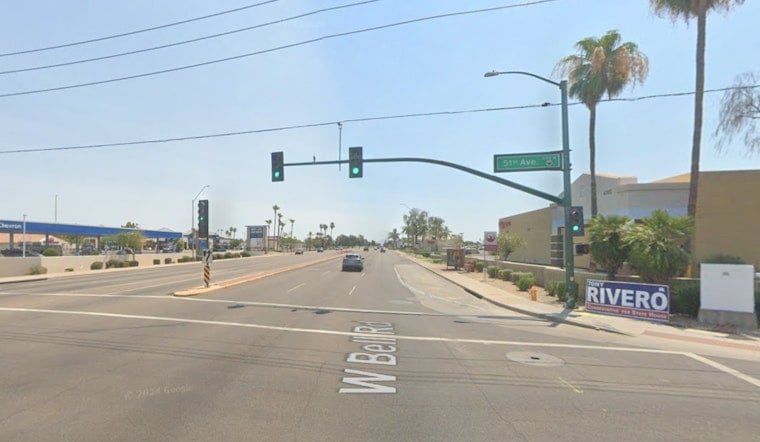
A multi-car crash near 51st Avenue and Bell Road in northwest Phoenix sent four people to the hospital overnight, including a 16-year-old girl in critical condition who had to be pulled from the wreckage. Phoenix firefighters found four injured people at the scene, with at least three damaged vehicles and debris scattered across the intersection, which remained shut down in all directions as crews worked.
According to azfamily.com, a 17-year-old girl was hospitalized in stable condition, along with a man and a woman also listed as stable. Phoenix police took over the collision investigation and are still working to determine what caused the crash, while drivers were asked to avoid the area and use alternate routes.
A Corner With a Troubled History
This is not the first serious wreck at this exact intersection. In December 2024, a 17-year-old girl was killed and another teenager injured at 51st Avenue and Bell Road when a car making a left turn was struck by an SUV, according to 12News. Then in February, a collision between a van and a motorcycle near the same intersection sent a motorcyclist to the hospital with serious injuries, with officers responding to that scene around 5:32 p.m.
Because two teenage girls were among the four hospitalized, the crash raises questions about Arizona's graduated licensing rules for young drivers. Under A.R.S. § 28-3174, 16- and 17-year-old drivers face restrictions during their first six months behind the wheel, including a midnight-to-5 a.m. driving ban and a limit of one passenger under 18 who is not immediate family, per the Arizona Department of Transportation. It remains unknown whether those restrictions have any bearing on this crash, and open questions persist about which driver was at fault, whether a failure to yield or speeding was involved, and whether impairment is suspected.
What Happens Next in the Investigation
Given the severity of the injuries, Phoenix police handed the case to their specialized Vehicular Crimes Unit, which uses 3D laser scanning technology to reconstruct major collisions, per the City of Phoenix. Preliminary police reports for crashes handled by that unit typically surface within about 30 days, though the formal statewide Arizona Crash Report can take several months to finalize, according to Law Bear.
If investigators determine a moving violation, such as failing to yield on a left turn or running a red light, caused the serious injuries, Arizona law treats that as more than a traffic ticket. Under Arizona Revised Statutes § 28-672, a moving violation resulting in serious physical injury is classified as a Class 1 misdemeanor, carrying potential license suspension and criminal penalties on top of any civil liability, per the Koplow Law Firm.
Part of a Larger Pattern on Phoenix Roads
The crash adds to a string of severe wrecks Hoodline has tracked along Bell Road in recent months, including a fatal crash that killed a motorcyclist in a fiery wreck in June and another that killed a passenger in July. Just a day earlier, a separate severe crash injured a pedestrian at Peoria Avenue and Cave Creek Road, underscoring how frequently North Phoenix intersections are turning up in local crash reports this year.
The numbers behind these individual crashes are stark. Phoenix recorded 37,472 total motor vehicle crashes in 2024, including 265 fatal collisions, making it the municipality with the highest crash burden in Arizona, according to My AZ Lawyers, which cites ADOT crash data. Maricopa County as a whole logged 88,094 crashes and 560 traffic fatalities that same year, accounting for the vast majority of collisions statewide.
The city has been trying to chip away at that toll. Phoenix adopted its Vision Zero Road Safety Action Plan in September 2022, committing $10 million annually toward upgrades on high-injury corridors, improved intersection lighting, and other safety measures, with a long-term goal of eliminating traffic deaths by 2050. Early citywide data showed a 13% reduction in killed-or-serious-injury crashes from baseline levels. The city also expanded its automated Photo Safety Program, with speed cameras across key corridors going live for citations in March, part of the same Vision Zero strategy, according to the City of Phoenix.




