

























































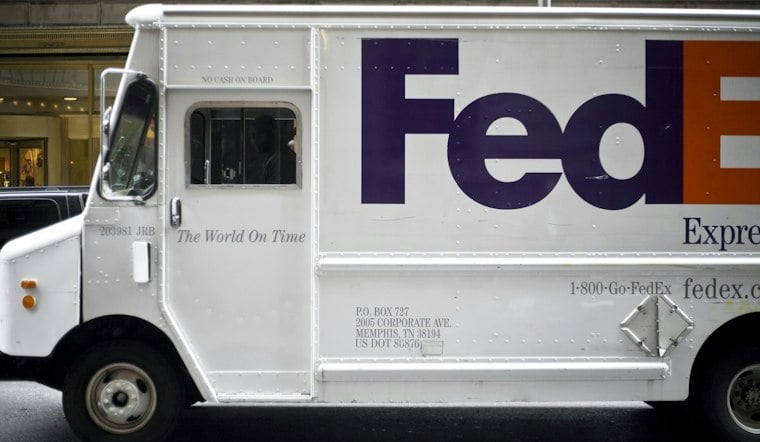
New York City will pay businesses cash to stop accepting deliveries during the day and start taking them overnight instead, part of a fresh round of incentives rolling out from the city's Department of Transportation. The program covers more than $500,000 in payments and will support as many as 14 businesses in its first phase, with deliveries shifted to a window between 7 p.m. and 6 a.m.
Congestion Tolls Fund a Push Away From Daytime Trucks
The money comes from the MTA's congestion pricing tolling program, according to Spectrum News NY1, which first reported the incentive expansion. It's a continuation of a funding model that dates back to April 2024, when the city's Off-Hour Deliveries program received $11 million in combined public funding — $6 million from a federal Congestion Mitigation and Air Quality grant and $5 million from MTA congestion pricing toll proceeds, as reported by Streetsblog New York City. New York City now plans to spend $5 million on the program across several phases, with applications accepted on a rolling basis.
The stakes are largely about what happens on city streets during business hours. Roughly 90% of all physical goods and cargo delivered into and around New York City move by truck, according to the NYC Department of Transportation. That reliance turns commercial corridors into daytime bottlenecks, with double-parked trucks and blocked bus lanes a familiar sight from Manhattan to Flushing.
What the Money Actually Covers
NYC DOT official Mike Flynn said the tolling revenue will make deliveries cleaner, safer, and more efficient, and that the incentive program will support local businesses while pulling delivery trucks off the road during the busiest daytime hours, per NY1. The one-time payments are designed to cover the practical costs that keep small businesses from switching schedules in the first place: low-noise equipment for delivery vehicles, security cameras, and building upgrades that make unattended overnight drop-offs possible.
Those costs are exactly the barrier that has kept the program dominated by large chains. The incentives are intended to help smaller businesses facing financial barriers to switching delivery schedules, though businesses of all sizes can participate, per NY1's reporting. It's a distinction that matters because emissions data gives the shift real environmental weight — a 2023 NYC DOT study found commercial truck tailpipe emissions run 15% to 18% higher during daytime peak hours than at night, when traffic moves freely, according to OHD NYC.
Big Chains Already On Board, Small Shops Still Lagging
New York City currently has 27 known businesses conducting off-hour deliveries across more than 1,120 locations. That tally includes major retailers and food distribution chains like Whole Foods Market, Wegmans, Just Salad, Odeko, and Anheuser-Busch InBev, according to the NYC Department of Transportation. Those brands prove overnight logistics can work at scale, but the smaller independent stores the new incentive round targets still face the staffing costs and security concerns that come with accepting a truck at 3 a.m.
The concept itself isn't new. NYC DOT first tested off-hour deliveries through a federally funded pilot with Rensselaer Polytechnic Institute from 2009 to 2010, before making the program permanent later that year, per OHD NYC. What's changed is the funding source and the scale of ambition: the city's current effort is managed by global engineering firm Arcadis, which was awarded an $8.38 million municipal contract to administer and evaluate the incentive program in partnership with New York University's C2SMART transportation research center, according to Arcadis. The program targets high-traffic commercial hubs including Manhattan south of 59th Street, Downtown Brooklyn, and Flushing and Jamaica in Queens, though it remains open to businesses citywide, Arcadis notes.
A 2040 Target and a Bigger Freight Overhaul
NYC DOT has set a goal of reaching 5,000 off-hour delivery locations by 2040. Hitting that number would shift an estimated 62,000 truck trips away from peak daytime hours every single day, per NY1's reporting on the department's projections. The off-hour delivery push is one piece of a broader city freight overhaul that also includes the LockerNYC secure parcel locker system, legalized commercial e-cargo bikes, neighborhood microhub transfer stations, and the Blue Highways waterway freight plan, according to the NYC Economic Development Corporation.
That freight strategy has been building alongside other curb-focused moves at City Hall. In April, the city created a dedicated Office of Curb Management inside NYC DOT to unify loading zone policy, expand commercial curb space, and oversee the rollout of delivery microhubs. Together with the off-hour incentives, the office reflects a city betting that congestion pricing dollars can reshape not just transit funding but the daily choreography of how goods move through its streets.





