

























































A roughly two-inch foam Kansas City Chiefs football, red and gold and somehow intact, turned up during the processing of World Trade Center debris a quarter-century ago, and it has never stopped haunting the man who found it. NYPD Detective Sergeant Michael Mayer found the small toy on a conveyor belt during the Fresh Kills operation after the September 11 attacks, and he has spent the years since hoping someone, somewhere, might recognize it as belonging to a loved one lost that day.
Mayer described the World Trade Center site where he worked as “the bowels of hell” and “sacred ground,” according to the Kansas City Star, which first told his story in a column by Vahe Gregorian. After the attacks, Mayer worked traffic control, morgue detail and debris recovery, according to the same account, logging 12-hour shifts seven days a week for about six months alongside his wife, Mary Mayer, who is also an NYPD detective. During the Fresh Kills operation, he found the foam football on a conveyor belt. Not far from it, he also recovered a golf ball marked with the Aon Corporation logo — a find that carries its own weight, since Aon occupied floors 92, 98 and 100 of the South Tower and lost 176 employees on September 11, per the Aon Memorial Education Fund.
A Football's Long Road to a Coach's Hands
Mayer did not keep the football to himself. He sent it to then-Chiefs coach Dick Vermeil along with a note describing where and how he had found it, the Star reported. Vermeil, in turn, invited Mayer to join the team for a meal before Kansas City's September 2002 game against the New York Jets, a game the Chiefs went on to win 29-25. The football and Mayer's note were displayed in a shadow box from 2002 to 2008, and after that season they were moved into the Chiefs' hidden-treasure storage area inside SubTropolis.
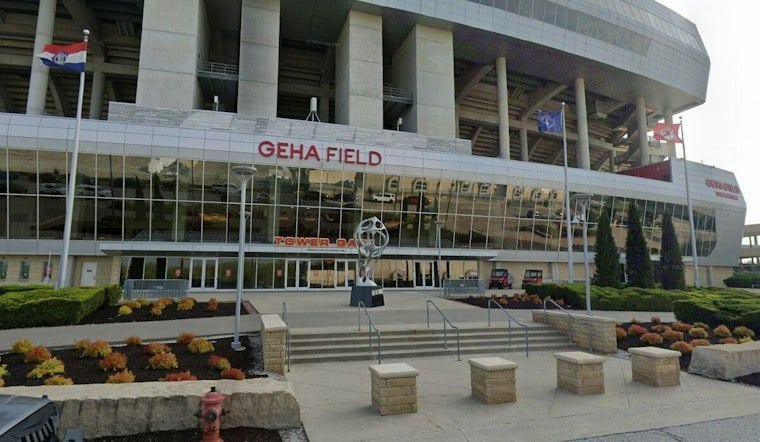
SubTropolis is the sprawling underground business complex in Kansas City, an approximately 9-million-square-foot expanse carved into limestone and converted into commercial real estate in the 1960s by Chiefs founder Lamar Hunt, according to KC Yesterday. It is there that the team keeps its private historic archive, tucked beneath the city alongside ordinary commercial tenants. Chiefs historians Bob Moore and Mike Davidson eventually added the football and Mayer's note to an exhibit connected to the Foolish Club and Lamar Hunt, and the artifact now rotates through the Chiefs Hall of Honor at GEHA Field at Arrowhead Stadium, a display established under Hunt to showcase team and AFL memorabilia, according to the Kansas City Chiefs. A Kansas City Fire Department boot is featured in the new exhibit as well.
A Bond Forged Nine Days After the Attacks
The football's journey to Arrowhead is tangled up with a broader story of two cities leaning on each other. On September 23, 2001, the Chiefs hosted the New York Giants in the NFL's return to play after Week 2 games were postponed following the attacks. Fans gave the visiting Giants a standing ovation, and Chiefs fans sang “home of the brave” at the end of the national anthem, according to the same Star account. Kansas City Mayor Kay Barnes proclaimed the day New York City Day, and fans passed about 500 boots through the stands, ultimately collecting more than $200,000 for New York relief efforts. The Chiefs organization later sent a $451,413.88 check to support the relief effort, and the Giants published an advertisement thanking the Chiefs, their fans and the citizens of Kansas City. Former NFL commissioner Paul Tagliabue said in 2021 that the attacks were worse than Pearl Harbor and the Kennedy assassination, adding, “you just couldn't go on,” describing the impossible choice facing the league that week.
Mayer, now hoping the football will one day connect with a grieving family, said of that possibility, “that would be truly amazing.” The small object has become a tangible reminder of the destruction that claimed thousands of lives around it.
Where the Football Was Found, and What Came After
Mayer's discovery came during the processing of a mountain of material that was eventually trucked to Staten Island's Fresh Kills Landfill, which received about 1.8 million tons of Ground Zero debris, per the seed reporting. Sifting operations there ran for ten months, from September 12, 2001, to July 2002, screening more than 1.2 million tons of material before the site was capped and set on a path toward becoming Freshkills Park, according to Freshkills Park. The operation, hosted by the city's sanitation department, drew in 25 government agencies logging 1.7 million work hours, according to the DSNY 9/11 Exhibit. Workers recovered more than 54,000 personal items, 1,358 vehicles and 4,257 human remains, sifting through wreckage that Mayer and other recovery personnel were exposed to as a toxic mix of hazardous materials.
That exposure has followed Mayer and his wife into the present. Both now have non-melanoma skin cancers, and Mary Mayer also has breathing issues, conditions that echo a much larger pattern documented among 9/11 responders nationally. The Fire Department of the City of New York reported in its 25-Year Health Impact Report, released this September, 453 illness-related deaths. The federal World Trade Center Health Program is among the programs addressing 9/11-related health effects. The September 11th Victim Compensation Fund had, as of August 31, awarded more than $18.56 billion to over 77,000 eligible first responders and survivors since it reopened in 2011, according to the U.S. Department of Justice.
An Identification Effort That Continues
The hope of matching the football to a name is part of a much larger, still-unfinished identification effort. The New York City Office of Chief Medical Examiner has formally identified more than 1,650 World Trade Center victims using advanced DNA sequencing and genetic genealogy, but roughly 40 percent of victims, more than 1,100 people, remain unidentified, according to the Associated Press and as reported by ABC7 News. That reality frames why Mayer's hope feels both modest and enormous: a foam football with no name attached, sitting in a Kansas City archive, waiting for someone from New York to see a photo and recognize it as their own.



