

























































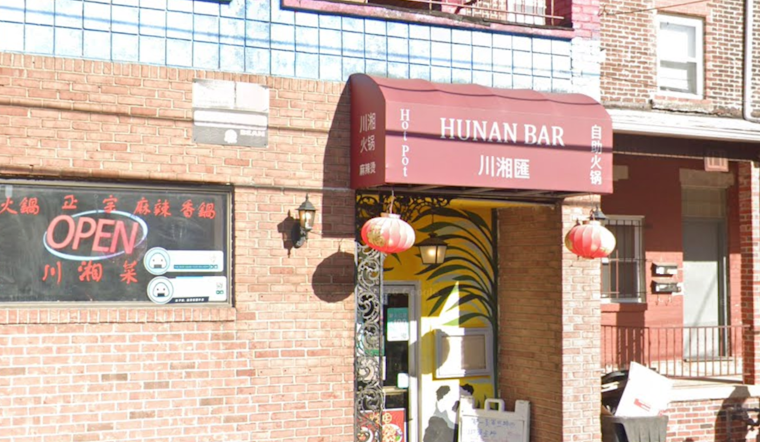
Hunan Bar, the longtime Sichuan hot pot spot on Atwood Street in Pittsburgh's Oakland neighborhood, has been ordered closed after health inspectors returned to find the same rodent and food-safety problems they had flagged ten days earlier still unresolved. Allegheny County health officials issued the restaurant a Red “Closed” placard following an August 31 reinspection, ending a grace period that began after a smoking complaint brought inspectors through the door in the first place.
According to WPXI, inspectors first visited Hunan Bar on August 21 while investigating a complaint about indoor smoking, though they did not observe any active smoking at the time. What they did find was a list of 20 violations, including improper cold-holding temperatures, cross-contamination problems, employee hygiene lapses, and mouse droppings scattered through the back storage hallway. Under Allegheny County Health Department Article III rules, that kind of finding earns a facility a Yellow “Consumer Alert” placard and a mandatory 10-day window to fix the problems before a follow-up visit, according to the Allegheny County Health Department.
During that first inspection, per WPXI's report, an employee was seen preparing raw pork with one gloved hand, and another returned to cooking without washing hands after removing a glove and wiping down a counter. A third employee was reportedly seen coughing and spitting phlegm into a sink. Inspectors also noted dented cans, peeled potatoes stored underneath raw meat, an inadequate kitchen sink, and two packs of cigarettes sitting on a kitchen trash can — and found that Hunan Bar had no certified food protection manager on-site when the inspection began.
Mice and Bugs Still Active at the Follow-Up
Ten days later, on August 31, inspectors did not find everything exactly as it had been. WPXI's report notes that inspectors acknowledged some violations had been resolved by that date. But the restaurant still had not met all the conditions required to keep its doors open, and several of the most serious problems from the first visit had simply persisted.
Chief among them was the rodent activity. Per Patch, inspectors documented 30 to 40 fresh mouse droppings on shelves in the storage hallway, another 5 to 10 fresh droppings inside a cabinet in the women's bathroom, and 15 to 20 older droppings on the storage hallway floor — making the pest activity a repeat violation from the original visit. WPXI additionally reported that inspectors saw to-go containers bearing chew marks and spotted fruit flies buzzing around the kitchen.
The dry storage room brought its own infestation. Patch's account describes moths and caddisflies actively feeding inside a bag of peanuts, with the contamination having spread to dried black fungus stored in the same container. WPXI similarly noted inspectors saw moths in a peanut bag during the same visit.
Raw Chicken at 54 Degrees, Dirty Knives Still in Use
Food temperature control hadn't improved either. The same Patch report states that inspectors found two boxes of raw chicken sitting on a prep table at 54 degrees Fahrenheit, well above the 41-degree maximum allowed for cold-holding, and watched an employee rinse a green cutting board and knife with plain water before immediately using them to cut vegetables — without washing, sanitizing, or air-drying the tools first.
Inspectors also flagged a deli slicer, a backsplash guard, a can opener blade, five peeler blades, and four knives that were all still coated in old food residue, the outlet's report notes. WPXI reported the same theme in broader terms, noting that equipment remained soiled with food debris and that many items still needed cleaning and sanitizing by the time of the follow-up visit. Grease-soiled floors rounded out the list of unresolved sanitation issues.
What Hunan Bar Must Do to Reopen
To get its permit back, Hunan Bar has to clean and sanitize every food-contact surface in the kitchen, remove all mouse droppings, and put a master cleaning schedule in place, per the county's requirements as detailed by WPXI. The restaurant also needs to complete a full pest assessment, retrain staff on food-safety procedures, and bring on two additional certified food protection managers before it can pass a full reinspection.
The closure adds Hunan Bar to a string of recent Allegheny County Health Department enforcement actions across the region. Earlier in August, the department shut down Dravosburg's Chicken Hut over waste water accumulation and Duquesne's Al's Fish & Chicken over a leaking grease trap, according to Patch's coverage of those closures. Less than two weeks before Hunan Bar's shutdown, Chaai and Chaatwala shut down over sewage and cooler failures just blocks away on Centre Avenue, after inspectors found 18 violations including cooler temperatures between 57 and 65 degrees and pooled basement sewage. The county's Food Safety Program oversees more than 8,000 food establishments across the region, from full-service restaurants to school cafeterias and mobile food trucks.
A Longtime Oakland Fixture
Hunan Bar, which also operates as Chuan Xiang Hui, has been a fixture of Oakland's dense student dining corridor near the University of Pittsburgh for years, known for Sichuan hot pot alongside more Westernized Chinese dishes. Hoodline previously named it the top-ranked spot in the neighborhood in 2019, citing its 4-star Yelp rating across 73 reviews at the time.
Atwood Street itself has a history of health-department run-ins. Las Palmas, a taco stand on the block, was shut down in November 2016 for extensive rat and fly activity, while India Garden was closed in 2013 over roach infestations, according to TribLIVE. Whether Hunan Bar can clear the county's reopening checklist and rejoin that stretch of Oakland's dining scene remains to be seen.





