

























































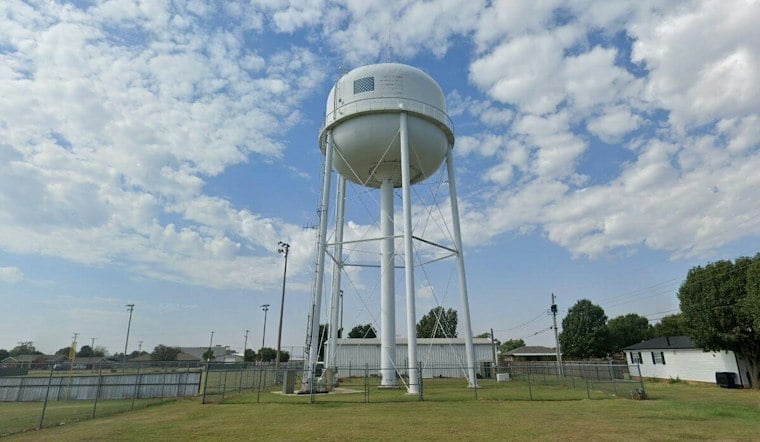
A water sample collected in Okarche on September 17 came back with a nitrate level of 14 milligrams per liter, well above the federal limit of 10 mg/L, prompting the Okarche Rural Water District to warn residents not to give tap water to infants younger than six months. Officials say babies who drink the affected water can become seriously ill, and untreated illness may result in death.
As reported by News 9, symptoms of nitrate exposure in infants include shortness of breath and blue baby syndrome, formally known as methemoglobinemia. The federal Maximum Contaminant Level of 10 mg/L was set by the U.S. Public Health Service in 1962 and later codified under the Safe Drinking Water Act in 1991 to protect infants from this condition, in which nitrate interferes with an infant's ability to carry oxygen in the blood, according to Circle of Blue. The rural water district is advising residents to use bottled water or another low-nitrate source when preparing water, juice, or formula for infants.
Importantly, the district says boiling tap water will not help. That guidance lines up with warnings from Oklahoma State University Extension specialists, who caution that boiling concentrates nitrate ions in water rather than removing them, since boiling evaporates the water itself while leaving the nitrates behind, per reporting from National Beef Wire.
Who Else Should Be Cautious
Pregnant people or those with specific health concerns are advised to consult a doctor before drinking the tap water, the district notes. Adults and children older than six months can continue drinking the water without the same restriction. The Okarche Rural Water District says it is working to fix the underlying nitrate issue and plans to build a blending station that would mix Okarche's water with a cleaner source to bring contamination levels down.
A blending station would mix Okarche's water with a cleaner source to lower nitrate concentrations.
Part of a Broader Pattern in Oklahoma
Okarche sits across Canadian and Kingfisher counties in the Oklahoma City metro area, with an estimated population of 1,141 as of the 2020 U.S. Census, according to Census Reporter. Federal tracking through the EPA's Safe Drinking Water Information System shows Okarche's public water utility serves roughly 1,110 residents drawing on groundwater, and the system has logged recurring health-based nitrate and nitrite violations from 2010 through 2025, according to a report from PureWaterGuys.com. That history suggests this month's advisory is part of a longer-running challenge rather than an isolated event.
Okarche's situation also fits a wider statewide pattern. A 2026 study by the Environmental Working Group found that Oklahoma is one of five states — alongside California, Texas, Kansas, and Nebraska — that together account for 64% of all public water systems nationwide exceeding the federal 10 mg/L nitrate threshold between 2021 and 2023, as reported by Public Radio Tulsa. Separate research analyzing more than 31,000 nitrate measurements taken between 1997 and 2024 across 745 Oklahoma public water systems found groundwater nitrate concentrations are highest in counties across the western half of the state, a trend researchers link to semi-arid conditions and intensive agricultural land use.
Where the Contamination Comes From
Rural groundwater nitrate pollution generally originates from nitrogen fertilizers and livestock operations that filter through shallow soils, according to Oklahoma State University Extension specialists cited by National Beef Wire. The Oklahoma Department of Environmental Quality oversees more than 1,300 active public water supply systems statewide, 67% of which serve local communities and rural water districts, and the agency requires public notification whenever Safe Drinking Water Act standards are breached, per the department's own guidance.
There is also a growing scientific debate over whether the current federal standard is strict enough. Emerging health research highlighted by Circle of Blue notes that nitrate levels above just 3 mg/L — far below the 10 mg/L federal limit — have been associated with increased long-term risks of colorectal cancer, thyroid disease, and adverse birth outcomes including preterm birth and low birth weight. Despite water quality ranking as Oklahomans' top water resources issue in a state survey from the Oklahoma Water Resources Center, fewer than 15% of residents actively test their own home drinking water, according to National Beef Wire's reporting.
For now, the guidance for Okarche residents remains straightforward: keep tap water away from infants under six months, do not rely on boiling to make it safer, and check with a doctor if pregnant or managing a health condition before drinking it. The rural water district says the planned blending station is intended to bring nitrate levels back under the federal threshold on a lasting basis.



