

























































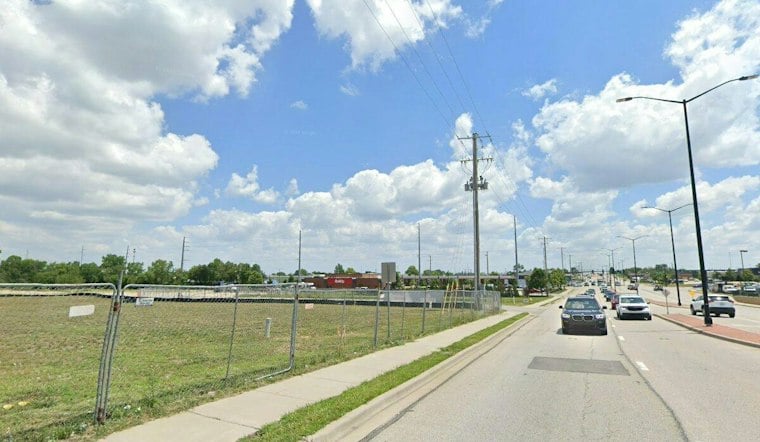
Olathe's $199.2 million proposal for Santa Fe Street at Interstate 35 combines two projects on separate schedules: the city's Santa Fe Street rebuild and the Kansas Department of Transportation's I-35 improvements. The plan would change the interchange, widen sidewalks and add design features along one of Olathe's most traveled corridors.
The Santa Fe Street and I-35 corridor project is designed to improve traffic safety and flow, according to the Kansas City Star. The interchange has experienced numerous crashes over the years, the newspaper reports, and Santa Fe Street at I-35 is considered one of Olathe's most traveled areas. The city has not yet won City Council approval for the designs.
What the crash figures show
The City of Olathe and KDOT say they completed an Environmental Assessment in fall 2023 to identify an improvement alternative for the interchange and the Santa Fe corridor from Ridgeview Road to Mur-Len Road. Their project open house estimates the selected improvement could reduce fatal and injury crashes by 42% and property-damage crashes by 22%. Those are projections, not post-construction results; the open-house figures provided here do not give year-by-year crash counts or comparisons with nearby Olathe intersections.
A single-point urban interchange would replace the two intersections on either side of the bridge with one central signal. The Missouri Department of Transportation explains that this design allows opposing left turns to move at the same time under one set of signals. Assistant City Engineer Theresa Vink, who presented pedestrian-safety changes to the council earlier this month, has said the configuration can handle more left-turn traffic than the current setup, according to the Star. The design is expected to resemble the interchange at 87th Street and I-35 on the Lenexa-Overland Park border.
Wider Sidewalks and New Lighting for Pedestrians
Pedestrian safety upgrades run through much of the plan. The Santa Fe Street corridor will get 10-foot-wide sidewalks stretching from Ridgeview Road to Mur-Len Road, while the Santa Fe Street bridge itself will have 10-foot-wide sidewalks on its north side and 5-foot-wide sidewalks on the south side. The bridge will also receive new lighting intended specifically to improve visibility for people on foot, the outlet notes.
Traffic medians throughout the corridor are getting a design refresh tied to their width. Medians measuring at least 18 feet across will be planted with trees, while narrower medians will feature grass, small plants and brick detailing instead. The interchange area is also slated for broader landscaping, including additional trees and planting beds.
Brick Arches, Wave Fencing and a Signature Signal
Beyond function, Olathe is leaning into decorative flourishes meant to tie the corridor visually to the rest of the city. The plan calls for brick paving between the concrete road barrier and the sidewalk, designed to match brick features found in downtown Olathe, along with brick and perforated-metal arches near the sidewalks. Fencing along the corridor will carry a wave pattern matching the design already used at Olathe's 119th Street interchange, finished off with decorative brick columns at the fence ends.
The interchange itself will feature a decorative traffic signal built around that same wave motif, according to the report. Olathe city officials presented the designs to the City Council as a discussion item this month, and the article notes that more design details are expected to come before the council over the next year as the plan moves toward approval.
Two Separate Timelines, One Busy Corridor
The construction schedules differ. KDOT is handling the I-35 highway improvements, with construction scheduled to begin sometime between October and the end of this year and continue through 2028. Olathe is rebuilding Santa Fe Street separately on a longer timeline.
Olathe aims to finish utility relocations and the final Santa Fe Street design by October 2027. Construction on the street is slated to begin in late 2027 and wrap up by summer 2030, overlapping with the state's highway work.





