

























































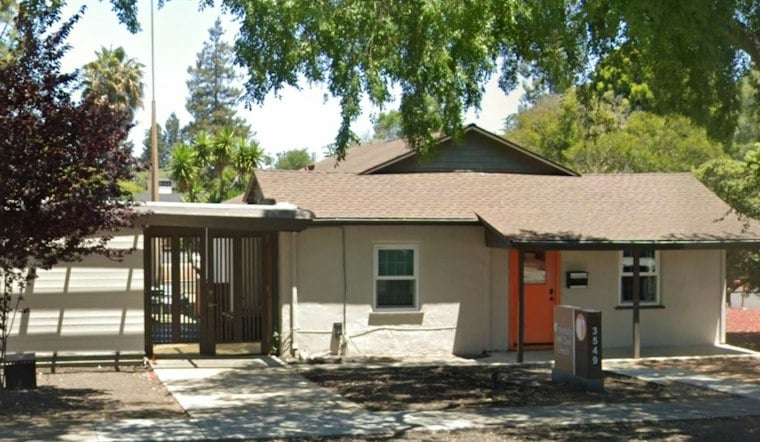
University AME Zion Church, the oldest continuously operating Black church in Silicon Valley, has been awarded a $400,000 grant to repair the crumbling foundation of its oldest building and refurbish its courtyard by spring 2027. The Palo Alto congregation, located on Middlefield Road, plans to replace the entire foundation of the Little House, a structure built in the 1920s, while adding grassy areas, garden beds, trees, and expanded pathways to the grounds.
The grant comes from the Preserving Black Churches program, according to Palo Alto Online, part of a national $60 million initiative funded by Lilly Endowment Inc. through the African American Cultural Heritage Action Fund. The fund awarded $13.5 million to historically Black churches nationwide in 2026 alone and has supported more than 170 sacred sites since its founding, according to the National Trust for Historic Preservation. Individual grants range from $50,000 to $500,000, and the program's broad public application cycle remains open through Friday, per the same organization.
Lead pastor Kaloma Smith, who has led the congregation since 2013, said the church has something special that motivated him to apply for the grant. He said the congregation made it its goal to save a midcentury modern church built for a Black congregation, according to Palo Alto Online's report, calling University AME Zion one of the few mid-century modern Black churches to exist.
A Congregation Rooted in 1918
University AME Zion Church began as a small group meeting in a home on Cowper Street after its founding in 1918. According to Palo Alto Stanford Heritage, the congregation started with four community members and 22 congregants as the first Black church between San Mateo and San Jose, initially gathering in Fraternal Hall before dedicated fundraising enabled construction of its first permanent sanctuary at 819 Ramona Street, built in 1924 and dedicated on April 5, 1925.
That original Ramona Street sanctuary was listed on the National Register of Historic Places in 1996 to prevent its demolition, and it was later adaptively reused, according to a Palo Alto Online video posted on YouTube. The congregation purchased its current property at 3549 Middlefield Road in 1965, where it has remained ever since. The Middlefield campus was designed by architects Reginald F. Inwood and Albert A. Hoover, marking the only church the pair designed for a Black congregation.
A Regional Anchor Despite a Small Local Population
Palo Alto's Black population sits at 1.5 percent, a figure shaped by mid-20th-century real estate practices including discriminatory housing covenants and housing exclusion, according to an ArcGIS StoryMaps analysis. Despite that small local footprint, the church has experienced steady growth since 2013, expanding into a multi-generational congregation that draws worshippers from cities including Milpitas, Danville, and Gilroy.
The African American Cultural Heritage Action Fund recognized University AME Zion Church as an essential spiritual sanctuary and community anchor for Black families who moved to the mid-Peninsula during the Great Migration from the American South, according to the National Trust for Historic Preservation. Smith said he encourages people to slow down, connect with others, and fight loneliness at the church, and has described the congregation as welcoming people as if they were travelers.
A Pastor With Deep Civic Ties
Smith's local standing extends well beyond the pulpit. In April 2025, he received the Tall Tree Outstanding Professional Award from the Palo Alto Chamber of Commerce and Palo Alto Weekly in recognition of his civic leadership and social justice work, according to Palo Alto News Online. He was appointed to the Palo Alto Human Relations Commission in 2017, according to CBS San Francisco. That advocacy followed anti-religious graffiti found at the church in late 2019, an incident that drew widespread community support during a Sunday Solidarity service.
A Recent Legal Threat to the Church's Property
The grant and planned renovations arrive not long after the congregation weathered a serious legal threat to its property title. In July 2025, former AME Zion Church Bishop Staccato Powell pleaded guilty in federal court to wire and mail fraud after illegally transferring University AME Zion Church's property deed to secure loans totaling $3.9 million without the congregation's authorization, according to the U.S. Department of Justice. The scheme had forced the Palo Alto congregation into bankruptcy litigation before the federal criminal case concluded with Powell's guilty plea.
The congregation now turns its attention to the physical structure at the heart of its Middlefield Road campus. Beyond the foundation work on the Little House, the congregation plans to paint and repair the wooden fence and trellis surrounding the property as part of the broader spring 2027 renovation timeline.





