

























































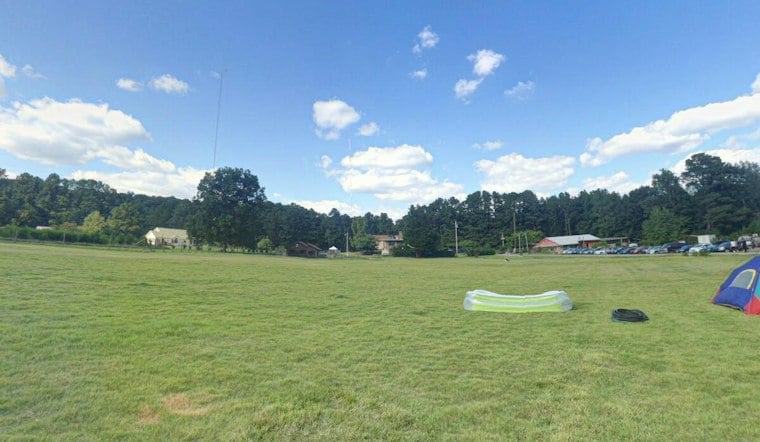
On a farm tucked between Chapel Hill and Carrboro, a lawn full of pop-up canopies and lawn chairs turned into the site of the world's longest continuously running progressive rock festival earlier this month. ProgDay drew fans from as far as Detroit, Maryland and northern Virginia to Storybook Farm on September 5 and 6, where an eight-band lineup played to a crowd that has kept coming back since 1995.
The festival's roots go back three decades, when founder Peter Renfro launched the event with an uncertain future during its first ten years, according to ABC11 News. Detroit band Discipline played that very first ProgDay in 1995, and the group returned to the Storybook Farm stage this year, closing a 31-year loop for a festival now recognized as the genre's oldest survivor, per Echoes.org.
A Lineup That Spans Continents, Anchored to One Field
This year's roster included Bruteus, Refestramus, French TV, Consider The Source, Sonus Umbra, PKT, Isolation Tank Ensemble and Discipline, according to United Mutations. Over its history, the festival has hosted 218 acts total, and for 167 of those bands, ProgDay marked their first North American festival stage, per the festival's own account. That global draw includes acts from Sweden, Italy and Venezuela, per ABC11's reporting, a striking contrast with the humble farm setting where the whole thing plays out.
Fans notice that contrast too. John Battema, who has attended every ProgDay since 1996 while living in northern Virginia, told ABC11 he discovered a community around progressive rock through the festival. Longtime attendee Jud Patterson has also been coming since the very first year in 1995, and organizers say the event still draws a mix of decades-long regulars alongside first-time attendees each September.
Small By Design, Where Bigger Festivals Folded
Academic research comparing progressive rock festivals has singled out ProgDay's intimate scale, a sharp contrast with larger indoor events like Pennsylvania's NEARfest, whose 2012 edition was announced as its final edition, according to a study published on ResearchGate. NEARfest has since ended, while ProgDay has continued.
That endurance traces back to the festival's lean, volunteer-driven structure. ProgDay is organized by the Musical Arts Progressive Society, a Chapel Hill-based nonprofit that operates the event using volunteer labor, per ABC11. The nonprofit, known as MAPS, is a 501(c)(3), according to ProgDay's own site.
No More Rain Backup, and a Pandemic Pause
ProgDay's ticketing page describes the festival as an outdoor event. Because the Storybook Farm lawn offers no shade during central North Carolina's humid Labor Day weekend, attendees have built a tradition of setting up a makeshift tent city of pop-up canopies and sun umbrellas behind the soundboard, per Carolina Music Festivals.
The festival's continuous run has not been entirely unbroken. In 2020, ProgDay adapted to the COVID-19 pandemic by hosting a virtual streaming festival, and in 2021, the festival was unable to complete a roster of bands rehearsed and ready to perform live, according to ProgDay. The festival later returned to Storybook Farm, as noted by ABC11 Raleigh-Durham.
The People Who Keep It Running
Michael Bennett has participated in ProgDay since its beginning and designs the festival's artwork every year, according to ABC11. Bennett described progressive rock simply as music that does not sound like everything else. Fans Michael Rowe and Jody Rowe are known for discovering new acts at the festival and supporting smaller bands that get less exposure elsewhere, while a supporter identified as Badham helps cover travel costs for the international bands that make the trip.
Storybook Farm sits off Jones Ferry Road at 190 Storybook Farm Lane near the Chatham-Orange county line, where attendees walk from parking to the stage and observe a 15 mph speed limit for resident families' safety, according to ProgDay's venue page. The festival uses volunteer labor and includes vendors, while day-of single-day passes are priced at $90 in 2026 to cover venue rental and performance fees, per the festival's ticketing information. Bands are paid after their performances, and the festival has built a reputation among overseas acts as a reliable, welcoming stop, per ABC11's reporting.



