

























































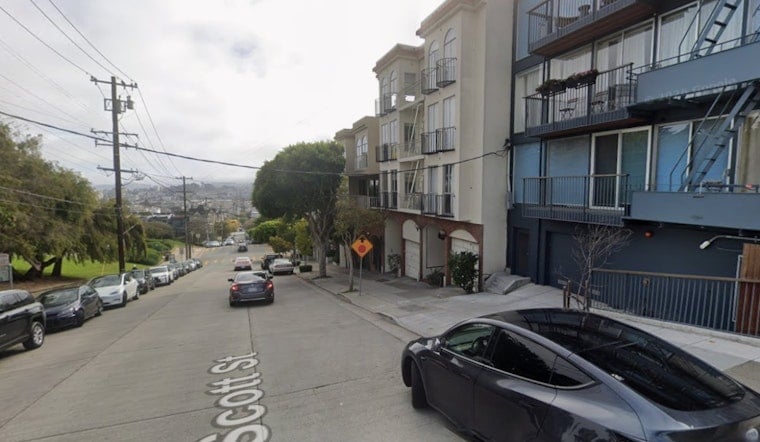
A one-bedroom apartment across from Alta Plaza Park in Pacific Heights hit the rental market for $5,495 a month, and San Francisco renters online are not impressed. The unit at 2321 Scott St #3 comes with dingy carpet, a dated kitchen, and no in-unit laundry — details that quickly turned a routine listing into a lightning rod for frustration over the city's housing costs.
The listing went up on rental platforms on August 29, according to IRIS, which noted the apartment's prime location directly opposite the park. San Francisco renters reacted swiftly and critically once the price spread online, according to the New York Post, which reported that the listing drew dozens of online reactions. One anonymous commenter didn't hold back, writing that the apartment amounted to “$5,500 for something that hasn’t been updated since ‘Guess who’s coming to Dinner?’ With a prison cell patio?!” Another critic said the unit was the worst apartment they'd seen for the price, while a third argued that landlords charging that much for space with dingy carpet and no washer or dryer were, in their words, “literal demons.”
A Small Patio Doesn't Soften the Sticker Shock
The apartment does include a small patio and one bedroom, but that wasn't enough to win over skeptics. One commenter compared the monthly rent to the mortgage payment on a $1 million house, per the Post's report. Real estate agent Thomas Baboin, who posted the listing on Instagram ahead of its release, described the unit as an SF icon in prime Pac Heights — a characterization that struck many online commenters as out of step with the apartment's condition.
Not everyone in the neighborhood was surprised by the price tag itself so much as unimpressed by what it bought. An anonymous Pacific Heights resident described the listing as a terrible price, noting that their own one-bedroom apartment in the neighborhood costs less than $4,000 a month and comes with 700 square feet and bay views, according to the same Post account.
How the Price Stacks Up Against the Neighborhood
Public records show 2321 Scott St is an 11,661-square-foot multi-family building with 11 units, according to Realtor.com. Even against Pacific Heights' famously steep rents, the $5,495 ask stands out: Zumper's tracking for August 2026 put average one-bedroom rents in the neighborhood between $4,640 and $4,845 a month, while the average rent across all unit sizes in Pacific Heights reached $5,297 a month — a figure 177% above the national average. Citywide, Zumper's Bay Area Metro Report for September 1 ranked San Francisco as the region's priciest rental market, with median one-bedroom rents hitting $4,300 a month, meaning the Scott Street unit sits nearly $1,200 above that citywide median.
San Francisco's rents have also outpaced nearby Silicon Valley suburbs. The same Zumper data show the city's $4,300 median one-bedroom rent running well ahead of Palo Alto's $3,560 and Mountain View's $3,480. That gap reflects intensifying competition for housing within city limits even as some tech workers have options in the suburbs.
Why Rents Keep Climbing in San Francisco
Part of the pressure comes from the labor market. San Francisco's residential vacancy rate fell to 2.2% as an artificial intelligence-driven hiring wave rekindled rental demand while new housing supply stayed constrained, according to Apartment List. Per the Post's reporting on Zumper's analysis, San Francisco's booming tech sector and limited housing supply are both fueling the city's rental prices, with the median one-bedroom rent in the city having climbed past $4,000 a month.
Cost-of-living figures compiled by C2ER and published by Zumper add further context: San Francisco housing costs run 138.9% above the U.S. average, pushing the total estimated monthly cost of living for a single resident to $8,479. Housing, in other words, consumes the bulk of what it costs to live in the city.
The Legal Loophole Behind the Asking Price
The apartment's price tag may look outrageous to renters, but it's legal. California's Costa-Hawkins Rental Housing Act of 1995 establishes vacancy decontrol, letting landlords in rent-stabilized cities like San Francisco set a vacant unit's initial rent at whatever the market will bear, regardless of local rent control ordinances. That means city rent boards have no authority to cap what a landlord asks for once a tenant moves out and the unit sits empty.
Once a new tenant signs a lease, though, different rules kick in. California's Tenant Protection Act, known as AB 1482, caps annual rent increases on covered multi-family properties in San Francisco at 8.8% — a 5% baseline plus a 3.8% regional Consumer Price Index adjustment — for the period running from August 1, 2026, through July 31, 2027. That cap protects existing tenants from steep hikes during their tenancy, but it does nothing to stop landlords from testing high asking prices the moment a unit like the one on Scott Street turns over.
For now, the Scott Street listing stands as a flashpoint in a housing market where legal rent-setting mechanics and renter frustration keep colliding. With vacancy decontrol shielding landlords' pricing decisions from city oversight, social media backlash remains one of the few outlets renters have to vent about affordability — even if it does nothing to change the number on the lease.





