

























































E-bikes and scooters hitting speeds up to 30 miles per hour have become a fixture on Palmetto Bay's sidewalks and shared paths, and village leaders are moving to rein them in with a new ordinance built around education rather than outright bans. The proposal would require anyone riding on sidewalks or shared-use paths to travel at a speed that will not seriously hurt or injure someone, and it sets up mandatory safety training for both adults and children who ride. A final vote is scheduled for September 14 at Palmetto Bay Village Hall, and residents are being encouraged to show up and weigh in.
The push comes as local hospital data shows a troubling trend. According to CBS News, Memorial Health System reported that e-bike and e-scooter-related injuries increased 178% from 2022 through 2025, and the increase continued through 2026. Resident Mohammed Taha described the scene in his neighborhood bluntly: “People just zoom by through the neighborhoods,” he said, adding that some of these devices can travel as fast as 30 miles per hour.
Village officials have heard similar complaints for months. Mark Merwitzer reported that residents have complained about both children and adults on e-bikes speeding, doing wheelies, and endangering themselves and others, per the same account. Village leaders have proposed adding restrictions and protocols specifically aimed at curbing that behavior while stopping short of the total prohibitions some neighboring communities have adopted.
An Education-First Strategy Takes Shape
The Palmetto Bay Village Council is considering the measure, according to Citizen Portal. The proposal includes a requirement to travel on sidewalks and shared-use paths at a speed that will not seriously hurt or injure someone and requires safety training for operators. Vice Mayor Mark Merwitzer has emphasized an education-first approach following resident complaints about high-speed devices, rather than pursuing the outright bans some other municipalities have chosen.
That approach puts Palmetto Bay in the middle of a broader debate playing out across Florida. Under Florida Statute § 316.20655, electric bicycles with motors up to 750 watts are legally classified as bicycles, a designation that grants riders access to roadways and shared paths without a driver's license, vehicle registration, or auto insurance, according to Ebike Oracle. That statutory framework sets out how electric bicycles are classified.
A Governor's Veto Left a Legal Gap
Florida lawmakers tried to close some of that gap statewide, but the effort stalled at the governor's desk. Senate Bill 382, which passed both legislative chambers unanimously, would have instituted a statewide 10 mph speed limit for e-bikes within 50 feet of pedestrians on sidewalks and shared paths. Governor Ron DeSantis vetoed the bill on June 25, according to CBS News, citing concerns that enforcing speed limits near pedestrians would require expanded local government speed detection and surveillance devices.
The veto left Florida without uniform statewide sidewalk speed limits or crash-tracking mandates, forcing municipalities to craft their own, often inconsistent, rules. Florida Statute § 316.2065 also only mandates helmet use for bicycle and e-bike operators under 16, leaving adult riders legally exempt even though head trauma remains the primary cause of severe cycling injuries, as Hoodline has previously reported.
How Neighboring Communities Have Responded
Palmetto Bay's measured approach stands in contrast to some of its neighbors. Key Biscayne enacted an emergency ban on all e-bikes and motorized scooters in February 2024 after a fatal collision between a 12-year-old e-bike rider and a 66-year-old cyclist, according to WLRN. Village leaders there voted to maintain the restriction into 2025, with fines reaching $500 and police granted explicit authority to impound non-compliant devices.
Sunny Isles Beach took a different but still stricter tack, instituting regulations in August that ban e-bikes on sidewalks, set a minimum operating age of 16, require government photo identification, and establish fines ranging from $250 to $500. Police officials there cited preventable accidents and pedestrian safety concerns as the main driver behind the policy. Meanwhile, the City of Miami Parks and Recreation Department maintains a complete ban on e-bikes and motorized vehicles across its roughly 150 public parks, though department officials have acknowledged that high speeds make catching violators difficult, a challenge that gained scrutiny after a 15-year-old on an electric dirt bike struck and hospitalized two pedestrians near Kennedy Park in January.
A National Surge in Pediatric Injuries
The concerns animating Palmetto Bay's ordinance mirror a national pattern. Nationwide emergency department visits for e-bike injuries surpassed 100,000 for the first time in 2025, reaching an estimated 102,777 visits, with injuries to children aged 14 and younger rising 167% in a single year to 17,206, per data from ERideHero. The same report also cites a 29% year-over-year increase in e-bike injuries.
Florida's pediatric trauma centers have treated injured young riders. Doctors at those facilities have described head trauma, facial fractures, and major bone breaks as the primary injuries among young riders.
According to the U.S. Consumer Product Safety Commission, children 14 years and younger accounted for about 36% of micromobility injuries from 2017 to 2022, double their 18% proportion of the U.S. population. The U.S. Consumer Product Safety Commission said it was aware of 193 e-bike fatalities from 2017 through 2023 and identified motor vehicle accidents and control issues as top associated hazards.
Infrastructure Investments Continue Alongside the Rules Debate
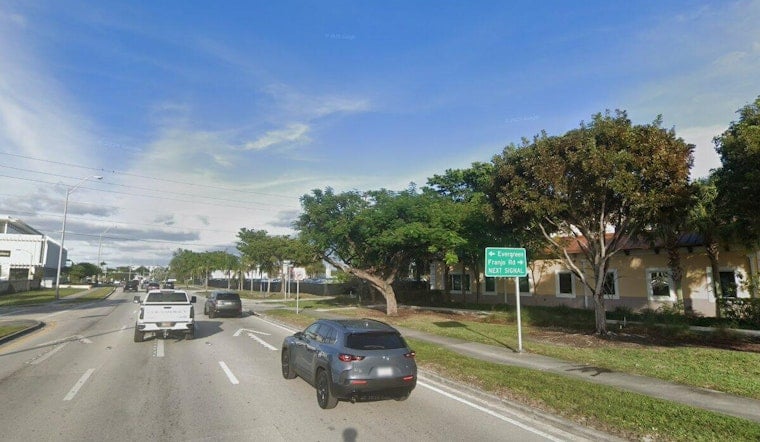
Even as the ordinance debate continues, Palmetto Bay has kept investing in infrastructure meant to separate cyclists and pedestrians from vehicle traffic. Miami-Dade County and the village began construction in late 2025 on the 12-foot-wide prefabricated Snowden Pedestrian Bridge along Old Cutler Trail, as detailed in Hoodline's earlier coverage of trail safety. Old Cutler Road is used by cars and e-bikes.
Whether Palmetto Bay's education-first model can curb the speeding and reckless riding residents have reported remains to be seen. The council's final vote on September 14 will determine whether the sidewalk speed standard and under-16 training requirement become permanent village law.





