

























































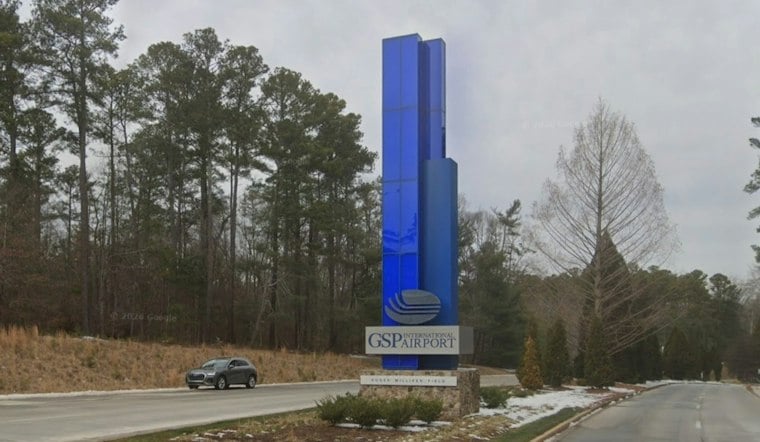
A commercial pilot taking off from Greenville-Spartanburg International Airport in December had to bank hard to the right to avoid a military helicopter that appeared close to the plane's departure path and, in the pilot's words, on a collision course. The crew's account, filed with a confidential federal safety database and detailed in a new report, describes air traffic control clearing both aircraft for takeoff without alerting the passenger jet's crew to the helicopter's presence until it was nearly too late.
According to WYFF, the tower had instructed the helicopter to fly east, but the passenger aircraft's crew did not hear that instruction until switching from ground control to tower control, by which point the helicopter was to the left of the plane and close to its own departure path. The pilot continued the takeoff while keeping the helicopter in sight, attributing the delayed sighting to ground clutter and other visual obscurations, before making an evasive right turn out of the assigned flight path and resuming the assigned runway heading once clear. The flight continued without further issue.
The incident was documented through the Aviation Safety Reporting System, a confidential program established in 1976 through a joint agreement between the FAA and NASA that lets pilots report close calls without fear of FAA penalty, according to NASA. The reports do not identify the party who filed them, and the FAA has said it does not attempt to validate the narratives submitted through the system, per the same WYFF account. In this case, the pilot went further than simply recounting the close call, writing that air traffic control failed to maintain situational awareness of military operations in the commercial environment and calling for stricter federal aviation regulations governing how controllers handle military operators during commercial airport operations.
A Pattern of Missed Warnings
The GSP pilot believed tower controllers had incorrectly estimated the military helicopter's takeoff and departure time, failed to ask whether the passenger crew had the helicopter in sight, and failed to monitor the helicopter's progress once airborne, the report states. That complaint echoes a separate incident from October 2025, when a commercial flight crew filed an ASRS report describing a helicopter that came within 100 feet of their plane during landing at Erie International Airport in Pennsylvania without any prior controller warning, according to WBAL Baltimore News. That Erie pilot reportedly warned that lessons from the fatal 2025 Washington, D.C. collision were not being fully integrated into everyday operations.
The GSP close call sits within a broader national trend: an analysis of ASRS data found that roughly 30% of reported near-collisions during airport takeoffs and landings nationwide involved helicopters, the same WBAL analysis found. Nationally, at least 95 near misses were reported across the country, with aircraft taking off or landing coming dangerously close to another aircraft about six times per month, according to data examined by WYFF's Get the Facts data team covering January 2025 through May 2026.
Federal Response Since the Deadly D.C. Collision
The scrutiny traces back to January 29, 2025, when a midair collision over the Potomac River between an American Airlines regional jet and a U.S. Army Black Hawk helicopter near Ronald Reagan Washington National Airport killed all 67 people aboard both aircraft, a crash described by Simple Flying as the deadliest U.S. commercial aviation accident since 2001. In response, the FAA required greater separation between helicopters and airplanes, and on March 18, 2026, it issued General Notice JO 7110.801, suspending pilot-maintained visual separation between fixed-wing airplanes and helicopters crossing arrival or departure paths in Class B, Class C, and TRSA airspace nationwide in favor of mandatory radar separation, according to the notice itself. The notice does not specifically identify GSP as covered. GSP has a runway over 6,500 feet long and handled more than 3 million passengers in 2025.
Federal regulators have said the FAA's directive exceeded the National Transportation Safety Board's own recommendation issued after the Reagan National collision. Yet as recently as Sept. 15, the NTSB classified 11 of the FAA's 33 responses to recommendations arising from the January 2025 collision near Ronald Reagan Washington National Airport as unacceptable, while the investigation produced 50 recommendations overall, per Simple Flying's report. Separately, a proposed federal aviation-safety bill involving tracking technology failed to pass the U.S. House of Representatives in February 2026.
Part of a Wider Run of Close Calls
The GSP incident is far from an isolated case. Similar near-misses between crossing helicopters and approaching airliners occurred in early 2026 at San Antonio International Airport and Hollywood Burbank Airport, incidents that federal regulators cited as immediate catalysts for suspending visual separation rules nationwide, according to Vertical Aviation International. Hoodline has previously covered the San Antonio episode, including a near miss between a jet and cop chopper in San Antonio.
GSP itself remains part of the discussion. Whether air traffic control at GSP was fully aware of the military helicopter's exact takeoff trajectory during the December incident, and how regional towers have adjusted their procedures since the March radar-separation mandate took effect, remain open questions.




