

























































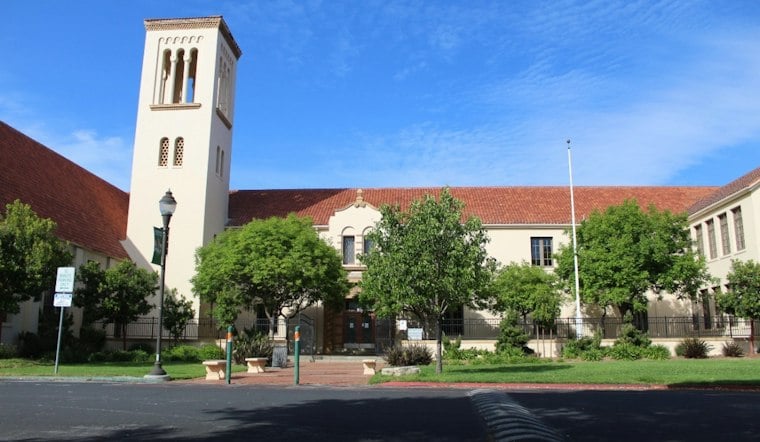
Palo Alto Unified’s declining enrollment and projected budget gap are putting an otherwise technical facilities question into the 2026 board election: whether the district should keep every campus available, lease sites it no longer needs or consider selling them. Ballotpedia lists Linda Henigin, Avery Wang and John Craig as candidates in the Nov. 3 general election.
The Palo Alto Daily Post reported that district enrollment fell from 12,287 students in 2017 to 10,209 last year, and identified Juana Briones and Barron Park as the two smallest elementary schools, with 244 and 258 students respectively. The same report described the candidates as willing to consider difficult facilities choices if enrollment continues to fall, although their preferences differ: Henigin favors retaining a campus, potentially through leasing; Craig is open to selling a site the district no longer uses; and Wang would prefer to avoid closure while acknowledging that continued enrollment losses could change the calculation. Those candidate positions are reported here from the Daily Post’s interviews, not from independent interviews for this article.
The financial pressure is separate but closely related. Houseberry reported that voters rejected Measure B, a proposed four-year, $800-per-parcel tax, after it received 62.4% support—below the two-thirds needed for passage. The measure would have replaced the existing tax when it expires in June 2027 and represented about $15 million in annual revenue, while an August projection showed a $47.2 million gap between spending and revenue, according to Houseberry.
The decision is not simply whether to close a school
A campus closure, a lease and a sale would raise different questions. The California Department of Education’s 2024 school-closure guidance recommends examining facility condition, operating costs and whether other campuses can accommodate displaced students. It also says that transferring students to existing schools may create a project subject to the California Environmental Quality Act, although exemptions can apply. The department cautions that its guide is high-level, nonbinding information rather than a complete legal procedure for a district.
The same state guidance says Education Code Section 17387 expresses the Legislature’s intent that communities be involved before decisions about closing a school or using surplus space. That makes public process part of the facilities issue, but the available records cited here do not establish that PAUSD has approved a closure study, selected a campus or adopted a timetable for reviewing its property portfolio.
Palo Alto has retained a closed campus before
Palo Alto’s own history shows that enrollment decline is not unprecedented. The district reached 15,575 students in 1967 and 7,452 in 1989; during the latter period it operated 11 elementary schools, one middle school and two high schools, according to PAUSD’s historical account. The comparison is useful as background, but it does not show that today’s elementary schools face the same demographic or financial conditions.
One past property decision illustrates why closure and disposal should not be treated as the same outcome. Palo Alto Online reported that Cubberley High School closed in 1979 during the earlier enrollment decline, while the district ultimately leased the campus to the city rather than selling it. Cubberley was a high school and a different era, so it is a precedent for retaining public control of a site—not evidence that leasing is the right answer now.
Nearby districts show different versions of the same problem
Recent regional examples demonstrate the range of possible responses without determining PAUSD’s outcome. K-12 Dive reported that the San Jose Unified board approved a plan on March 26, 2026, to close five of its 26 elementary schools. In a separate case, the Alum Rock Union Elementary School District board decided on Dec. 2, 2024, to close six sites, consolidate three and redesign three, according to the district’s official account.
Those actions are comparisons, not evidence that Palo Alto should follow either model. District size, enrollment patterns, finances, facility conditions and community processes differ. For PAUSD, the unresolved question is how much capacity it can afford to preserve while enrollment falls—and whether a campus viewed as excess space today may still have educational or public value later.




