

























































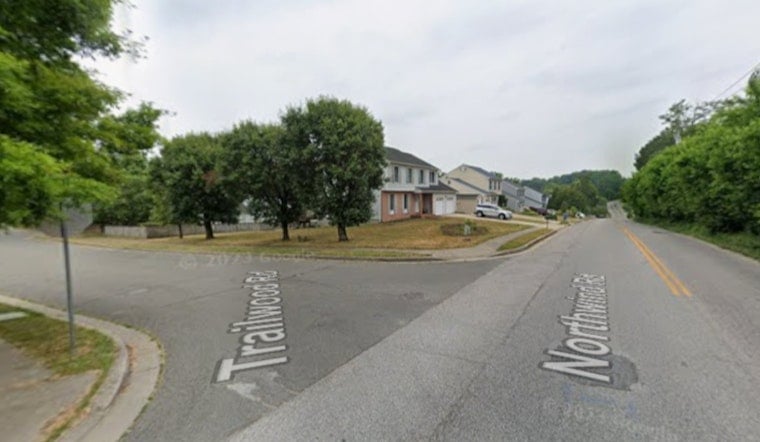
A pedestrian was struck and killed early Tuesday morning near the intersection of Trailwood Road and Northwind Road in Carney, Maryland, prompting a heavy emergency response and a police investigation into exactly what happened. Emergency personnel arrived around 8:45 a.m. and found the victim unconscious and not breathing; the person was pronounced deceased at the scene.
According to NottinghamMD.com, which first reported the crash, police and fire department units were dispatched to the scene in the Parkville/Carney area of Maryland 21234, and the Baltimore County Police Department Crash Team was requested to lead the investigation. Crash investigators conducted a preliminary inquiry before emergency crews cleared the scene. The victim's identity had not been released as of the report, and authorities advised motorists and residents to avoid the area while the investigation was underway.
Pedestrian Safety Concerns Draw Attention
In the hours after the crash, the collision prompted discussion among local neighbors.
Any effort to address traffic concerns would run up against a formal process. Under Baltimore County's Department of Public Works Neighborhood Traffic Management Program, residential communities seeking traffic-calming devices such as speed humps must first pass initial speed and volume studies; speed humps also require a minimum 1,000-foot street segment to qualify.
A Second Fatal Pedestrian Crash In The Same Corner Of The County This Year
Tuesday's crash is not the only fatal pedestrian collision to hit the Carney and Parkville area recently. In February 2026, 72-year-old Peter Anthony Ruy was fatally struck along Harford Road near the Parkville-Carney library. Court records revealed in July that criminal traffic charges — including leaving the scene of a fatal crash and driving 44 mph in a 30 mph zone — were filed against a local driver in connection with Ruy's death, according to The Baltimore County Courtroom Observer.
That crash spurred community advocacy that led the signal now planned for Harford Road, after the Maryland State Highway Administration agreed in July to install a Pedestrian Hybrid Beacon at Harford Road and 5th Avenue, creating a protected WALK phase for pedestrians. The beacon remains dark until a pedestrian pushes a button to trigger a steady red light and stop traffic.
What Maryland Law Says About Crosswalks
Whether Tuesday's victim was crossing within an intersection crosswalk remains an open question, and it matters under state law. Maryland Transportation Code § 21-502 requires drivers to stop and yield the right-of-way to a pedestrian crossing within any marked or unmarked crosswalk when that pedestrian is on the driver's half of the road or approaching closely, according to Justia Law. Maryland statutory law recognizes unmarked crosswalks as the legal extension of sidewalks across intersections.
But pedestrians carry obligations too. Under Maryland Transportation Code § 21-503, pedestrians may not suddenly leave a curb or other safe place and enter a crosswalk when a vehicle is so close that it cannot safely stop, per KBD Attorneys. Maryland remains one of the few states with a strict contributory negligence doctrine, which can shape how liability claims are ultimately decided. It is not yet known whether the Baltimore County Police Department Crash Team will pursue criminal or traffic charges in Tuesday's case, nor has the driver's speed been disclosed.
Statewide Numbers Improve, But Local Hazards Persist
The Carney crash lands against a backdrop of improving statewide trends. Statewide pedestrian and bicyclist fatalities fell 33 percent. Local pedestrian safety concerns remain.
Before Tuesday's crash, Baltimore County Councilman David Marks shared back-to-school safety advice. A rural-road-safety resolution involving Marks was forthcoming.
For residents near Trailwood and Northwind roads, the gap between those broader policy efforts and the specific hazard outside their front doors remains the central frustration. Whether Tuesday's fatal crash will prompt further traffic-safety action in the neighborhood is, for now, another open question.





